
Awakening Hanoi’s Heritage Through 4 Unique Digital Journeys
The four heritage tourism routes recently launched in Hanoi do more than just connect 28 iconic monuments; they open a new way to access the past through digital technology. Thang Long’s heritage is now “awakened” via interactive maps, QR codes, and the H-Heritage application.
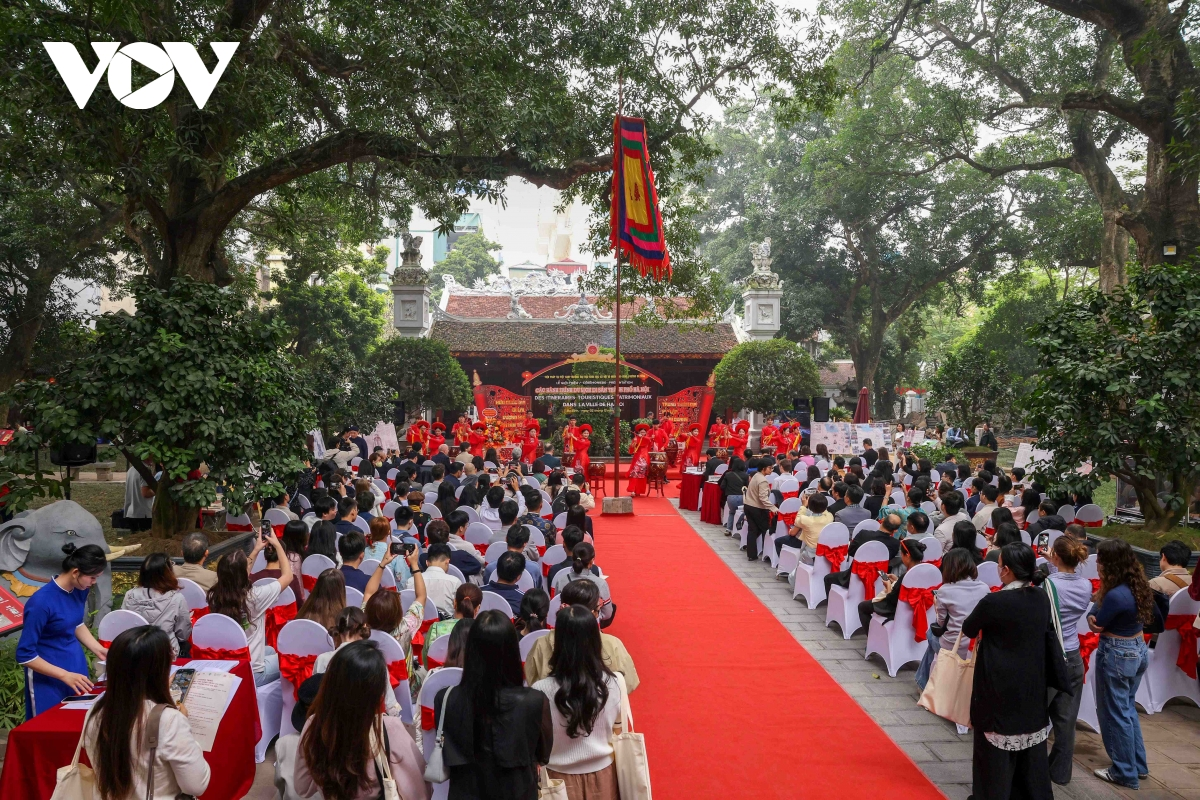
On December 3, 2025, at Quan Thanh Temple, Hanoi, the project “Heritage Tourism Routes in Hanoi City” was officially introduced to the public. This initiative is part of the FEF-R Patrimoine project, funded by the French Ministry for Europe and Foreign Affairs, and implemented in collaboration with prestigious academic and research partners from Vietnam and France.
The project is executed by the University of Social Sciences and Humanities – Vietnam National University, Hanoi, in coordination with the École Française d’Extrême-Orient (EFEO) and the Agence Universitaire de la Francophonie (AUF), with support from the French Embassy and the French Institute in Vietnam.
The sacred space of Quan Thanh Temple – one of the “Thang Long Four Sacred Temples” guarding the ancient citadel – served as the venue for the launch of the “Hanoi Heritage Tourism Routes” project.
This initiative aims to identify, preserve, and promote the value of Hanoi’s tangible, intangible, and digital heritage through four pilot heritage tourism routes, integrating interactive maps, QR codes, and the H-Heritage app at various monuments within the capital’s central area.
When Past and Present Intersect in the Urban Heart
Hanoi, a city of a thousand years of civilization, faces significant challenges in heritage preservation amidst rapid urbanization. While many ancient monuments still exist within modern residential areas, they have yet to be protected or presented in a systematic and professional manner.
In response to this reality, the ‘Hanoi Heritage Tourism Routes’ program was established with the ambition of connecting these fragmented values into a structured network, narrated through scientific methodology and modern technological language. The project integrates field surveys, archival analysis, student training, and digital mapping applications throughout its implementation.
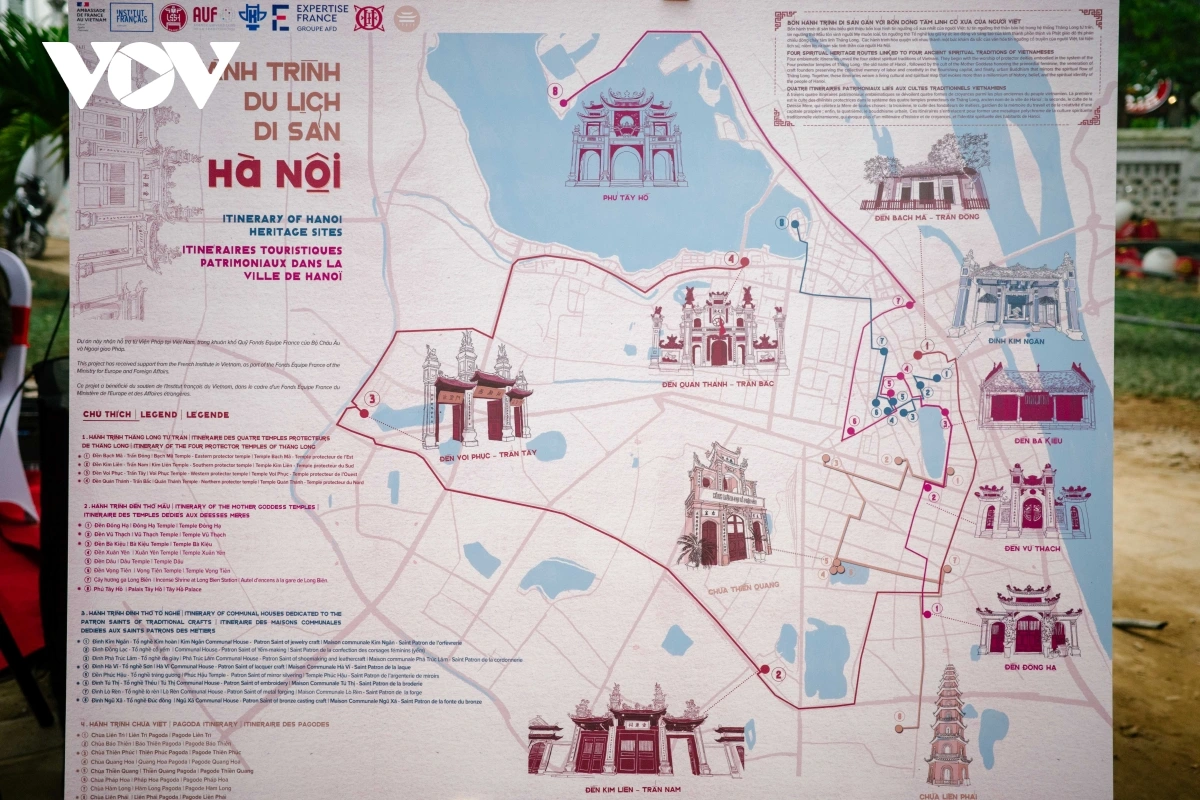
The project introduces a pioneering approach: transforming Hanoi into a ‘living museum’ in the digital age.
From over 100 surveyed monuments across Hanoi, the research team selected 28 representative sites to create four distinct journeys, each linked to a vital spiritual tradition in Vietnamese life.
Four Journeys – Four Layers of Hanoi’s Cultural Sediments
Route 1: The Thang Long Four Sacred Temples
Explore the four sacred temples guarding the ancient citadel: Bach Ma, Voi Phuc, Quan Thanh, and Kim Liên, corresponding to the four cardinal directions—East, West, North, and South. This route honors the unique spiritual space of Thang Long, where the human and divine realms coexist to protect the capital.
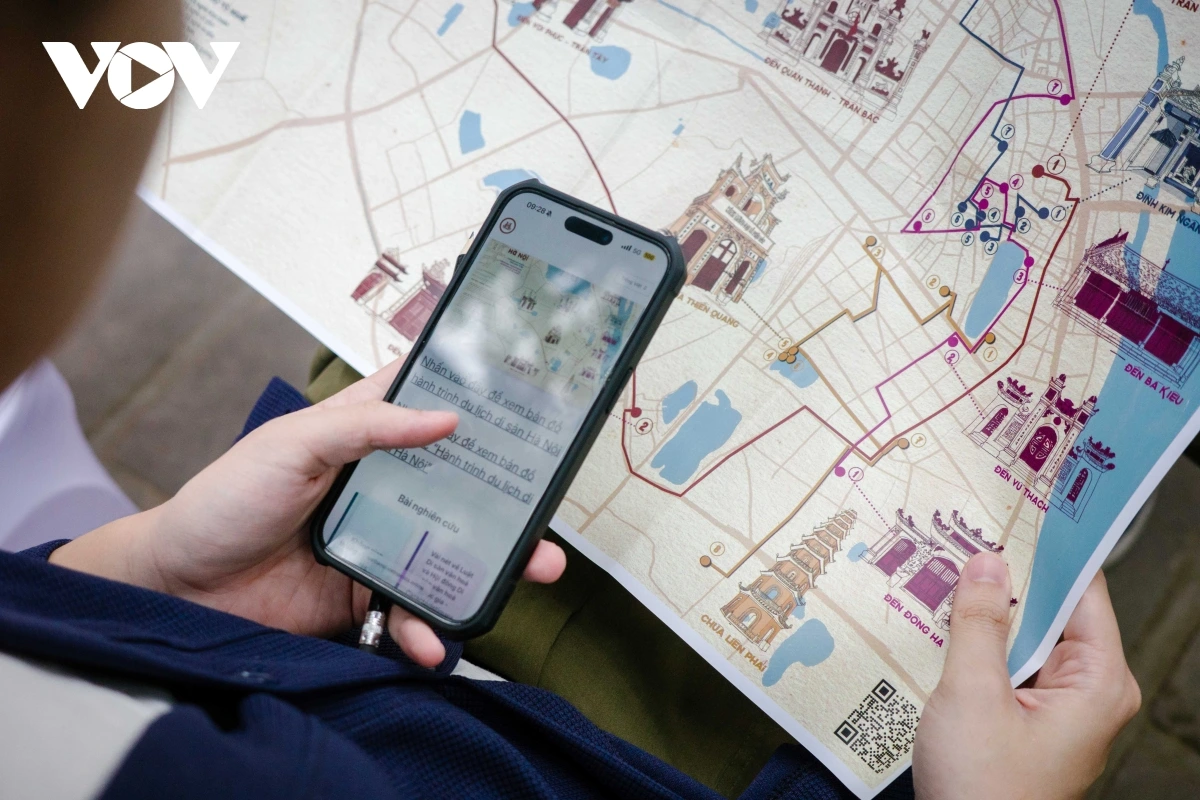
The H-Heritage app allows users to explore the history of monuments directly via their smartphones.
Route 2: Mother Goddess Temples
This route connects eight representative sites of Mother Goddess worship, including Dong Ha, Vu Thach, Ba Kieu, Xuan Yen, Dau Temple, Vong Tien, Tay Ho Temple, and the Long Bien incense pavilion. The journey introduces the Mother Goddess Worship of the Three Realms—a UNESCO-recognized intangible cultural heritage—highlighting the seamless blend of ritual, music, and the profound veneration of the Mother Goddess.
Route 3: Guild Temples
Visitors are guided through the heart of Hanoi’s Old Quarter, where each communal house symbolizes a traditional craft: Kim Ngan (jewelry), Dong Lac (bibs/silk), Pha Truc Lam (shoemaking), Ha Vi (lacquer), Phuc Hau (mirror polishing), Tu Thi (embroidery), Lo Ren (blacksmithing), and Ngu Xa (bronze casting). This journey reenacts the developmental history of traditional handicrafts that shaped the capital’s unique identity.
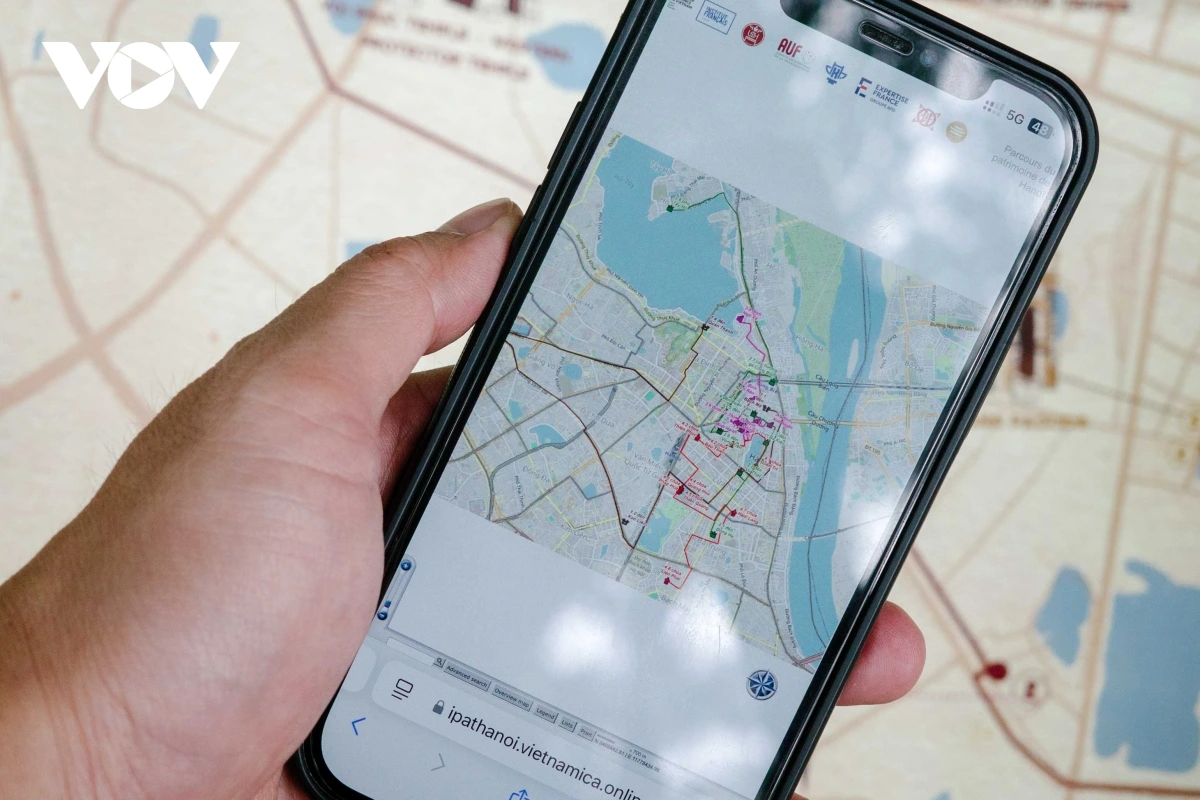
An interactive map system enables visitors to easily locate and connect heritage sites within inner Hanoi.
Route 4: Hanoi Pagodas
Associated with Monk An Thien (Phuc Dien)—a prominent patriarch of Vietnamese Buddhism—this route takes visitors through sites such as Bao Thien (now existing only in memory), Lien Tri, Ham Long, and Lien Phai. It is a journey of memory and faith, reflecting the process of loss, survival, and heritage reconstruction amidst the flows of history.
Digitizing Heritage Knowledge through Modern Technology
Each monument within the project is compiled into a comprehensive digital dossier, including scientific descriptions, archival and contemporary imagery, videos, excerpts from stone steles and Han-Nom documents, architectural diagrams, and relevant research catalogs. All data is digitized and integrated into electronic maps, QR codes, and the H-Heritage application.
As a result, citizens, tourists, and students can seamlessly access information on their smartphones, transforming heritage exploration into a vivid, flexible, and highly educational experience.
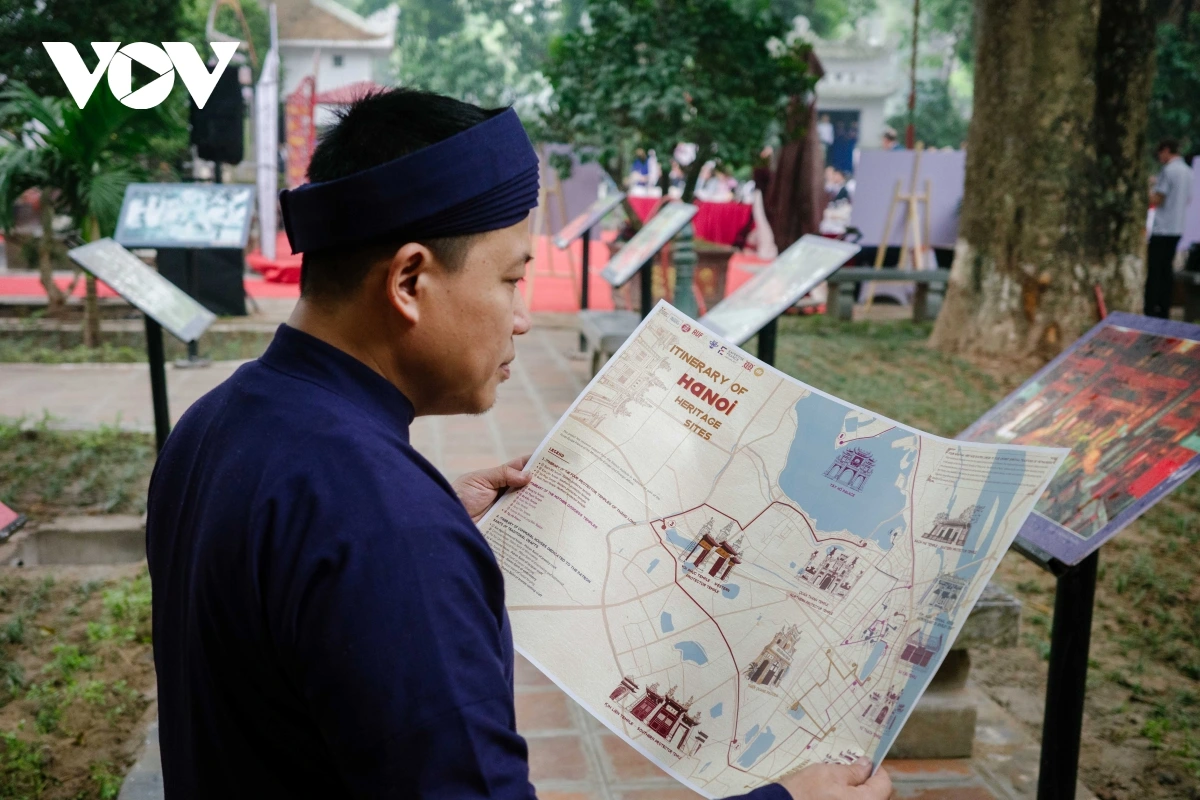
Intuitive Experience: With just a single touch, the entire system of monuments is revealed on a digital map.
A Symbol of French-Vietnamese Cultural Cooperation
Speaking at the event, H.E. Olivier Brochet, Ambassador of the French Republic to Vietnam, emphasized: ‘This project is a vivid testament to the profound cooperation between France and Vietnam in the fields of culture, heritage, and innovation. Through science, technology, and training, we are bringing heritage closer to the public, especially the younger generation.’
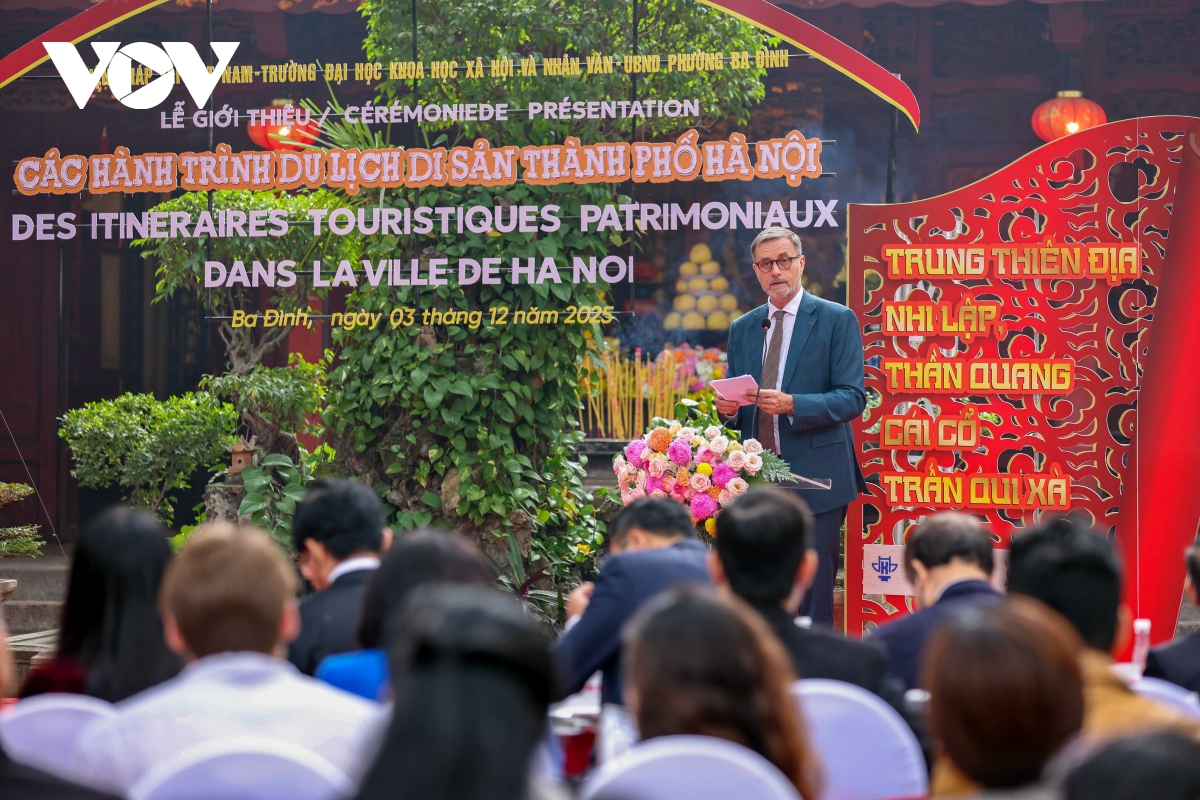
H.E. Olivier Brochet, Ambassador of the French Republic to Vietnam, delivering his speech.
Dr. Nguyen Thi Hiep, International Technical Expert from the International Technical Cooperation Agency (Expertise France), noted that within just one year and with a modest budget, the project successfully mobilized nearly 40 experts and approximately 100 students for field surveys. According to her, these heritage routes serve not only as tourism products but also as essential tools for education, research, and community connectivity.
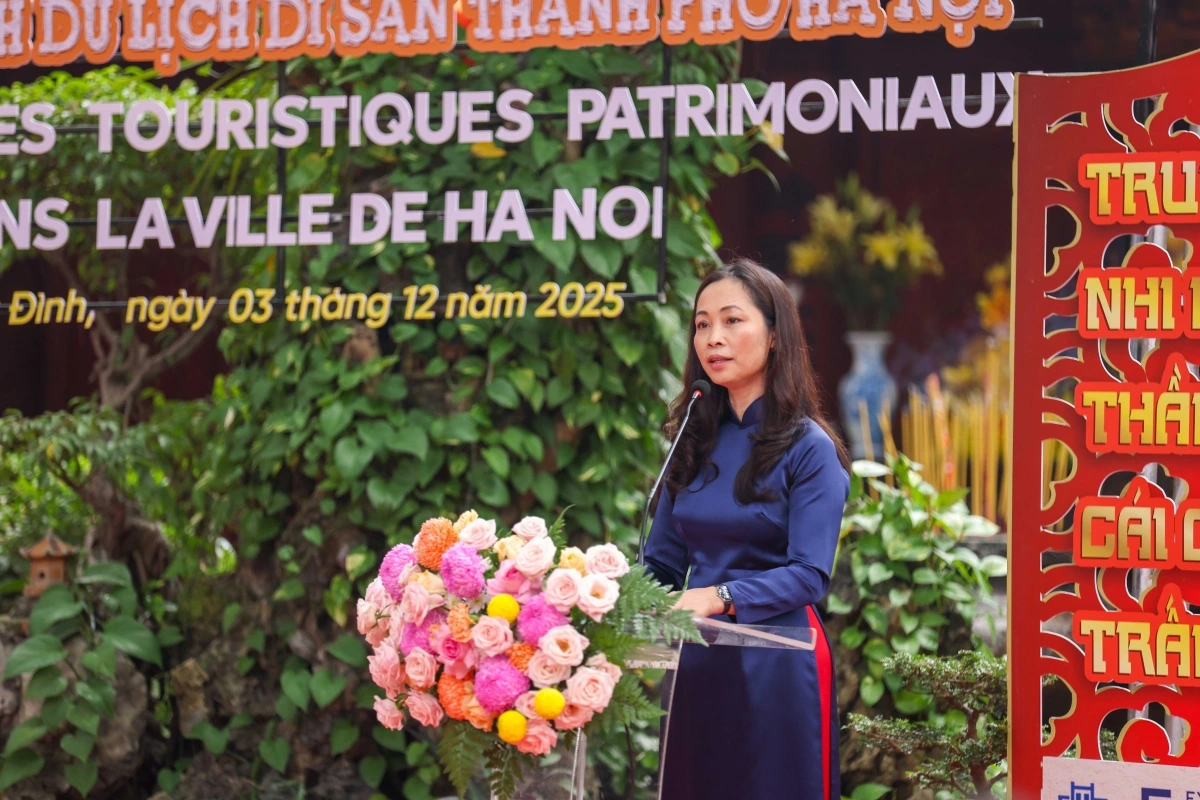
Dr. Nguyen Thi Hiep – International Technical Expert, International Technical Cooperation Agency (Expertise France).
Prof. Dr. Hoang Anh Tuan, Rector of the University of Social Sciences and Humanities (VNU-USSH), affirmed: ‘This is an entirely new model for heritage engagement, bringing seemingly ancient values closer and more accessible to the youth and international tourists. The university expects the project to be further expanded and replicated across other districts of Hanoi and various localities nationwide.
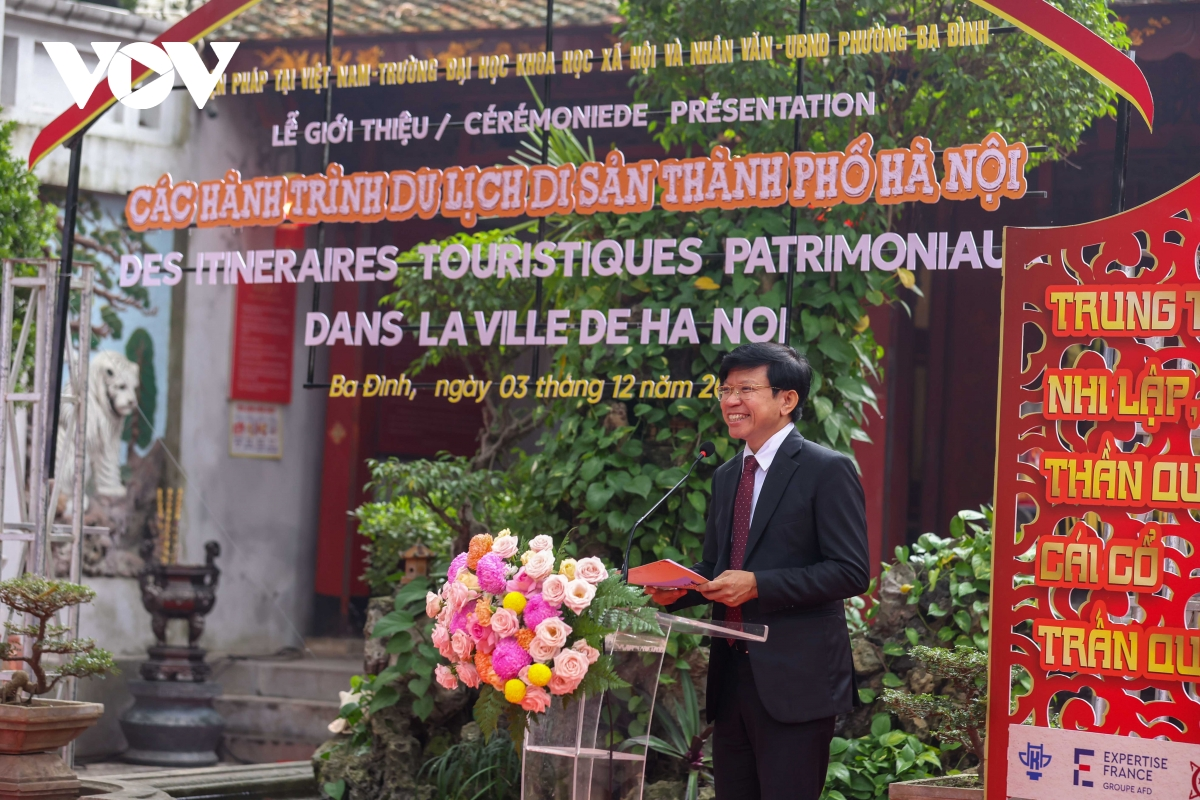
Prof. Dr. Hoang Anh Tuan – Rector of the University of Social Sciences and Humanities.
Hanoi: A ‘Living Museum’ in the Digital Age
Beyond mere tourism routes, ‘Hanoi Heritage Tourism Routes’ offers a fresh perspective on the capital: Hanoi is not just a destination but a ‘living museum,’ where past and present coexist, and where heritage does not remain dormant in textbooks but manifests, narrates, and dialogues with the people.
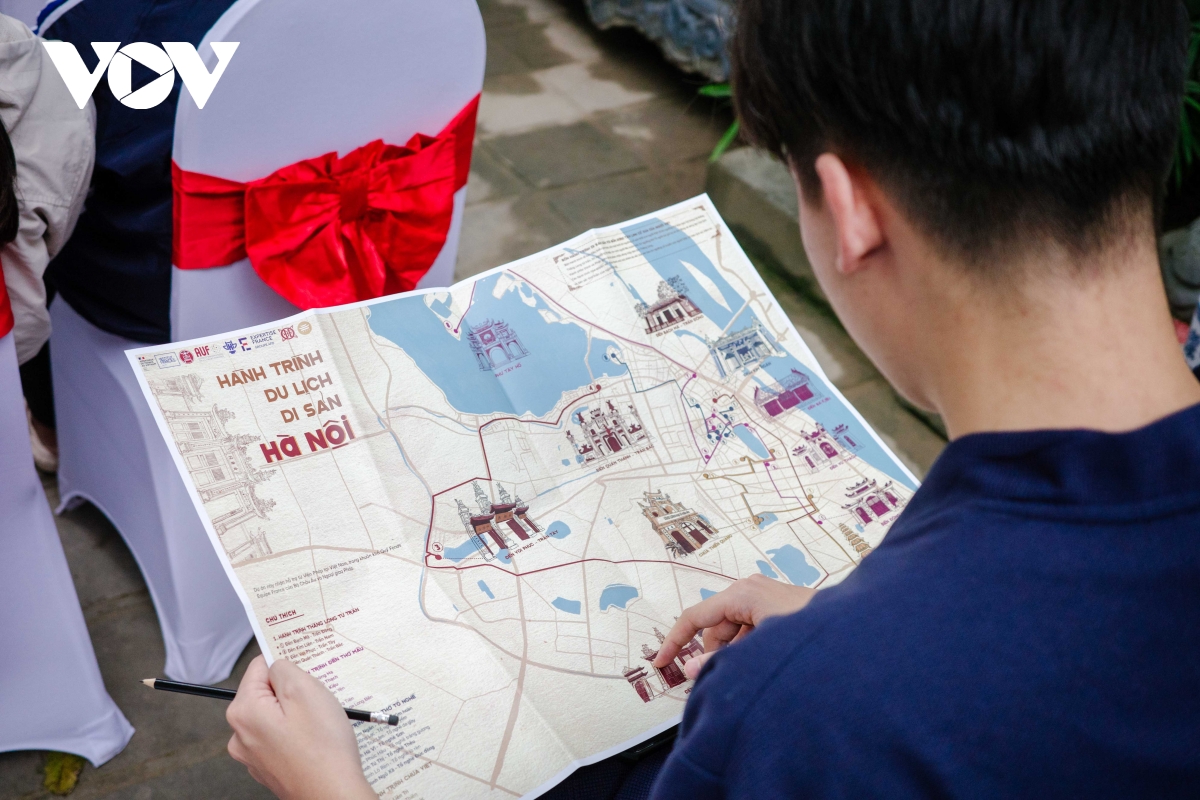
Traditional spaces integrated with modern technology open new ways for the younger generation to access heritage.
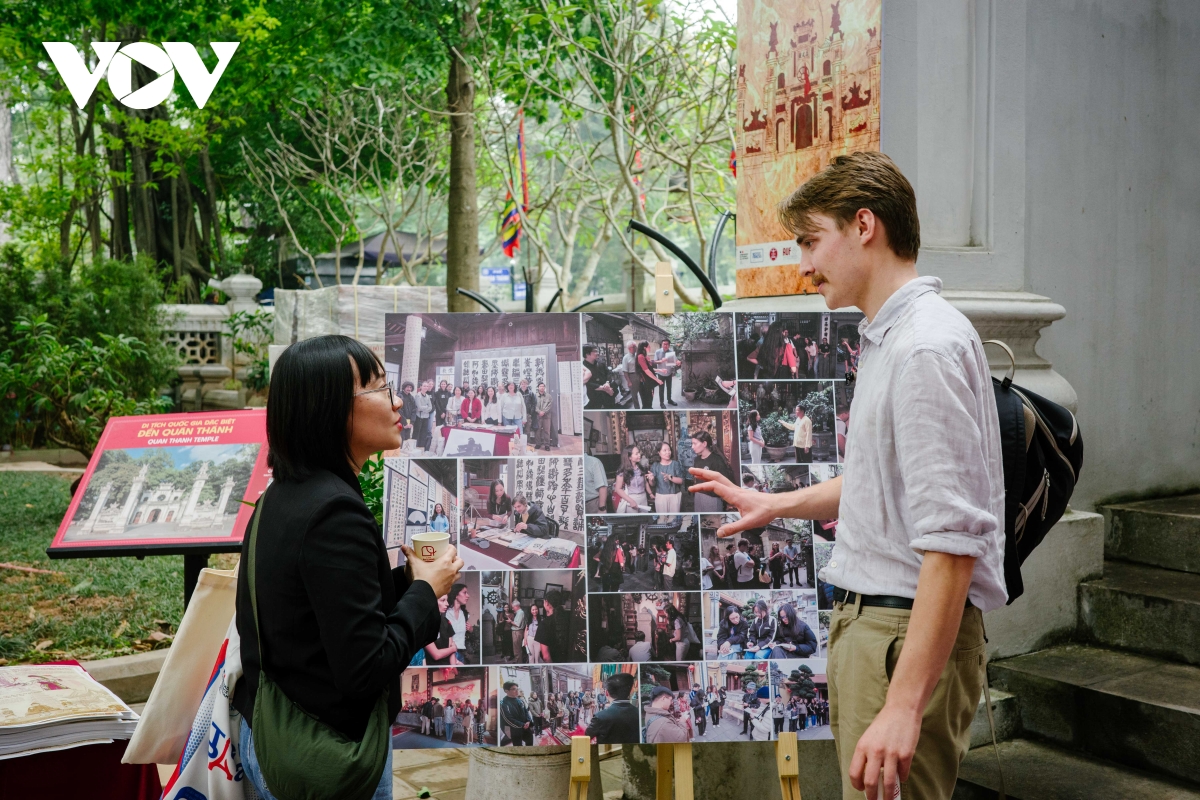
The ‘Thang Long Four Sacred Temples’ journey connects the four sacred temples guarding the four cardinal directions of the ancient citadel.
In the future, as the ‘heritage network’ expands as envisioned by the research team—with each monument serving as a ‘waystation’ connecting culture and history—Hanoi will emerge as a vivid map of memory, guided by technology and preserved by the community’s love for heritage.
By Hải Hà/VOV.VN