
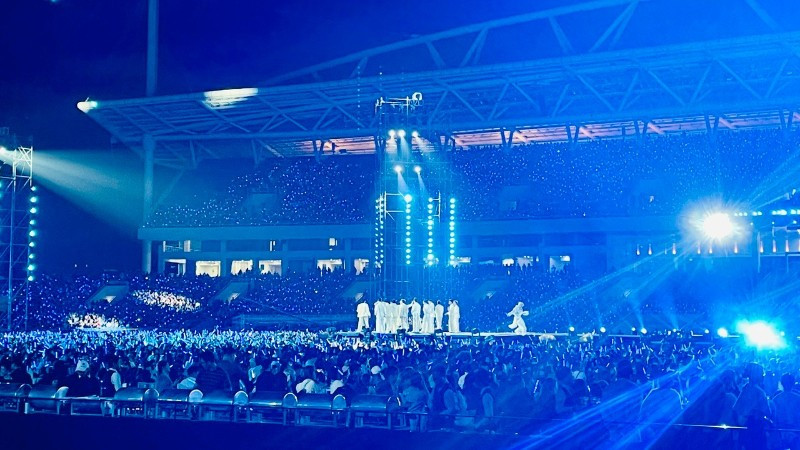
Seeking pathways to unlock Vietnam’s cultural and creative industries “treasure trove”
At the roundtable discussion “Cultural Industries – The Path to Unlocking Vietnam’s Endless Creative Treasure”, held on 1 October 2025 in Hà Nội, experts, artists and businesses reached a shared conclusion: Vietnam possesses an immense cultural treasure, yet it has not been sufficiently harnessed to generate economic value and national soft power.
The roundtable was organised by the Vietnam Cultural Industries Development Research Center (S-DCI), under the Sustainable Development Science Association (STDe).
The paradox of possessing a cultural “treasure” that has not yet been fully exploited
(Photo: Nhân Dân)
Opening the door to limitless resources
At the roundtable “Cultural Industries – The Path to Unlocking Vietnam’s Endless Creative Treasure”, the most fundamental question raised from the outset was not “What does Vietnam have?”, but rather: “How can we unlock the treasure embedded in the cultural industries we already possess?”
According to Dr. Architect Nguyễn Thu Hạnh, Director of S-DCI, this treasure has always existed — from UNESCO-recognised heritage such as Nhã nhạc (Hue royal court music), Ca trù and Xòe Thái, to everyday cultural symbols like the áo dài, conical hats, phở, or a cup of phin coffee. These are not merely legacies of the past, but resources capable of endless regeneration when placed within an industrial production ecosystem.
Experts at the roundtable unanimously agreed that the key lies in approaching cultural industries from a different perspective — one that positions culture as a generator of added value, new jobs, new markets and expanded national soft power, rather than merely a form of entertainment or aesthetic appreciation. When culture enters an “industrial process” encompassing design, production, commercialisation and strategic distribution, it becomes a genuine economic driver.
This is also why many participants observed that cultural industries are among the few sectors capable of simultaneously fulfilling three development objectives: creating wealth, by generating scalable economic value through creativity; enhancing beauty, by nurturing spiritual life and preserving cultural identity; and building strength, by reinforcing Vietnam’s position, creative capacity and soft power in global exchange flows. Cultural industries, therefore, are not merely a new economic sector, but a long-term engine for shaping Vietnam’s image as a creative, confident and culturally rich nation.
However, the “door” to cultural industries does not open by itself. It requires coordination among multiple actors: policies to establish enabling frameworks, businesses to create markets, artists to generate content, communities to nurture creativity, and cities to provide infrastructure. When these elements converge, Vietnam’s rich and distinctive cultural treasure will no longer remain confined to museums or collective memory, but will enter daily life, markets and billion-dollar industries.
Persistent bottlenecks
To open this door, the roundtable candidly identified long-standing constraints that continue to hinder breakthroughs across Vietnam’s cultural industry sectors.
First is the perception barrier. Many agencies, businesses and communities still have a vague understanding of cultural industries, viewing culture primarily as a field of preservation rather than as an economic sector capable of generating added value. This approach leads to rigid conservation-oriented exploitation of cultural resources, a lack of product development thinking, and limited awareness of the creative value chain — from ideas and design to production and market access.
On the institutional front, Professor Trần Thọ Đạt emphasised that while national strategies are already in place, many policies have yet to be translated into law, particularly regarding the legal status of intellectual property — the foundation of all creativity-based industries. When copyright protection mechanisms remain weak, businesses lack confidence to invest long term, artists lose creative motivation, markets are easily flooded with counterfeit and copied products, and Vietnamese cultural products struggle to compete regionally and internationally. Beyond copyright issues, other participants also pointed to inconsistencies in land-use policies, tax incentives and credit mechanisms for creative enterprises, making it difficult for the cultural industry ecosystem to develop in a coordinated manner.
Also addressing intellectual property concerns, Mr. Trương Minh Tiến, Vice Chairman of the UNESCO Association in Hanoi, stressed: “There is a need to improve the Law on Intellectual Property and copyright legislation, and to strengthen protection for software products, digital products and AI applications in cultural industries.” He also highlighted the importance of high-quality human resources, both in management and professional expertise within the cultural and cultural industry sectors: “Training linkages must be strengthened between domestic and international universities, and between educational institutions and businesses in alignment with market needs.”
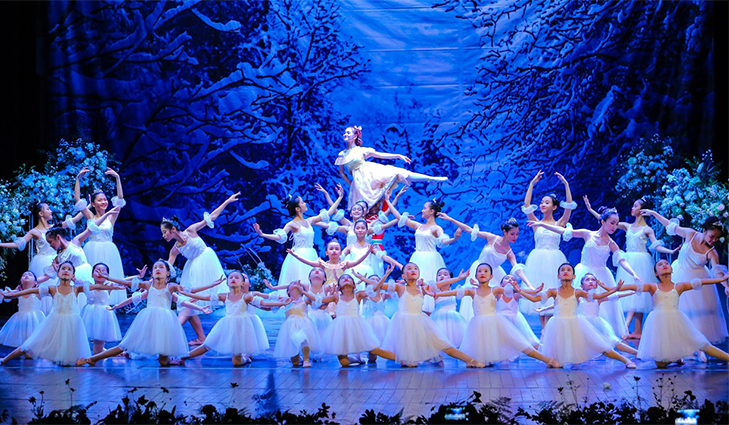
A need for a coherent legal framework in the development of cultural industries
(Photo: hanoimoi.vn)
Creative human resources, infrastructure and market challenges
Creative human resources emerged as the next major issue. Although Vietnam has a large and youthful population, skills gaps remain significant — including deficiencies in digital content design, creative management, cultural marketing, digital data utilisation and digital product development. University training remains distant from real-world demand, lacks strong business linkages and offers limited interdisciplinary programmes — a critical factor for cultural industries.
Dr. Lê Minh Khuê, Deputy Director of the Vietnam Cultural Industries Development Research Center, proposed the need to develop a national strategy for cultural industry human resources, establish a network of cultural industry training centres, strengthen international cooperation, develop creative ecosystems, invest in foreign language and digital skills training, and introduce mechanisms to assess and recognise creative competencies. These measures aim to cultivate a workforce that is both professionally specialised and deeply attuned to the cultural industry market.
Infrastructure and market development were also highlighted. Creative spaces, performance centres, product testing zones and long-term premises for cultural enterprises have not yet been invested in proportion to the potential of a domestic market of 100 million people. Many businesses reported difficulties in securing stable premises to sustain operations, nurture artists, build communities or develop product value chains. In addition, the domestic market remains fragmented, with weak linkages between creation, production and distribution, while digital technologies have yet to be effectively leveraged to expand into international markets.
Understanding the operational challenges faced by businesses in relation to public facilities and rental mechanisms for cultural entities, Mr. Đỗ Tuấn Anh, Chairman of Skysounds Joint Stock Company, made a concrete proposal: “The State needs to introduce stable, reasonable and long-term rental pricing policies that reflect the specific characteristics of cultural industry projects. Businesses will certainly be willing to work alongside the State in developing cultural industries sustainably.”
From these analyses, it is evident that cultural industries can only develop sustainably if five pillars are addressed simultaneously: mindset, institutions, human resources, financial mechanisms and digital transformation. Without removing these five bottlenecks, meaningful breakthroughs in cultural industries will remain difficult to achieve.
Which direction for the 2025–2035 period?
At the conclusion of the roundtable, Professor Trần Thọ Đạt summarised 11 expert viewpoints, distilled five core issues, and proposed four priority solution groups for the 2025–2035 period, as follows.
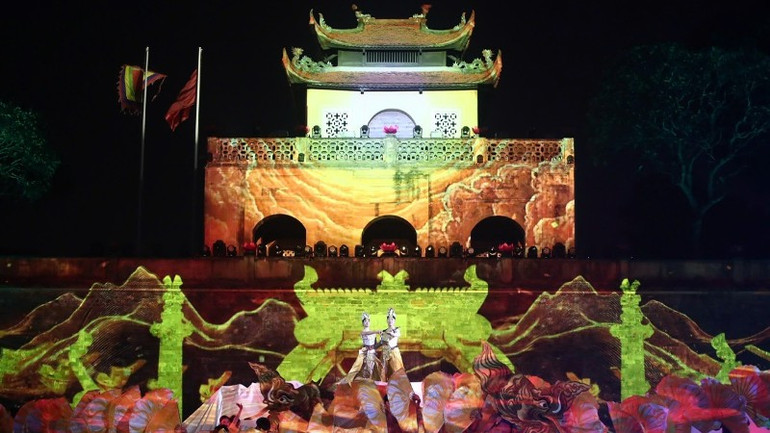
Four priority solutions required to “unlock the chest” of Vietnam’s cultural industry treasure
(Photo: Nhân Dân)
First, Vietnam needs to urgently complete its legal framework for cultural industries, moving towards the development of a Law on Cultural Industries to establish a unified legal corridor for intellectual property protection, financial support mechanisms and the operating environment for creative enterprises. This is the minimum condition for forming a healthy, competitive and high-value cultural product market.
Second, creative human resources must become a central pillar. This requires strong investment in education, the establishment of cultural industry training networks, closer linkages between universities and businesses, expanded international cooperation, and enhanced digital skills to meet emerging market demands.
Third, a creative ecosystem must be developed, encompassing cultural industry centres, creative spaces, and models linking cultural industries with tourism, urban development and national branding. Architecture experts proposed integrating cultural elements into urban planning, developing creative clusters and building large-scale performance infrastructure to attract businesses and artists.
Finally, digital transformation must serve as a cross-cutting driver. Vietnam’s cultural industries can only achieve breakthroughs if Industry 4.0 technologies are applied robustly across the entire value chain — from content creation and digital distribution to digital copyright management, cultural data systems and access to international markets.
The roundtable concluded with the signing of a cooperation agreement between S-DCI and the Faculty of Architecture and Planning of Hanoi University of Civil Engineering, opening new pathways for research and development of interdisciplinary cultural industry models.
Although the discussion lasted only a single morning, it clearly demonstrated one point: for Vietnam’s cultural “treasure trove” to truly be unlocked, the country needs a new mindset, a new institutional framework and a new creative infrastructure — so that culture is not only preserved, but transformed into a driving force of the future creative economy.