
Groundbreaking for the Hanoi Opera: Expectations for a new cultural landmark by West Lake
On the morning of 5 October, the Hanoi People’s Committee and Sun Group officially broke ground on the Hanoi Opera House and a themed Cultural and Arts Park in the Dam Tri Lake area, Quang An Peninsula, Tay Ho Ward. The project has a total investment of VND 12,756 billion, built on an area of 19.1 hectares, funded entirely through socialised capital from Sun Group.
The project is one of the key works celebrating the 71st anniversary of the Liberation of the Capital (10/10/1954 – 10/10/2025), while also serving the goal of making Hanoi a cultured – modern – creative capital, with culture and people at the centre of development.
Mobilising social resources to build a world-class cultural project
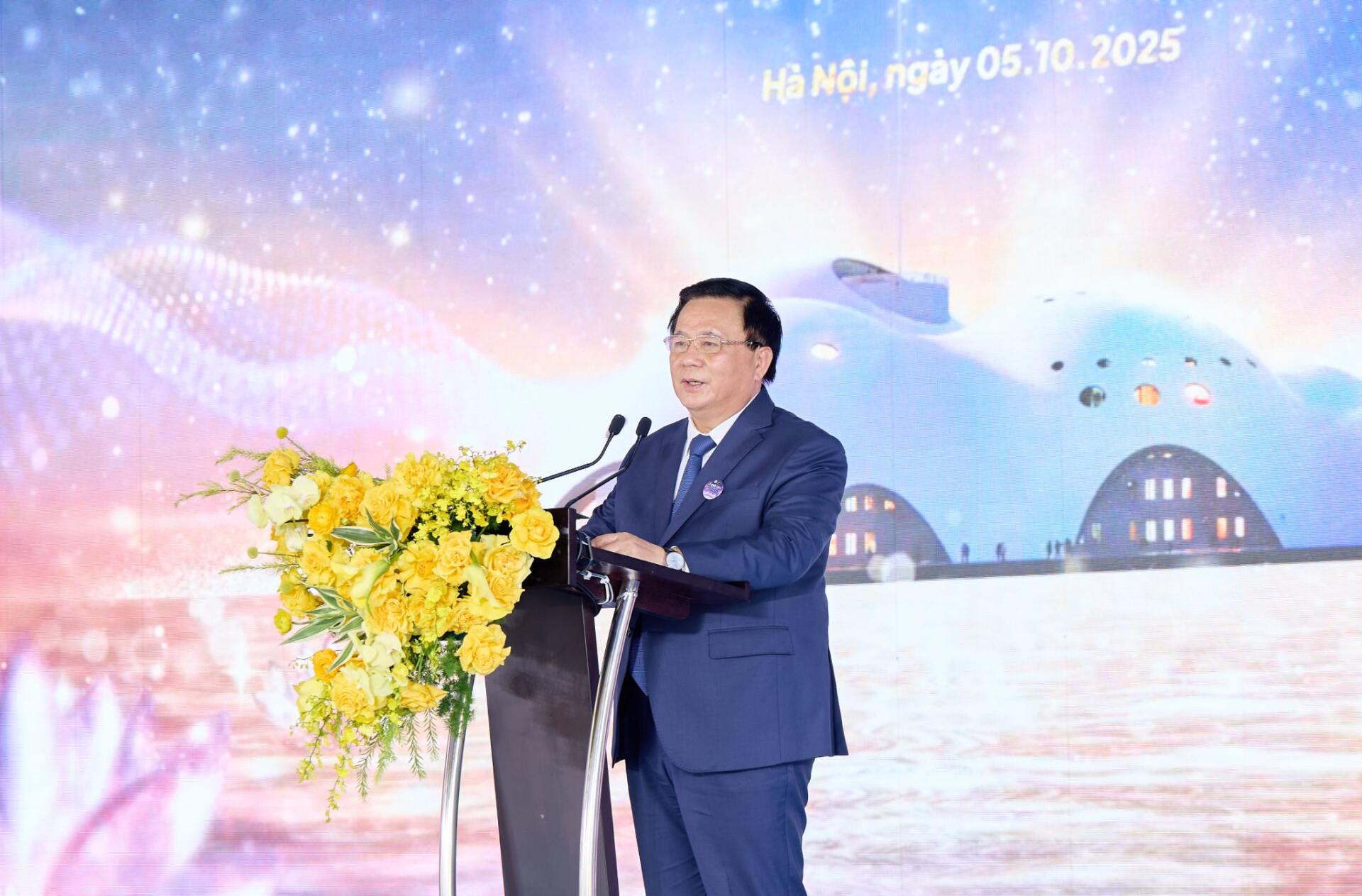
Speaking at the groundbreaking ceremony, Mr. Nguyễn Xuân Thắng — Politburo member and Director of the Hồ Chí Minh National Academy of Politics — affirmed that the start of construction on the Hanoi Opera House clearly reflects the spirit of Resolution 68 on developing the private sector as an important driver of the economy, encouraging diversified investment resources, including in culture and the arts. “This will be a place where the world’s finest is brought together, where the most distinctive advancements of the world converge, and where we can enjoy globally renowned artistic programmes. At the same time, this will also be a place that spreads Vietnam’s cultural values and Vietnamese talent to the world. We expect this to be proof of a beginning — so that there will be more modern cultural works, so that the capital Hanoi is worthy of being a cultured and modern capital, a green and beautiful capital,” he emphasised.
Mr. Nguyễn Văn Thắng noted that the Hanoi Opera House clearly embodies the spirit of Resolution 68 (Photo: Sun Group).
Echoing this view, Mr. Dương Đức Tuấn — Vice Chairman of the Hanoi People’s Committee — stated: “This is a project with profound humanistic value, aimed at serving the community, not for profit, and funded through socialised capital — something very rare in the world, because most major theatres are invested in or sponsored by the State. Sun Group — one of the leading private enterprises pioneering this investment — has demonstrated the aspiration to create a representative cultural complex with modern, fresh architecture of international calibre, reflecting the desire to rise.”
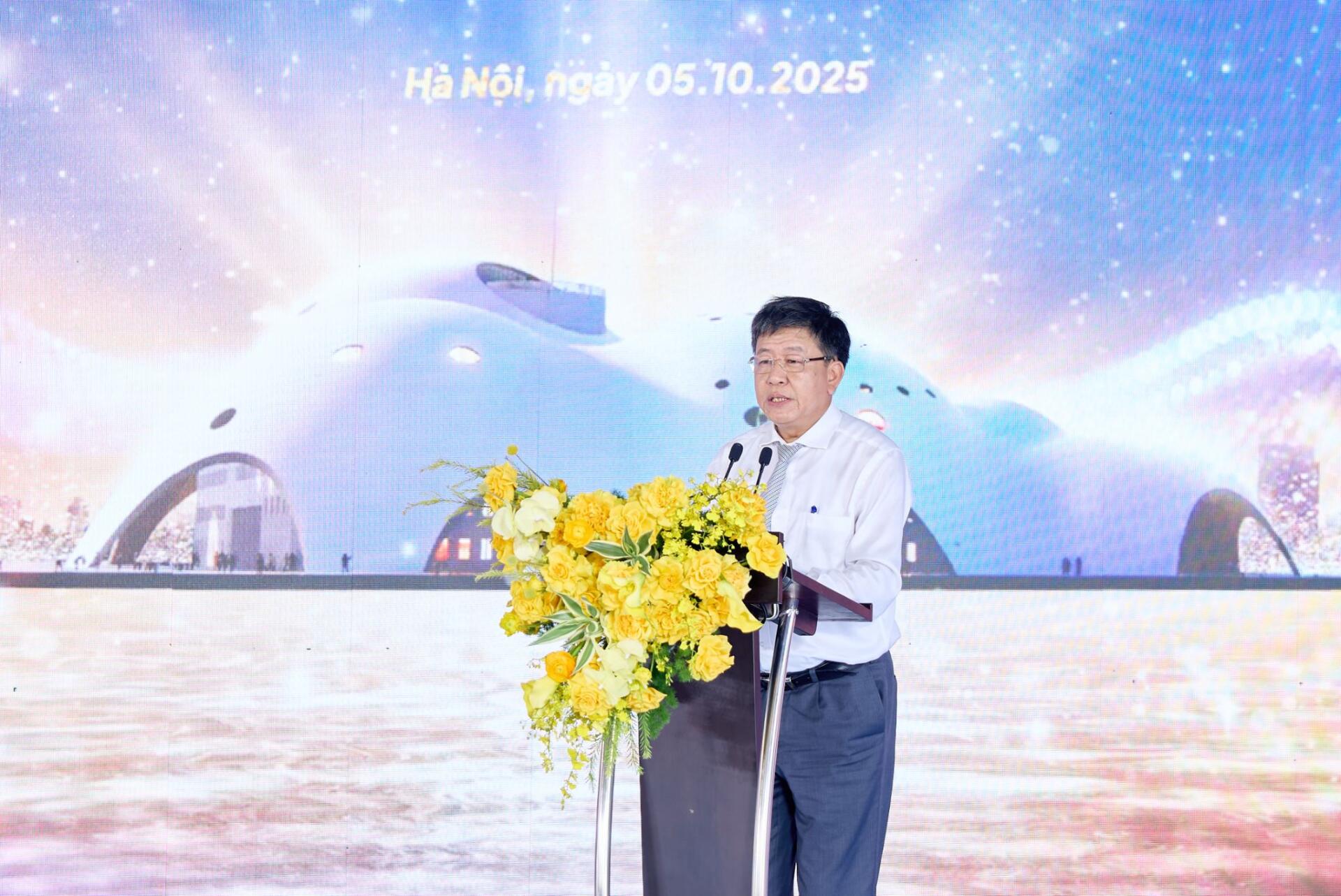
Mr. Dương Đức Tuấn speaks at the groundbreaking ceremony (Photo: Sun Group).
A private enterprise taking the lead to fully invest in a large-scale public cultural work of the stature of the Hanoi Opera House is considered rare — not only in Vietnam but also globally. In a context where most famous “temples of the arts” are financed by the State, this socialisation model opens a new path: easing pressure on public budgets while encouraging businesses to join hands in creating high-quality cultural spaces for the community.
Also speaking at the ceremony, Mr. Đặng Minh Trường — Chairman of the Board of Directors of Sun Group — said the project is not merely an investment but a cultural mission: “This is a special honour for those of us who were born and raised in Hanoi. We wish to contribute to creating a cultural symbol for the capital, reflecting the spirit of confidence, self-reliance, and the aspiration of Vietnam to rise in a new era.”
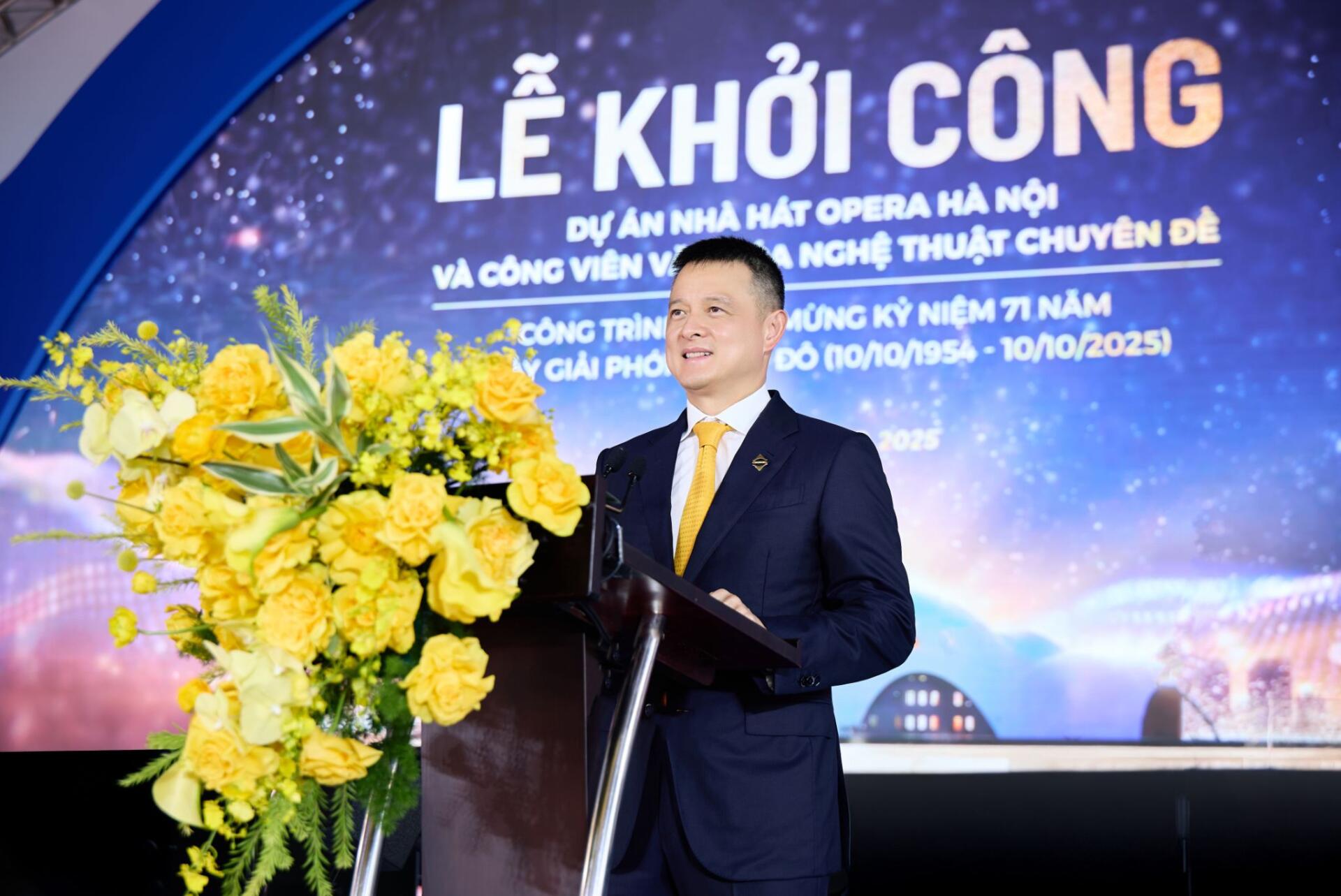
Mr. Đặng Minh Trường affirmed this is an honour for Sun Group (Photo: Sun Group).
According to him, the Hanoi Opera House will be a destination for top-tier artistic programmes, a place that gathers leading artists from around the world, and at the same time a bridge to bring Vietnamese culture to the world and bring the world closer to Vietnam.
At the ceremony, Vietcombank also presented a Letter of Credit Approval for the project, demonstrating the financial sector’s support for works with national symbolic value.
Connecting cultural heritage with contemporary aspirations
With the Hanoi Opera House, Hanoi will not only gain a modern cultural facility but also continue its tradition as a “creative city” — where art, architecture, and heritage go hand in hand with urban development.
Mr. Dương Đức Tuấn — Vice Chairman of the Hanoi People’s Committee — emphasised that under the Capital Planning for 2021–2030, with a vision to 2050, culture and heritage are identified as one of five development pillars. Investing in a symbolic theatre not only helps elevate the capital’s standing but also concretises the vision of a “creative – integrated – humane – sustainably developing Hanoi”.
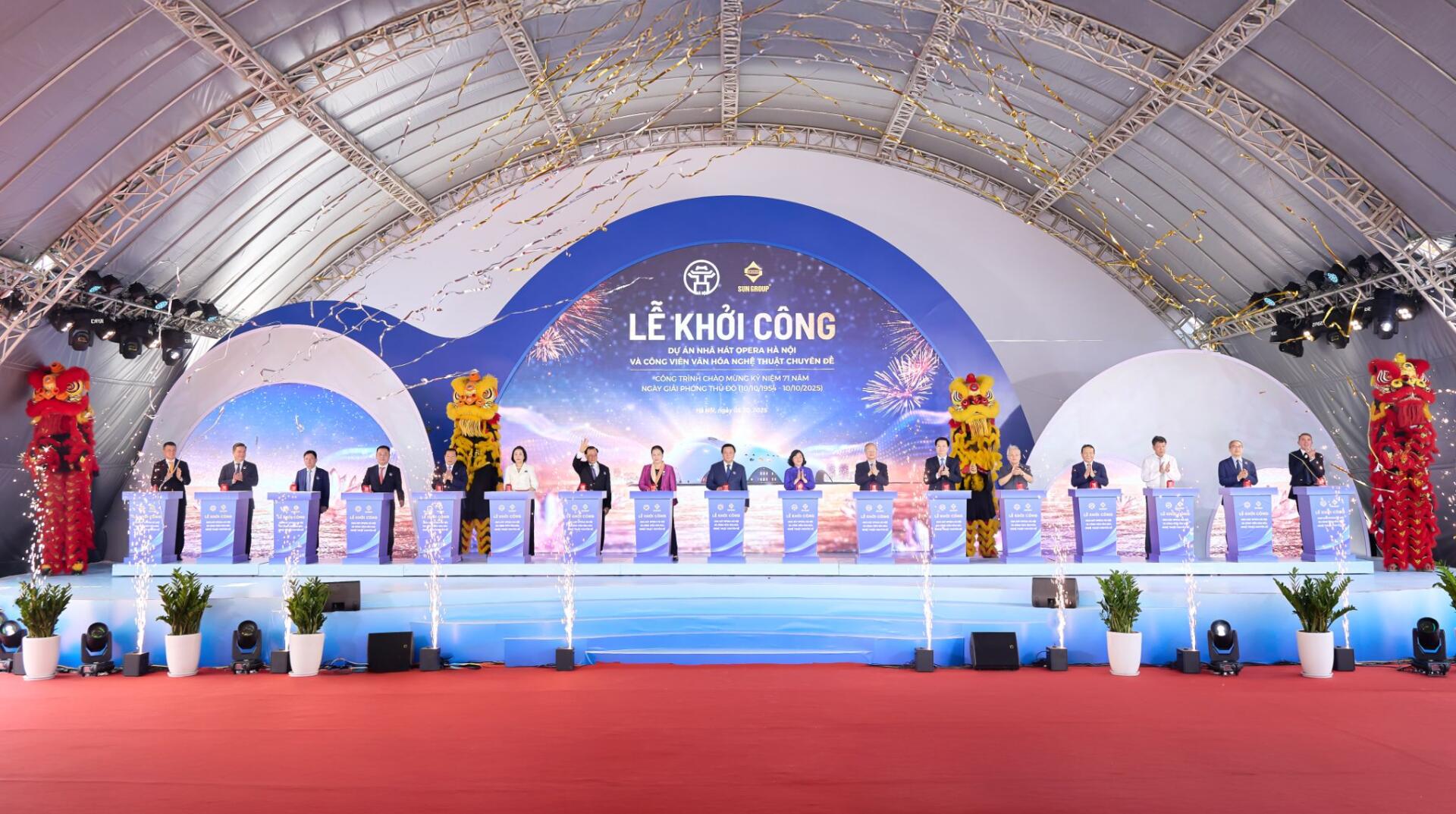
Delegates at the project’s groundbreaking ceremony, expressing expectations for a work that will elevate the capital’s cultural industries (Photo: Sun Group).
The project is also linked to directions for restoring the West Lake ecological space: improving lakes and ponds in the area such as the lotus pond at Phổ Linh Pagoda, Thủy Sứ Lake, planting West Lake lotus, cleaning and connecting the landscape system. In addition, eight boat piers and a water tourism route around West Lake will be added, including a pier right next to the theatre, making it easier for residents and visitors to access the site.
The space around the theatre is planned according to a green philosophy, harmoniously combining water, greenery, and architecture, with the aim of creating an “open cultural and arts park” where people can enjoy art while also experiencing the natural setting of West Lake.
A new temple of the arts for Hanoi
The building is designed by Renzo Piano — the legendary Italian architect and Pritzker Prize laureate (often compared to the “Nobel Prize of Architecture”), who has created globally iconic works such as the Pompidou Centre (Paris), The Shard (London), the Whitney Museum (New York)…
At the age of 88, Renzo Piano still directly participates and devotes his full commitment to the project in Vietnam. In a message sent to the groundbreaking ceremony, he shared: “I love this project, and I believe this is the project I love the most. Because this project is connected to music, and music is my passion. And a theatre is an island, a place that always carries something miraculous. Amid the waves, this island of music will be more splendid and full of magic. The most wonderful thing for me is to create a work where people come together, listen to music together, enjoy it, and share happiness.”
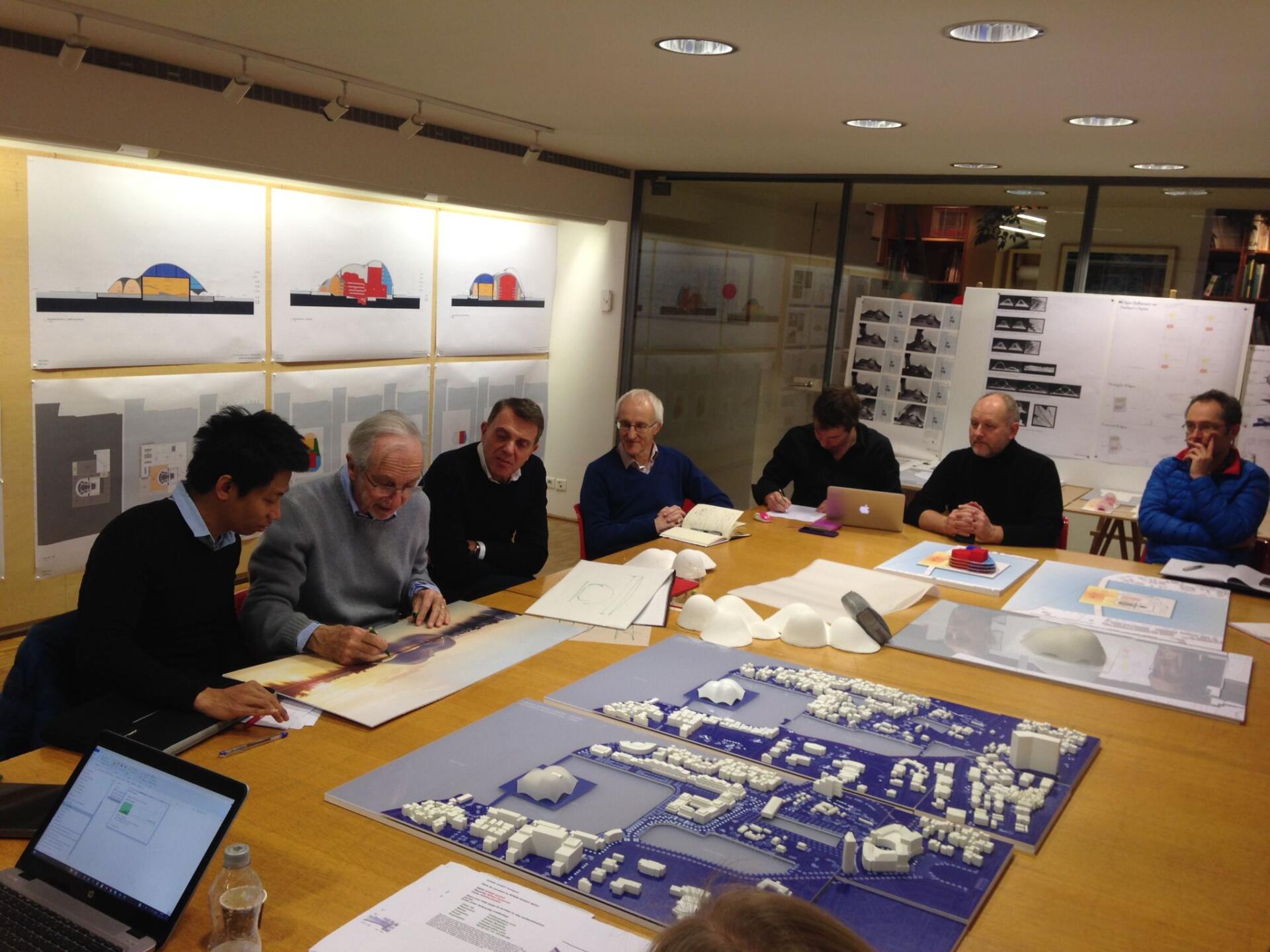
Architect Renzo Piano working with the project team for the Hanoi Opera House (Photo: Sun Group).
The opera house will have a total gross floor area of more than 40,000 m² (excluding parking and technical areas), equivalent to nearly six times the area of a standard football pitch. The building includes two main auditoriums:
- Opera auditorium with 1,797 seats, designed to meet international standards for acoustics and sightlines.
- Multi-purpose auditorium that can flexibly shift between performances and events, with a capacity of 1,430 standing places and 216 balcony seats.
Beyond the two main performance spaces, the theatre will also include a main foyer, rehearsal rooms, a museum, and supporting cultural spaces, planned as an arts–entertainment–creative exchange complex serving audiences of all backgrounds.
The most prominent highlight of the building is the “pearl dome” roof — an ultra-thin, ultra-strong structure inspired by the image of a pearl rising from the waters of West Lake. The roof surface is covered with light-reflecting materials, enabling the building to shift in tone throughout the day — and when sunset falls, the entire opera house will glow like a luminous pearl in the heart of Hanoi.
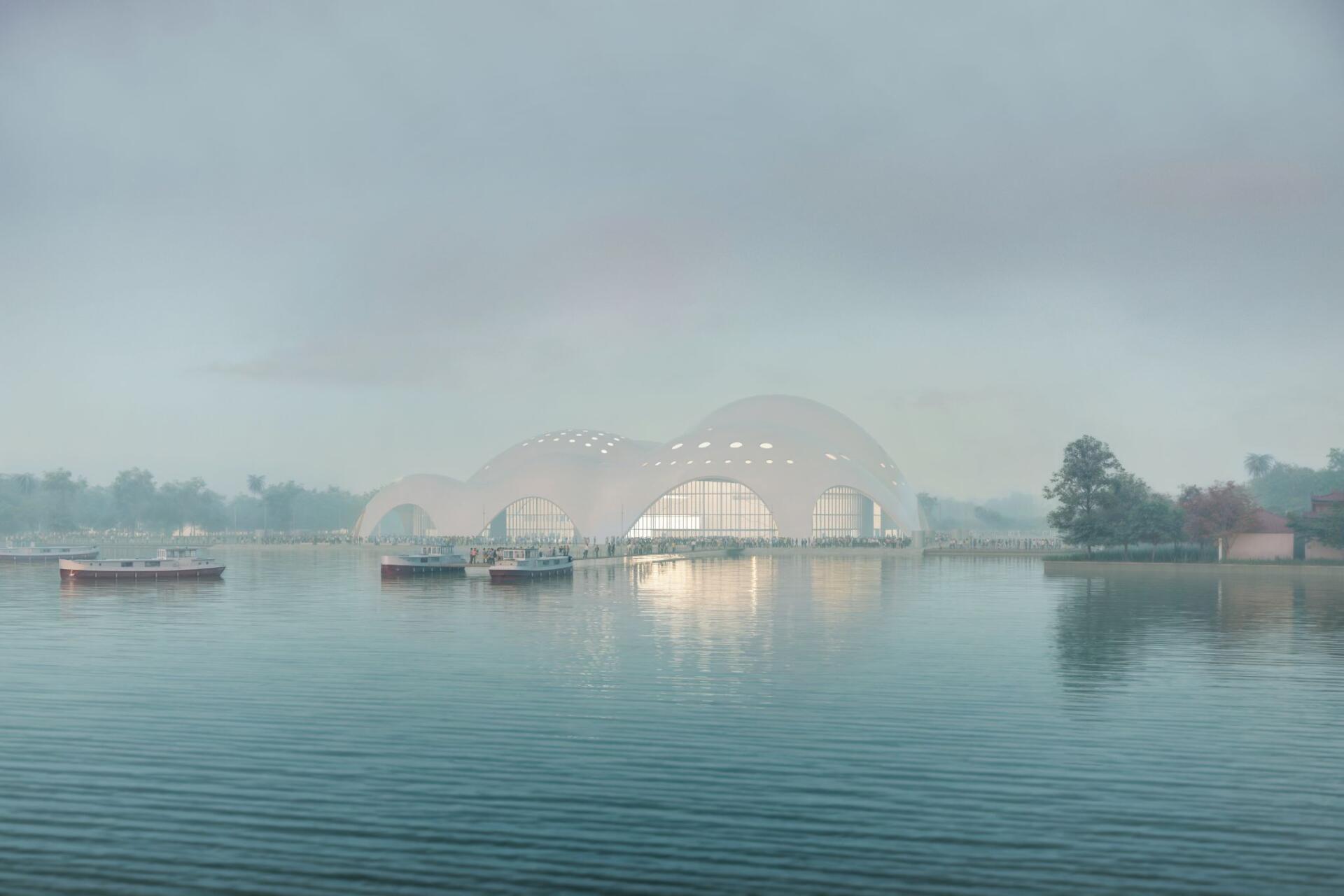
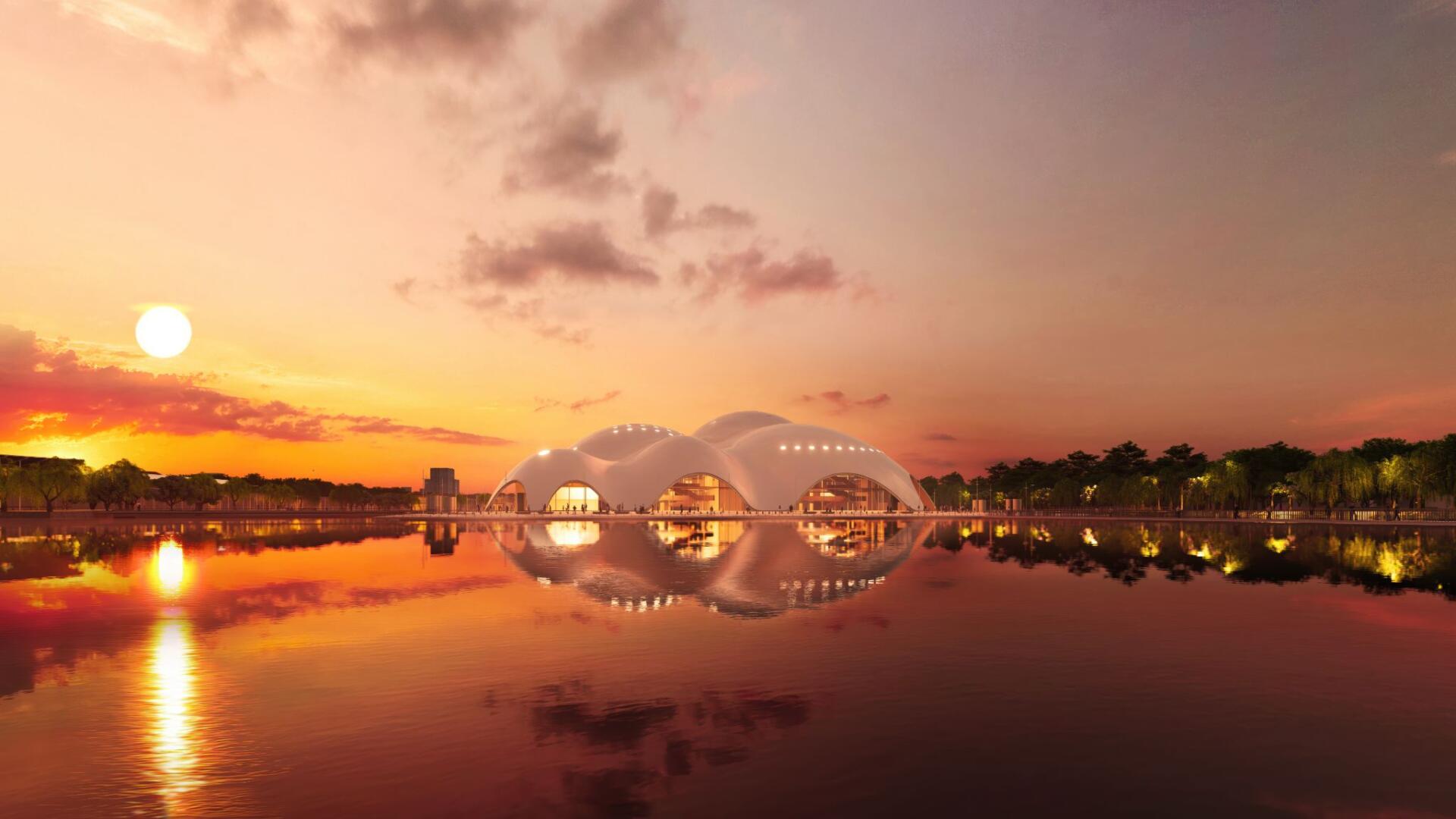
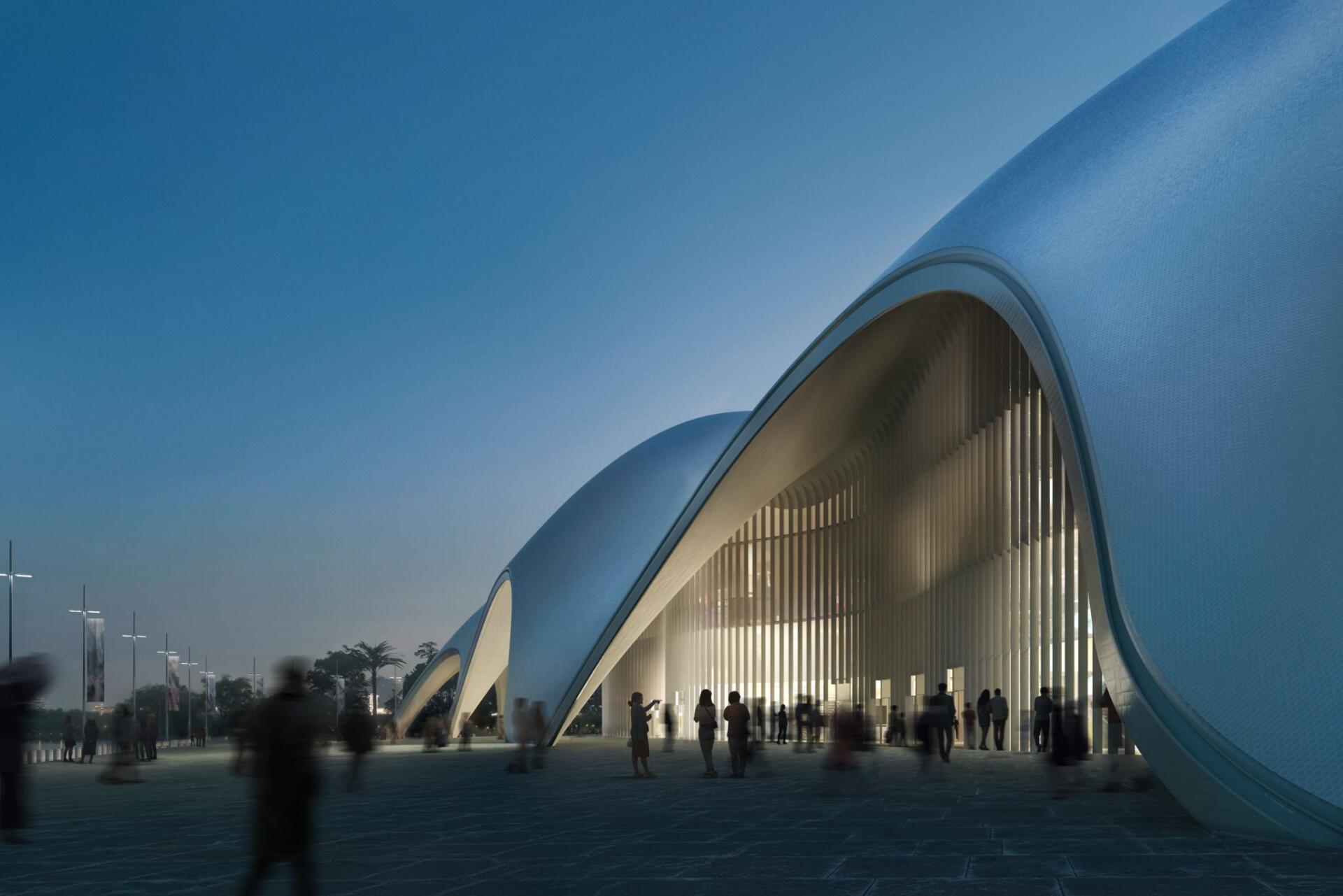
Architectural rendering of the opera house (Photo: Sun Group).
When completed in 2027, the Hanoi Opera House is envisioned as an international-calibre arts venue, capable of standing alongside the Sydney Opera House, Teatro alla Scala (Milan) or the Royal Opera House (London).
Not only will it be a venue for opera, concerts, ballet and international performances, it will also be a cultural and creative gathering point for the capital’s residents — where the public can access classical arts in a modern and approachable setting.
The project is expected to become a new cultural symbol of Hanoi in an era of integration, helping affirm Vietnam’s position on the world arts map. From there, culture will be not only heritage, but also the soft power of a nation rising strongly.