

AROUSE THE CULTURAL POWER OF THANG LONG – HANOI: OPPORTUNITIES AND ACTIONS

Culture is an invaluable asset of Thang Long – Hanoi, but has long been seen in the form potential but endogenous resources that can be compared with economics and politics. From the unprecedented guidelines in the Resolution of the XIIICongress of the Party, the XVII Congress of the Party Committee of the City, the Hanoi Committee has been creating an opportunity for all to act together, with the determination to arouse the cultural power of Thang Long – Hanoi worthy of the capital of thousands of years of culture.
The Hà nội mới newspaper introduces to readers the series “Arousing the cultural power of Thang Long – Hanoi: Opportunities and actions”, reflecting the efforts of the Party and people of the city in promoting cultural resources for the sustainable development of the Capital.
Lesson 1: “Here lies the soul of Vietam …”
” Đây Hồ Gươm, Hồng Hà, Hồ Tây. Đây lắng hồn núi sông ngàn năm… (Here Sword Lake, Hong Ha, West Lake. Here lies the soul of Vietnam…) ” – The lyrics on the opening song “Người Hà Nội (Hanoians)” by musician Nguyen Dinh Thi seem to bring the feeling about the sacred, pompous and ancient capital to Hanoi lovers. In these simple lyrics is a pride in the long history, culture – the enduring values that have been deposited on the land of thousands of years of culture, nurturing the soul and the essence of Vietnam throughout the long history.
Follow the millennial trail
The song “Người Hà Nội (Hanoians)” was composed by musician Nguyen Dinh Thi in 1947, when the resistance war against the French had only broken out for a few days and the whole of Hanoi had set out to evacuate according to President Ho Chi Minh’s appeal for national resistance. With great emotion, the talented 23-year-old has sketched a Hanoi in cultural space and historical depth with a series of famous landmarks, names associated with each heroic era, and affirmed that here lies the soul of Vietnam. This affirmation again shows the outstanding features of Thang Long – Hanoi, “a place of convergence, crystallization, spreading of the quintessence of national culture” – things that have been established since the time of the identity of Kinh Ky – Ke Cho, up to now still manifested through abundant creative capacity, the spirit of Thang Long is immutable with rich and unique heritage resources being rarely available anywhere.
According to Director of Thang Long Cultural Research Institute, Nguyen Viet Cuong, Thang Long – Hanoi with the characteristics of converging, crystallizing and spreading throughout more than thousand years of history, has been a place to attract and train talents for the country and also a place for talents to build careers and promote their strengths in the land of ancient literature.
Statistics from the Hanoi Department of Culture and Sports reflect a more detailed and realistic picture of Hanoi’s cultural heritage. It is a dense heritage system with 5,922 historical-cultural relics, scenic spots, including 1 world cultural heritage, 21 special national relics, 1,163 national relics and 1,441 city-level relics; 1,793 intangible cultural heritages of various types, of which 3 are registered by the United Nations Educational, Scientific and Cultural Organization – UNESCO as representative for intangible cultural heritage of humanity, 1 world documentary heritage and 20 national intangible cultural heritages.
Vice President of Vietnam Cultural Heritage Association, Le Thi Minh Ly said: “History shows that Hanoi is a land of integration and convergence of cultural values, is the country’s richest and the most diverse heritage resource over the country.”
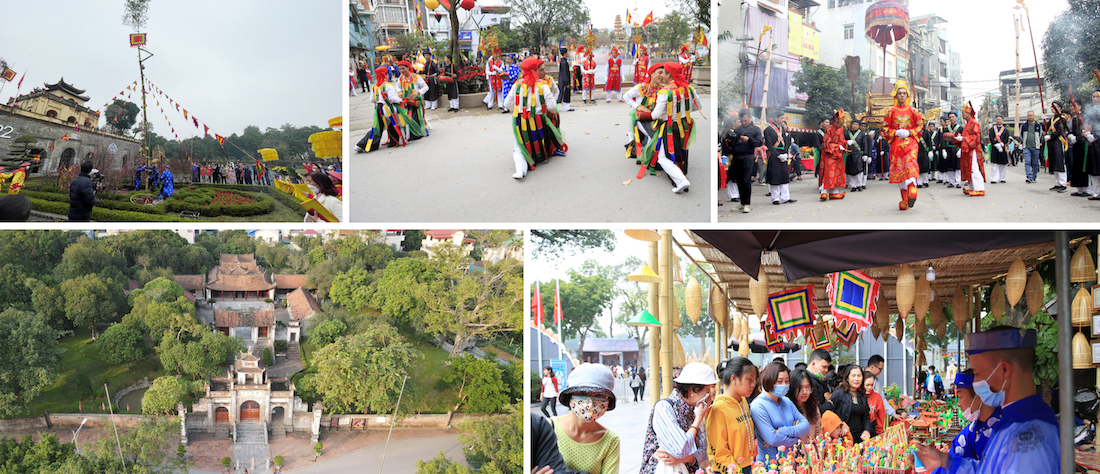
It can be mentioned that the Temple of Literature – Quoc Tu Giam – the very first university of Vietnam for the literature and doctor training; Thang Long Imperial Citadel – a heritage area as a center of power from the dynasty of Ly Thai To – Ly Cong Uan; Thang Long quadrilateral – a cluster of relics dedicated to the 4 gods who protect 4 sides of the citadel or the Old Quarter with dozens of streets that are the material for composing songs, folk proverbs …
In the cultural treasures left by the forefathers, there are hundreds of intangible cultural heritages with diverse types expressing the talent and aspirations of the people; for examples, Hoi Giong, Bat Trang pottery, Van Phuc silk, “bồng” dance, water puppets have been present since the creation of Thang Long Capital, or thousands of other heritages are typical representatives of many successive dynasties Ly, Tran, Le … Regardless of the role, these precious cultural capitals always reflect history, highlight the creative capacity and Thang Long spirit, and at the same time, preserving and protecting the traditions and cultural identity of Hanoi Capital.
Thang Long’s creative and spiritual capacity
Not only possessing a massive cultural heritage system, Hanoi is also a land for nurturing and promoting creative capacity, making creativity a great feature in the history of Hanoi’s creation and development. According to Dr. Phan Dang Long (former Deputy Head of the Standing Committee of the Hanoi Committee’s Propaganda Department), becoming the economic and cultural center of the whole Northern Delta region, Hanoi has also become the cradle of creativity. Gathering here are the quintessences of the regions of the country over the forming time for Thang Long – Hanoi having the classes of delicate residents, with aesthetic sense and love of art. “The crafts developed and formed Kẻ Chợ, with the inhabitants being “skilled or crafted”. Also from here, craft villages and craft streets were formed, typically the 36-street area as a testament to the creative spaces of ancient Hanoi”, Mr. Phan Dang Long emphasized.
It can be seen anywhere in the heart of the city for thousand years of cultural the creative imprints in the spirit of Thang Long, proving that Hanoi is always a place to nurture, converge and promote creativity. These can be timeless treasures, such as: The statue of Huyen Thien Tran Vu in Quan Thanh Temple; the relief carving of Lac Long Quan at Lac Long Quan Temple; statues of Arhat in Tay Phuong temple; statue of stone lions at the temple – Ba Tam pagoda… or very simple handicrafts such as “nón lá” – Chuong village , “tò he” – Xuan La. In the space of innovation and international integration, the creative capacity of Hanoians continues to be marked by cultural transformation products, expressed in many fields: Fine arts, music, cinema, performing arts…; highly competitive fields such as heritage tourism, journalism – publishing, public entertainment …; also developing in the direction of diversification, multi-disciplinary links to meet the needs of cultural enjoyment of the modern public.
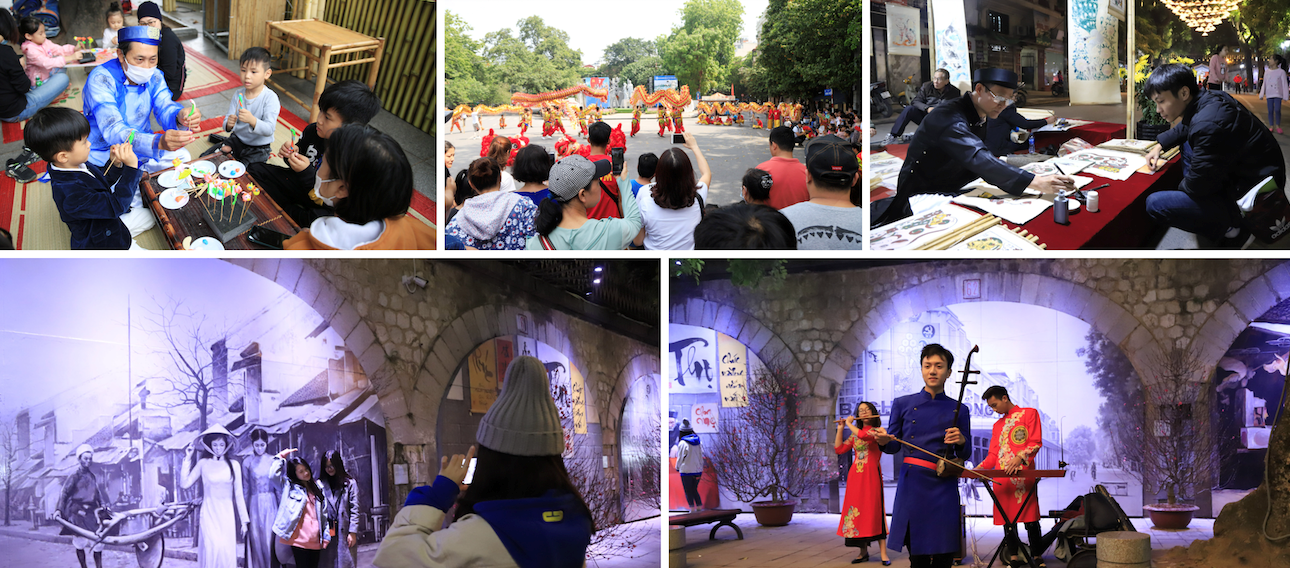
According to Director of the Vietnam National Institute of Culture and Arts, Nguyen Thi Thu Phuong, “Hanoi is a city of diverse cultural resources, with a system of thousands of dense heritages, rich cultural infrastructure, a network of 1,350 craft villages and new and rich creative communities including designers, artists, science and technology innovators and creative hubs throughout the city. Hanoi has been a place to nurture, converge and promote creativity…”.
These are also an important factors in creating Hanoi’s own identity in the way the city preserves traditions, shapes the present and aims to the future based on promoting cultural resources. It’s a matter of how to leverage and promote that resource!