
Effectively exploit value from “real and virtual” space in museums
The shows have created a deep, sophisticated artistic space, with the intersection of music and fine arts.
Many museums in Vietnam are now not simply places for periodic displays and exhibitions, but aim to provide a comprehensive experience for visitors from real space to “virtual” space. It is gradually becoming an important space where education and research meet to shape community understanding, from art and history to science and technology.
* Continuous creativity from the museum
At the end of April 2024, joining the atmosphere with the whole country towards the 70th anniversary of the Dien Bien Phu Victory, the Vietnam Museum of Fine Arts organized the program “When music blends with fine arts” for free for visitors.
Trong không gian trưng bày hội họa, điêu khắc về Chiến dịch Điện Biên Phủ hào hùng, đông đảo công chúng được thưởng thức nhiều tác phẩm âm nhạc nổi tiếng của Việt Nam như “Tiến quân ca”, “Làng tôi”, “Lên đàng”, “Nhạc rừng”, “Đất nước trọn niềm vui”, “Cô gái mở đường”, “Tự nguyện”…cho đến nhiều nhạc phẩm quốc tế nổi tiếng khác.In the exhibition space of paintings and sculptures about the heroic Dien Bien Phu Campaign, the public can enjoy many famous Vietnamese musical works such as “Tien Quan Ca”, “My Village”, “Len Quan Ca”. Dang”, “Jungle Music”, “Country full of joy”, “The girl who paved the way”, “Volunteer”… to many other famous international music.
Previously, in March 2024, an outdoor concert called “Spring Melody” also took place at the Museum, attracting a large crowd to enjoy and experience authentic music.
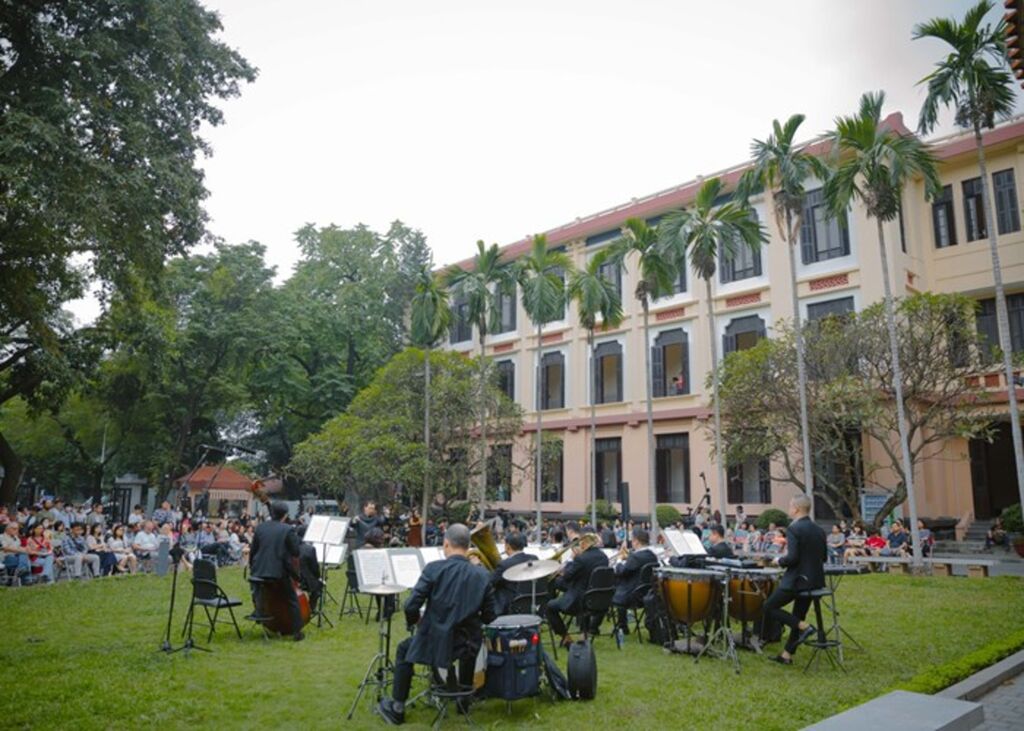
Photo: Vietnam Museum of Fine Arts.
Director of the Vietnam Museum of Fine Arts, Dr. Nguyen Anh Minh shared, from 2022, the Museum will coordinate with units and artists to carry out music programs to express gratitude to the art-loving public, including art. The shows have actively contributed to creating a profound and sophisticated artistic space in the heart of Hanoi, with the intersection of music and fine arts in the same destination.
From the first concert program at the end of 2022 until now, this place has positioned itself as an attractive cultural destination in Hanoi. It is admirable that the efforts of the Museum and its partners have been received by the public, the shows are always full of people to enjoy. The concert program in the art space of the museum in the capital of thousands of years of civilization is still small, so the efforts of the Vietnam Fine Arts Museum are very encouraging. The important thing is that the melody of the music blends with the colors of the painting, making the Museum a more attractive destination in the eyes of visitors.
The Vietnam Museum of Fine Arts is also a pioneer in digital transformation, strongly applying technology to display and attract the public in “virtual” space. Among them, the 3D tour launched in October 2021 allows us to experience 360 degrees of the regular display system on the online platform. Immediately after that, the Museum coordinated to create a 3D online exhibition – “Vietnamese Lacquer Paintings”, introducing 50 typical lacquer works, including the painting “Front Screen” by Artist Nguyen Gia Tri – a National Treasure. Viewers can also discover the history of development and lacquer painting techniques through documentary films. The exhibition was introduced in Vietnamese and English, then Korean and German were added, quickly attracting many international friends to participate in the experience.
Not stopping there, in October 2023, the Museum launched the Online Fine Arts Exhibition Space (VAES). This digital space is a 3D simulation of real space, where artists can find ways to display their works that suit their needs and creativity. Visitors can easily access it anytime, anywhere with just an internet-connected device.
Director of the Vietnam Museum of Fine Arts Nguyen Anh Minh clearly stated: The space for developing online art exhibitions is the first, strong and creative step to introduce and promote the value of fine art heritage. , the new international art state vitality. This space also shares information about the value of art products being kept at art museums, affirming the endless creativity of artist …
* Destination of romantic Hue
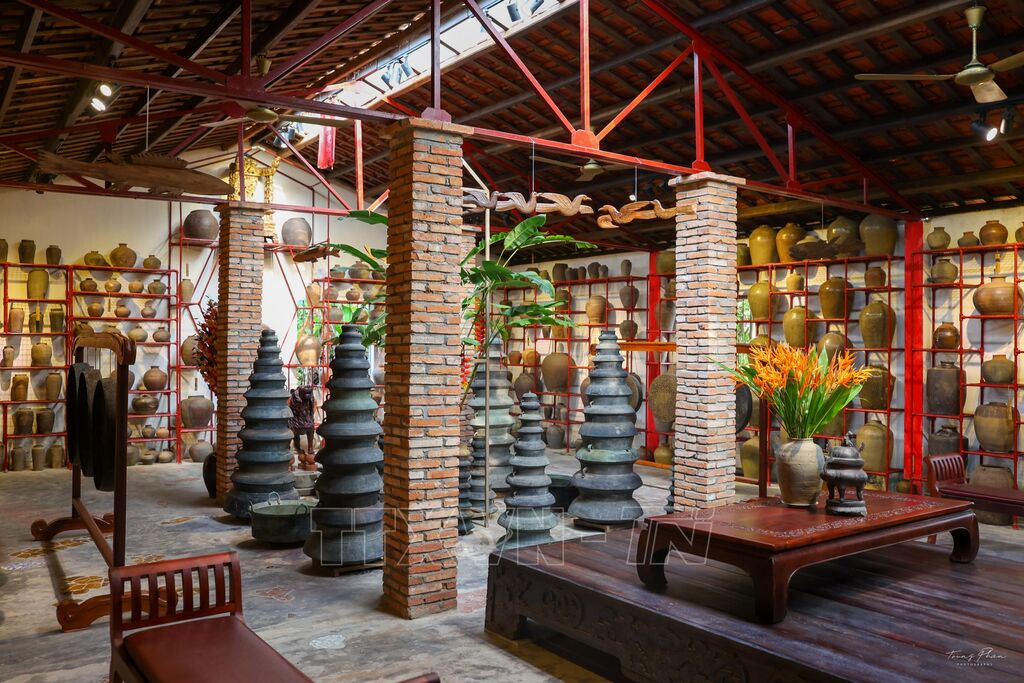
Photo: Huong River Ancient Ceramic Museum
The Museum of Ancient Perfume River Ceramics owned by Professor and Dr. Thai Kim Lan is located on the campus of the Thai Family Tu Duong. This is a traditional house area more than 100 years old with a church, monk’s house, tea porch, garden, flower beds, and ornamental plants, creating a typical garden house architectural complex of the ancient capital of Hue. This place has become an interesting sightseeing spot, an attractive cultural destination for tourists choosing the western Hue travel route, along the left bank of the Huong Giang River, and those interested in and researching Hue culture.
Professor and Dr. Thai Kim Lan informed that this place remains open regularly to welcome visitors. With a display area of about 1500m2, the Museum has 2,410 artifacts with 4 main collections: Porcelain collection (2017 artifacts), terracotta (35 artifacts), semi-porcelain (38 artifacts) and porcelain collection (320 artifacts).
Many large, professional travel companies in the province and big cities such as Hanoi, Ho Chi Minh City, Da Nang, Hoi An, Nha Trang… have coordinated to build a museum tour program Museum, Orchid Garden House (Thai Clan’s Tu Tang) and culinary experiences. This place is also visited, experienced, and promoted by famous travel websites, magazines, publications, Facebookers, Titoker, and Travel bloggers at home and abroad.
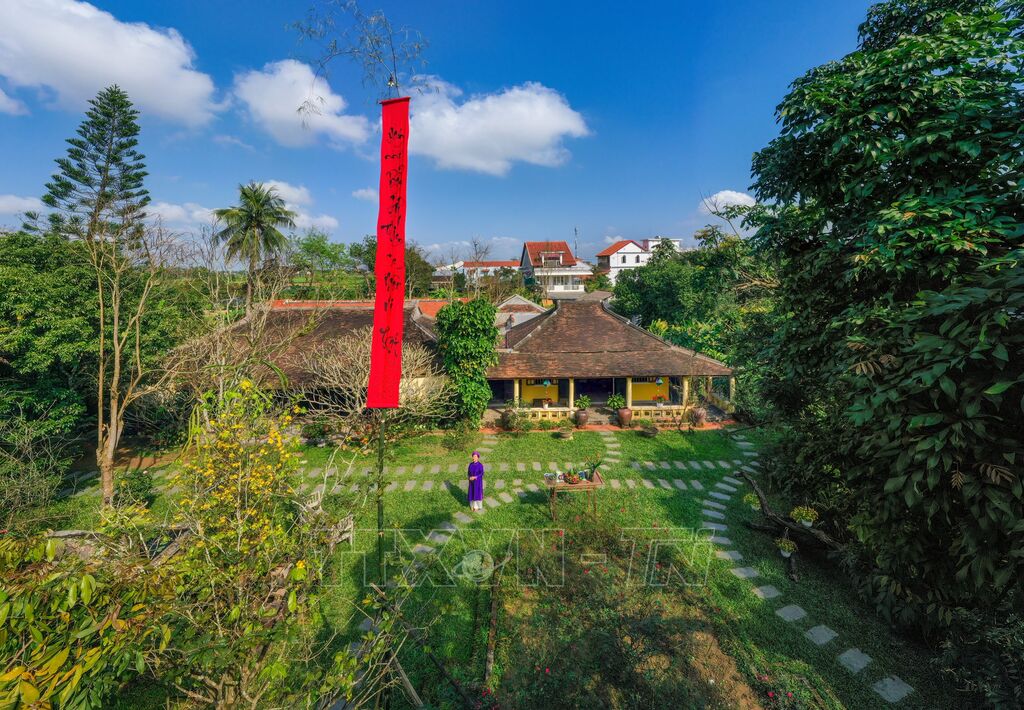
Photo: Huong River Ancient Ceramic Museum
The Huong River Museum of Ancient Ceramics has developed souvenir products based on sketches. This is a Postcard book that collects many sketches of the Ancient Orchid Garden and Museum by artist Duc Pham. More specifically, the Virtual Museum introducing the Ancient Orchid, the Museum of Ancient Perfume River Pottery and the Royal Ao Dai Collection on the website: http://thaikimlan.com has also been born and will be available to the public during the period. next time.
According to Professor, Dr. Thai Kim Lan, the Huong River Ancient Ceramic Museum is considered the first and only private museum in Vietnam (among 54 private museums) that only displays ancient ceramic artifacts. found from a river, in the province of Thua Thien – Hue. Through its activities, the Museum has contributed to preserving and promoting the traditional cultural values of the nation, especially Hue cultural heritage, bringing it closer to the public, creating more lively destinations. , promoting tourism and service development.
In the near future, Professor and Dr. Thai Kim Lan wants to expand the Museum of Ancient Huong River Ceramic, building an ao dai museum with the collection of Nguyen Dynasty ao dai she is preserving. The female Professor has a deep passion for Hue culture and shares: Fashion artifacts of the Nguyen Dynasty are in dire need of being preserved intact because the Museum’s current preservation conditions are limited and Hue’s climate is very harsh – dangerous. chance to influence the existence of this collection. The Huong River Ancient Ceramic Museum also hopes to receive support from the province in promoting it on propaganda channels and mass media to put this place on the list of unique cultural and historical tourism destinations.
According to the Department of Culture, Sports and Tourism of Thua Thien – Hue province, the system of non-public museums in Hue currently includes: Museum of Nguyen Dynasty-style Porcelain, Museum of XQ Embroidery Art, Museum of Ancient Song Ceramics Huong, General Nguyen Chi Thanh Museum and Cecile Le Pham Fine Arts Museum. This is considered a new source of energy in organizing museum activities in the province, attracting tourists, contributing to improving the level of spiritual and cultural enjoyment for the people.
Associate Professor, Dr. Dang Van Bai, Vice Chairman of the National Cultural Heritage Council, former Director of the Department of Cultural Heritage (Ministry of Culture, Sports and Tourism) commented: In the future, conservation Non-public museums in Vietnam will gradually increase, possibly more than public museums. That is not only a development trend in the world, but also a better condition for the public to access the cultural heritage values of the nation being kept and preserved by the community…/.