
LESSON 2: REALIZATION OF CULTURAL RESOURCES
Thang Long – Hanoi has diverse cultural resources, but it’s hard to promote this great resource. Inheriting cultural values crystallized from “thousand years of civilization”; and building new cultural values with the trend of the times will realize cultural resources for socio-economic development. To do that, it’s requires new thinking as well as many efforts and mechanisms and policies.
Challenges ahead
Thang Long – Hanoi contains a cultural treasure that cannot be found anywhere else, but to become a development resource is still a difficulty. There are many things to be done to preserve and promote heritage values in tourism to create a cultural industry with elements of the times. In other words, cultural development along with economic development as an endogenous resource is still a big challenge.
In fact, Hanoi has focused on investing in preserving and promoting heritage values as well as creating favorable conditions for the creation of cultural products, but Dr. Le Thi Minh Ly, Vice President of the Vietnam Cultural Heritage Association also frankly admits: “Hanoi has not identified cultural values from heritage specifically and closely to cultural creativity; has not built a database, specialized information, and a reasonable investment mechanism for the cultural industry”.
In fact, the space of Hanoi’s Old Quarter – a “living” heritage in the heart of the capital, with vibrant economic activities is facing many challenges, especially in solving the problem of preservation and development. The preservation of space, architectural landscape is facing many problems. Economic development, diverse business needs have made trade streets, trade wards changed; they are gradually disappearing. Meanwhile, solutions to improve the living conditions of people inside the streets and old houses have not yet been synchronized. On the other hand, cultural heritages and destination in the heart of the old quater have not been effectively connected for sightseeing.
Promoting the value of “hundred occupations” land is also a problem. “Nhat Nghe Tinh” – the skill of the artisan is the core element; however, it’s just a part of promoting the heritage of the craft village. To have products containing traditional culture and modern designs, meeting market requirements is also a big challenge for many craft villages.
Chairman of the Hanoi Association of handicrafts fine arts and craft villages, Ha Thi Vinh shared: “Most handicraft products are manufactured according to old models, with little improvement or creativity; a number of craft villages specialize in manufacturing according to ordered samples; The registration of trademarks and product designs has not been focused”.
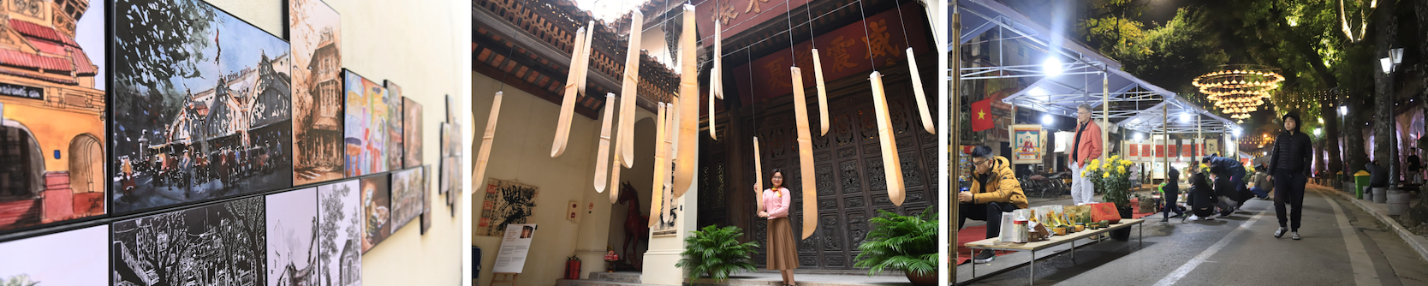
In the context of strong integration with the world, Hanoi has enrolled in the Creative Cities Network of UNESCO. However, the creative spaces, the destinations of culture – creativity, culture – economy have not been able to promote the creative economy, because people only focus on certain industries in the small scale and lack of connection and international promotion. Therefore, these spaces do not receive an intense creative life, have not linked with economic development.
And the core factor that makes Hanoi “quality” is elegant lifestyle, behavior – Trang An is showing signs of fading in the whirlwind of opening up and integration, losing its unique charm of Thang Long – Hanoi as a friendly and hospitable “destination”. Meanwhile, the cultural market is also facing many internal problems such as the protection of intellectual property rights, prevention of harmful cultural product; not to mention the fierce competition with foreign cultural industrial products.
Get motivated
In order for Hanoi Old Quarter to be truly a heritage space, an attractive cultural destination, former UNESCO Representative in Vietnam, Dr. Michael Croft said that: Hanoi has a designed culture in itself; inherited from a long history and cultural works directly connected with the development of economy and infrastructure. If managed effectively, it will be a great potential for the future of the city. Development planning must go along with actions of preserving and promoting cultural assets in the cities as they help shape the identity of the city with creativity and sustainability.
Promoting the cultural value of Hanoi craft villages in the current international economic integration context requires not only creative capacity but also market thinking. Along with creating a mechanism to encourage artisans to keep their “vocational enthusiasm” and transmit the profession to the younger generation, craft villages need to make in-depth training for each product type as well as improve the ability to apply technology in design.
Former UNESCO Representative in Vietnam, Dr. Michael Croft said that: Hanoi has a designed culture in itself; inherited from a long history and cultural works directly connected with the development of economy and infrastructure. If managed effectively, it will be a great potential for the future of the city.
And a specially important issue is forming thinking and cultural management methods in the new development context of the integration period to help cultural subjects shape their products in the direction of serving the community interests; at the same time, promoting internal resources and creative capacity in every Hanoian. Along with promoting the values of Hanoi people, the city needs to have root solutions for the healthy development of the cultural market; and renovating investment in cultural industry by creating mechanisms and policies, such as tax exemption and reduction, enhanced copyright protection, etc.
To make cultural resources to become spiritual values and important factor to promote the development of the capital, it’s required a new development thinking as well as mechanisms and policies.