
When “Minor Things” Become Cultural Assets
Cultural industries are often mentioned alongside grand concepts: heritage, museums, festivals, or cinema. However, in Hanoi, another flow is quietly forming from very small things: a bar of soap, a candle, a piece of paper, a scrap of leather. When these are narrated, designed into experiences, and connected into a community, these “minor things” gradually form a value chain and find their place in the market.
In reality, culture does not exist as an isolated element. It is an integrated product of material, aesthetic, intellectual, and memorial values, interwoven with social relationships. Before becoming an “input” for enterprises, culture inherently belongs to the community and daily life. It is precisely from these small, dispersed, and seemingly marginal practices that cultural industries can form in a sustainable way.
Packaging Cultural Products from a Bar of Soap
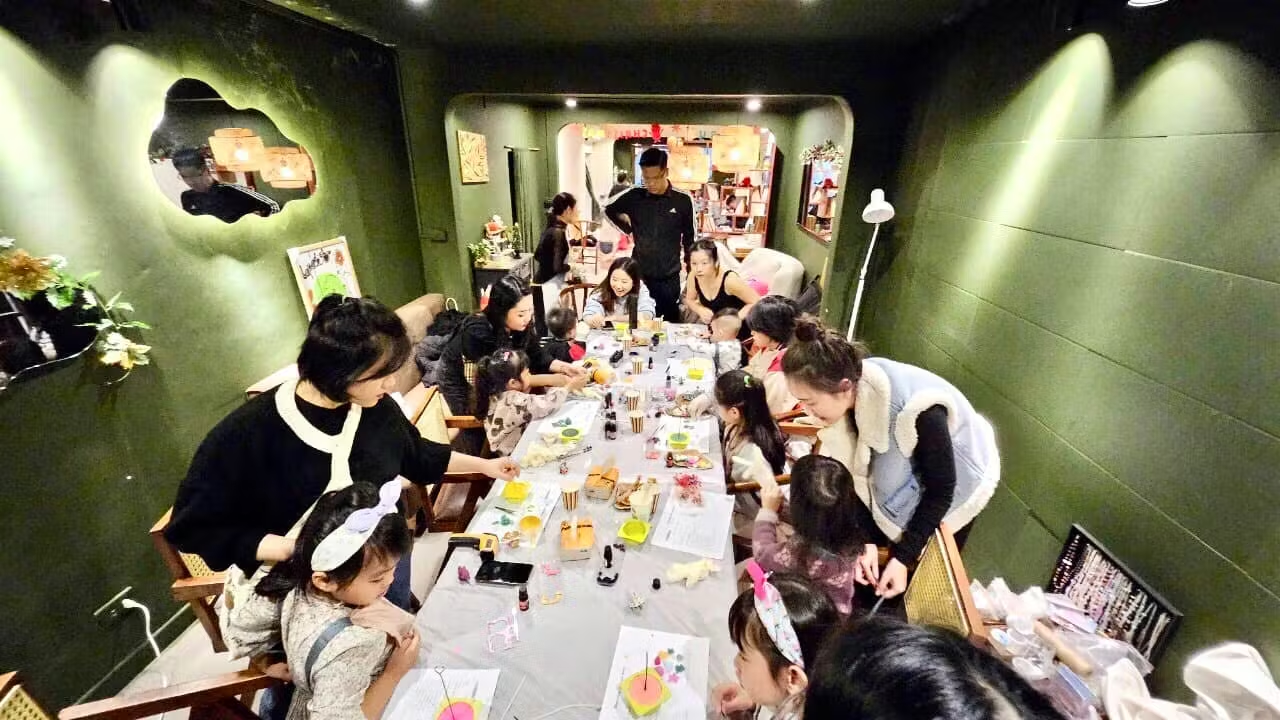
For over a year, every weekend, Dreamery Cafe (Ba Đình, Hanoi) has become the venue for soap and scented candle-making classes by Oniria Craft House. The participants are primarily children, but what happens here goes beyond a mere recreational activity. Under the guidance of artisans, familiar materials like beeswax, soy wax, or natural essential oils are linked to festival stories, fine arts, and a green lifestyle.
Image: Onira Craft House
Soap and candles, traditionally mass-produced and anonymous industrial commodities, are transformed into cultural products when placed within experiential spaces, personalized, and integrated into a creative narrative. In this context, value is derived not from mere utility, but from the experience, memory, and direct participation of the creator.
Consequently, a niche market is steadily emerging around workshops, experiential activities, and training, attracting both children and adults. What is remarkable is not just the handicraft trend itself, but how experiential services have evolved manual activities into a form of creative economy—one characterized by design, storytelling, interaction, and a customer base willing to pay a premium.
The ‘New’ Craft Community and the Value Leap
For years, handicrafts were primarily associated with traditional craft villages and artisanal groups. However, the current landscape has expanded significantly, with paper, leather, candles, and essential oils becoming new creative mediums. This diversity reflects a clear demand for personalization, a desire for bespoke products, and the rise of the ‘experience economy’ in urban life.
In Hanoi, the list of venues hosting handmade candle workshops alone has grown extensive. More importantly, this ‘new’ craft movement prioritizes design and creative individuality. Origami, once a simple pastime, has evolved into fine art, often carrying local imprints when artists utilize traditional Dó paper. Similarly, Kirigami (the art of paper cutting and folding) and leather carving serve as prime examples of a creative system based on modest materials and delicate techniques that generate substantial value.
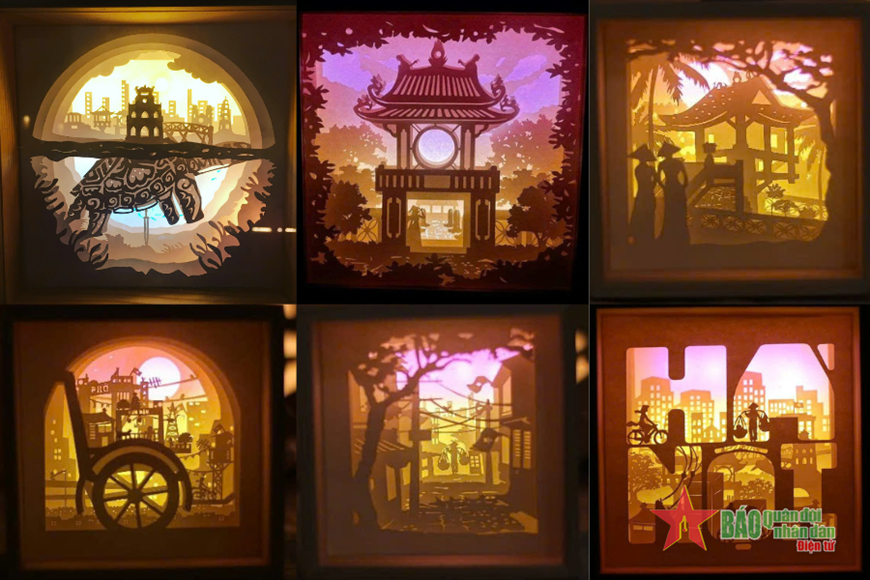
These artistic paper lanterns depict images of Hanoi in a remarkably vivid way. Image: Báo Quân đội nhân dân
The shift lies in the nature of competition. Products are no longer priced by their raw materials, but by ideas, craftsmanship, aesthetics, and storytelling. A hand-carved leather wallet can command a price in the tens of millions of VND due to its uniqueness and the concentrated creative labor involved. From these examples, cultural industries emerge as a network of small-scale yet numerous creative laborers, forming a formidable and significant workforce community.
From Creative Fragments to the Heritage-Market Equation
Reality from UNESCO-recognized heritages such as Hue Royal Court Music, Ca Tru, or Don Ca Tai Tu demonstrates that heritage cannot endure if it relies solely on patronage or exists in isolation. Experiences from East Asian nations indicate that heritage only gains true economic vitality when integrated into a complete value chain, where preservation, education, and the market mutually reinforce one another. The narrative of soap, paper, leather, or scented candles, when placed within the cultural industry framework, addresses the very question of heritage viability. Consequently, cultural industries do not ‘hollow out’ heritage; rather, they serve as a medium for heritage to naturally permeate contemporary life.
In Vietnam, despite a wealth of heritage resources, the flow of circulation remains weak due to bottlenecks in design, branding, intellectual property, and market capacity. These ‘minor things’ are, in fact, significant barriers preventing handicrafts and traditional arts from scaling up. To address this, it must be recognized that cultural industries rarely emerge from large-scale projects at the outset. Instead, they result from the gradual accumulation of small fragments: a workshop, a bespoke product, or an artisanal community—all forming a solid social and creative foundation.
The relationship between workshops and fairs serves as a microcosm of cultural circulation. If a workshop is the starting point of creativity, then a fair is the first step toward the market. The Hanoi Creative Design Festival 2024 proved that a market does not form spontaneously without intermediary spaces. When selection criteria emphasize original creativity and craftsmanship, fairs become essential connective points between practitioners, investors, and the public, enabling cultural resources to operate sustainably rather than just flaring up during festival seasons.
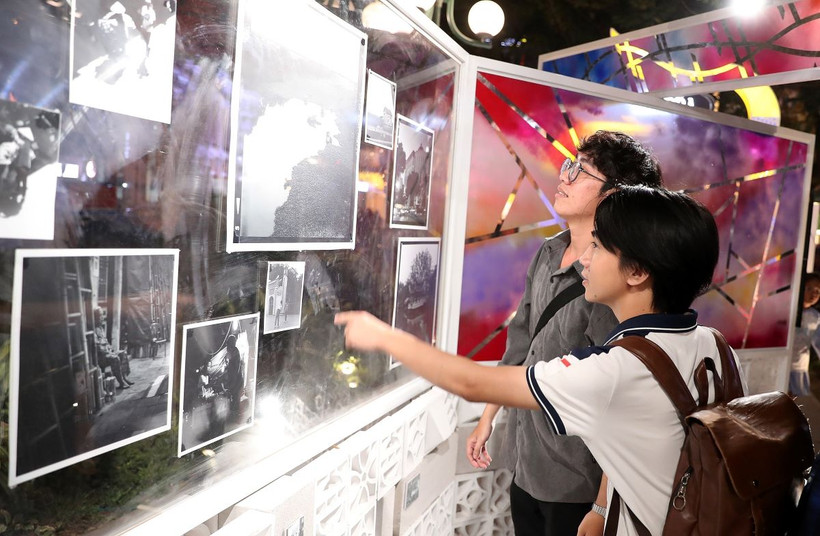
Hanoi residents visit and experience the Creative Design Festival. (Image: Quốc Khánh/TTXVN)
Looking deeper, the primary ‘bottleneck’ currently lies in the ‘mismatch’ between management mechanisms and market realities, alongside the absence of an intermediary class capable of linking creative communities with industrial sectors. Massive amounts of heritage data have been digitized but remain ‘idle in storage’ due to a lack of benefit-sharing and creative exploitation mechanisms. This leaves traditional art forms struggling between fragmented survival models: either tied to tourism, reliant on patronage, or languishing within the community without truly becoming an economic sector.
Therefore, promoting cultural industries is not about building a few more grand projects, but about reorganizing the roadmap from the smallest details. It is about connecting individual creative fragments into a shared ecosystem, where traditional values are empowered by technology and modern branding mindsets. When these small things are nurtured and correctly positioned, they are no longer disjointed but become vivid materials for a creative economy imbued with Vietnamese identity—helping culture thrive in the present while retaining its communal soul.