
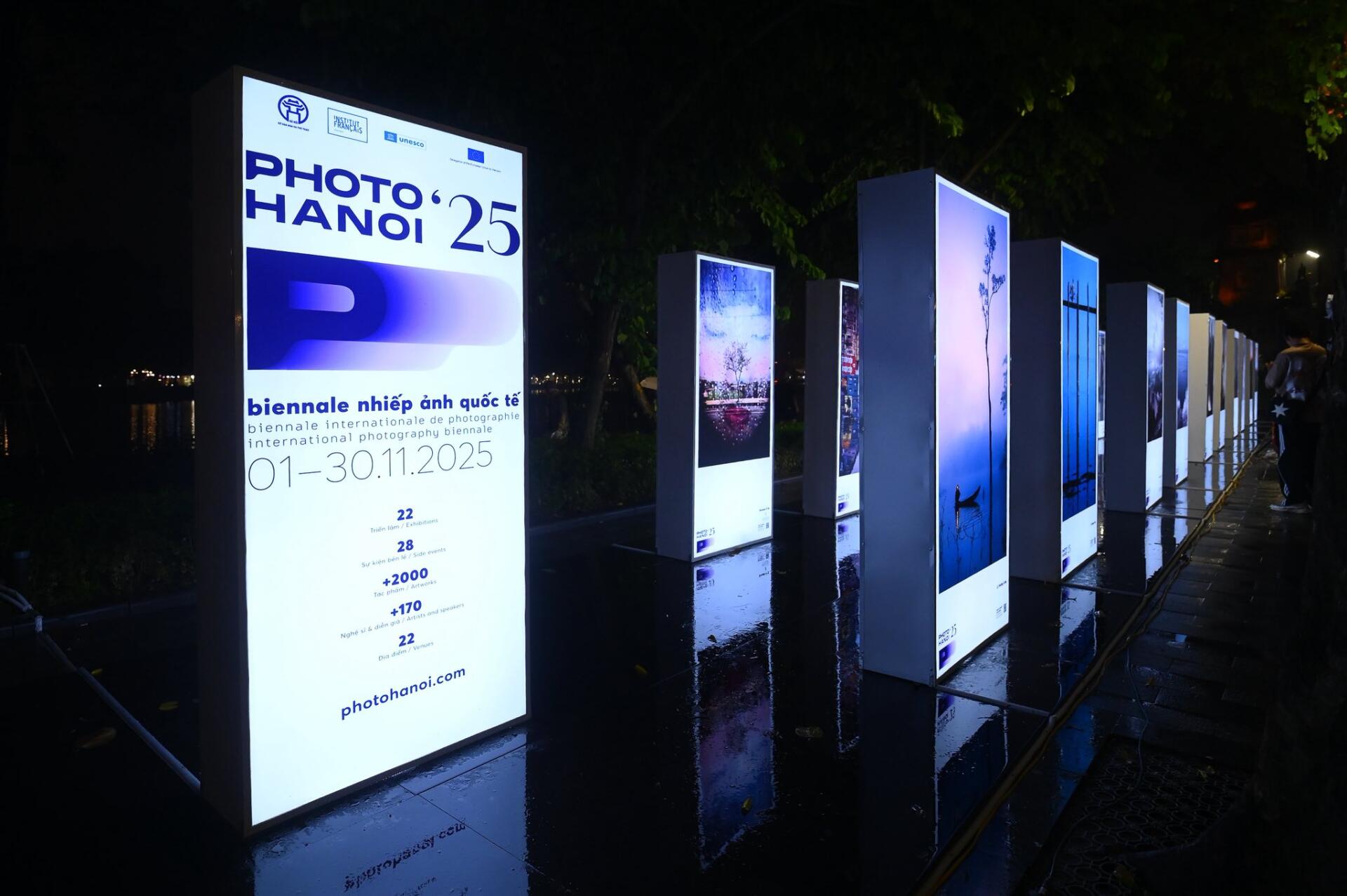
Biennale Photo Hanoi ’25: Propelling Hanoi into a Creative Photography Hub
In November 2025, Hanoi experienced a vibrant and profound “photography season” with the Biennale Photo Hanoi ’25, initiated by the French Institute in Vietnam. Spanning from November 1 to 30, 2025, the event brought together over 170 multi-national artists and featured 22 exhibitions alongside numerous professional activities, transforming streets, cultural spaces, and heritage sites into a sprawling visual map.
Photo Hanoi ’25 demonstrates that Hanoi is gaining a new “light source” within its creative city ecosystem: photography as a contemporary art language that is capable of international dialogue while touching deeply upon urban memory and community life.
Narrating Urban Stories Through Visual Language
The significance of Photo Hanoi ’25 lies not in the sheer volume of exhibitions, but in the way Hanoi is revisited through every frame. Photography moves beyond the mere presentation of aesthetics to open a profound dialogue on humanity, memory, and urban transformation.
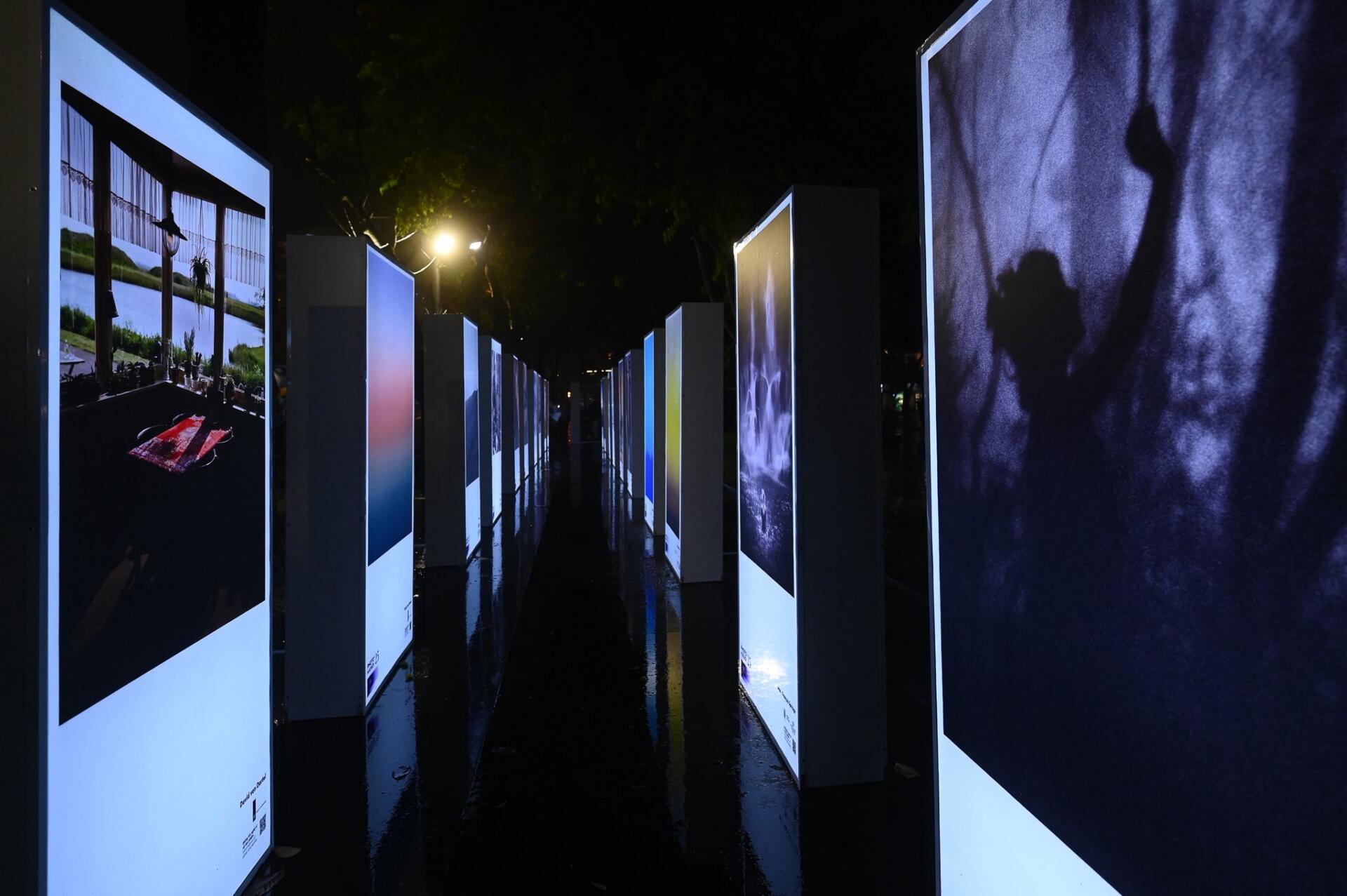
The “Landscapes Along” exhibition on the shores of Hoan Kiem Lake, as part of the Biennale Photo Hanoi ’25. Photo: Biennale Photo Hanoi
Visual artist Nguyen The Son, Curator of Photo Hanoi ’25, remarked: ‘Each biennale acts as a mirror reflecting the city’s life. Many students have chosen to pursue fine art photography after visiting the exhibitions, as they realize that photography is more than just a recording tool—it is a narrative medium and a form of visual thinking.’
After two editions, Photo Hanoi is gradually evolving into a platform for exchange and visual experimentation, where photography is recognized as a language of the modern era. The success of the event also creates further opportunities for young Vietnamese artists to access international professional networks, gain insights into exhibition management and organization, and expand creative collaborations.
Local Engagement, Sustainability, and Socio-Economic Impact
An arts festival is measured not by its scale or prestige alone. Its long-term success is defined by three pillars: local engagement, sustainability, and socio-economic impact.
Ms. Sophie Robnard, representing the Institut Français in Paris, shared that France’s photography network is highly dynamic, with artists supported in bringing their work to the world stage through a system of embassies, French Institutes, and international festivals. This approach allows photography to function as a cohesive ‘ecosystem’ rather than a series of fragmented events.
Conversely, curator and cultural coordinator Céline Gourgues highlighted the case of Photo Australia in Melbourne. Despite high initial acclaim, it was forced to dissolve after three editions due to funding shortfalls and difficulties in connecting with the indigenous community. The lesson is clear: without genuine community involvement and a stable resource mechanism, even the most praised events can easily lose momentum.
In the case of Hanoi, Photo Hanoi ’25 has proven its immense appeal, yet infrastructure challenges persist. Many exhibitions had to utilize private spaces, placing the heavy burden of organization—from site renovation to exhibition management—on curators and artists. This gap reflects a broader issue within cultural institutions, both from the perspective of state management and the art market.
Nevertheless, Photo Hanoi ’25 recorded positive signals from the regulatory side. Coordination between authorities and organizers was noted to be more flexible, indicating a shift in awareness towards a partnership-driven approach with international artistic activities.
From a Month-Long Event to the Ambition of a Creative Photography Hub
Closing on November 30 after more than a month of activities, Photo Hanoi ’25 recorded over 200,000 interactions, including both in-person and virtual participation. As shared at the closing ceremony by Ms. Bach Lien Huong, Director of the Hanoi Department of Culture and Sports, the event attracted coverage from over 100 media outlets with more than 500 articles in various languages, marking a significant cultural milestone for the capital.
UNESCO Representative to Vietnam, Mr. Jonathan Baker, observed that Photo Hanoi ’25 demonstrates the power of photography in connecting people across cultural divides, sparking dialogue, and opening new global perspectives. More importantly, he emphasized the vital role of the local creative community and the energy of young artists in nurturing Hanoi’s creative ecosystem.
From an urban development perspective, Photo Hanoi ’25 serves as a ‘capacity test’ for Hanoi: demonstrating its ability to mobilize international partners, activate urban spaces, engage the youth in artistic life, and gradually build a brand for a creative sector that still lacks professional infrastructure.
The next challenge lies in how Hanoi can sustain this ‘light’ long after the event concludes. To move beyond the ambition of a single brilliant month, the city requires more durable links: professional exhibition spaces, long-term funding mechanisms, a robust team of cultural intermediaries, and an integrated network for education, practice, and archiving. The goal is to ensure that photography is not merely a recurring event, but a fundamental pillar of the city’s creative life.