
Commercializing OCOP: Why Do Certified Products Still Struggle to Generate Sales?
The “One Commune, One Product” (OCOP) program has helped standardize local products and expand the scale of participation nationwide, especially in Hanoi—the leading locality in terms of the number of categorized products. However, market reality shows that: OCOP certification does not automatically equate to stable sales performance. When branding, distribution, and value chains are not organized synchronously, many products—despite achieving star ratings—struggle to maintain a foothold in the retail system and fail to create sustainable purchasing power.
Craft Village Brands Not Yet Linked to OCOP
Hanoi possesses over 1,350 craft villages, including more than 300 traditional craft villages, accounting for approximately 40% of the country’s total. This is a rare and exceptional advantage from an OCOP brand development perspective: each village is tied to a history of trade, indigenous knowledge, handicraft skills, and a community of artisans—elements capable of creating distinct value in the market.
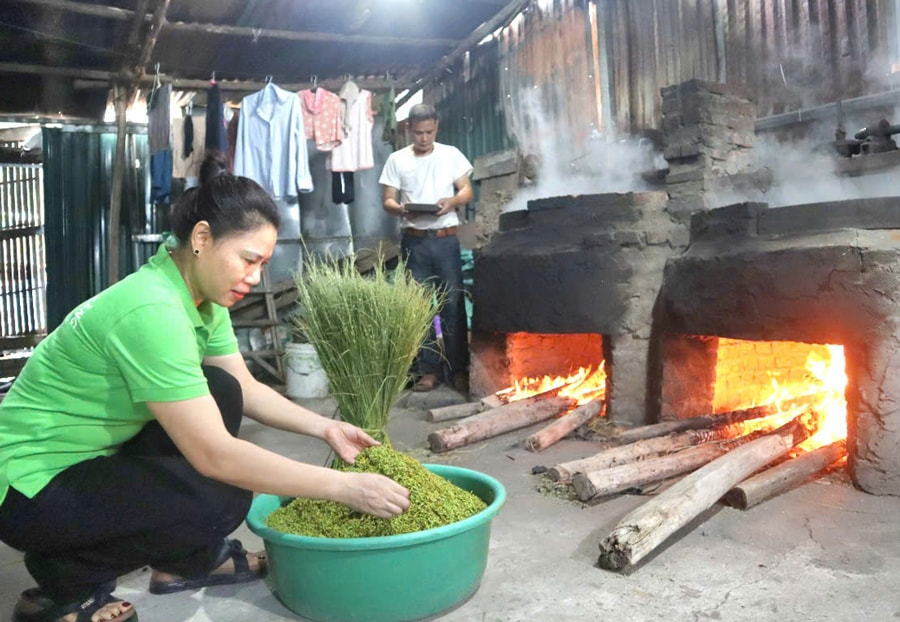
Cốm production in Mễ Trì Ward (Nam Từ Liêm District). Photo: Hanoi Moi
In reality, some 5-star OCOP products in Hanoi have effectively leveraged this foundation by associating products with the story of the craft village, the role of artisans, and the combination of traditional craftsmanship with modern technology. These products not only meet quality standards but also establish a clear identity, reaching discerning markets and demonstrating potential for international expansion.
However, the majority of current OCOP products have yet to fully exploit the cultural depth of craft villages. Many products have only reached the stage of completing technical profiles, packaging, and evaluation criteria, while their brand stories, design languages, and product positioning remain lackluster. In the absence of a distinct identity, OCOP certification becomes merely a general benchmark rather than a competitive advantage.
Insights from seminars on craft village development linked to OCOP consistently highlight the necessity of shifting from a ‘production-oriented’ mindset to a ‘brand-oriented’ one: treating quality as the core while innovating design, building cultural narratives for each product, and integrating products with tourism-cultural experiences. When craft villages function solely as production sites without a consistently told brand story, OCOP products struggle to establish a sustainable reason for purchase in the market.
Product Standardization Outpaces Market Operational Standardization
According to statistics from the Ministry of Agriculture and Rural Development, as of September 2024, Vietnam has 14,085 OCOP products rated 3 stars or higher, with 3-star products accounting for over 72%. Hanoi leads the nation with more than 3,300 classified products, representing over 20% of the country’s total OCOP inventory.
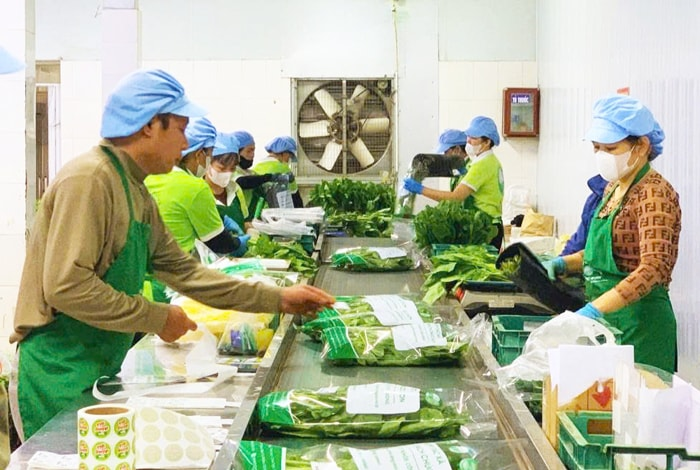
Pre-processing and packaging of clean fruit and vegetable products at Chúc Sơn Clean Fruit and Vegetable Cooperative. Photo: Hanoi Moi
These figures clearly reflect the effectiveness of OCOP in expanding scale and standardizing products. However, the market does not operate on the logic that “standardization automatically guarantees sales.” Reality shows that many OCOP products still struggle to access modern distribution systems, facing unstable consumption and often “stagnating” after promotion campaigns.
According to VietnamPlus, many OCOP products—especially those from small-scale entities—face difficulties in meeting the requirements of modern retail channels, such as invoices, documentation, traceability labels, transaction procedures, and the capacity to coordinate promotions with retailers. In some cases, products have successfully been exported yet still struggle to enter domestic supermarkets due to a failure to meet full operational requirements.
The core issue is that product standardization is advancing faster than business operational standardization. For a product to achieve consistent sales, it requires an entire ecosystem: contracts, payments, logistics, preservation, supply schedules, packaging standards, and the ability to maintain stable output. Meanwhile, many OCOP entities still operate on a small scale, with limited capital, processing and preservation technology, and management capacity, making it difficult for their goods to “stay” long-term in modern distribution channels.
Evidence from specialized farming areas in Hanoi indicates that OCOP products linked to concentrated raw material areas with clear production-consumption chains tend to have better market access. Conversely, when production remains fragmented, lacks linkage, and suffers from underinvestment in post-harvest stages, OCOP certification only serves to cross the initial evaluation threshold—it is not yet enough to guarantee sustainable purchasing power.
Abundant Trade Promotion, but Lacking a Sustainable Revenue Structure
In recent years, Hanoi has intensified trade promotion for OCOP products through fairs, specialized weeks, exhibitions, and a network of product showrooms integrated with culture, tourism, and craft villages. These activities have contributed to increasing brand recognition, establishing initial consumer trust, and expanding market access opportunities.
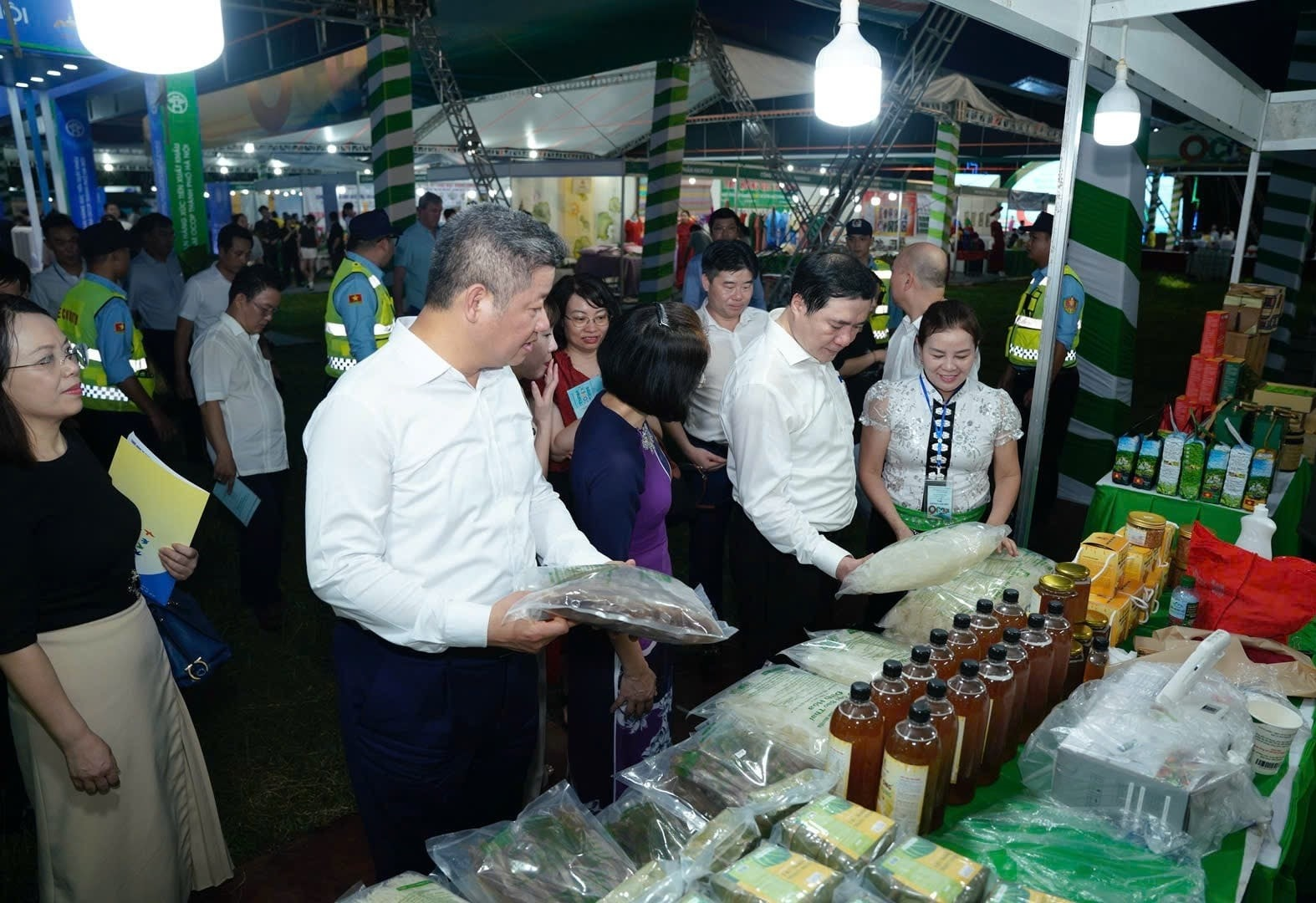
Delegates visiting VIETNAM OCOPEX 2025 Fair. Photo: Bích Loan
However, reality indicates that event-based promotion does not automatically translate into sustainable revenue. According to the Central New Rural Development Coordination Office, OCOP products are currently consumed primarily through traditional channels; the volume of products consistently available in supermarkets and commercial centers remains limited, accounting for only over 10%.
According to Ms. Trinh Kim Thu, General Director of MD Queens Joint Stock Company, while OCOP elevates brand status and builds consumer confidence, the majority of small-scale entities still lack the necessary procedures, documentation, and commercial capacity. There is a pressing need for more points of sale, consultancy, and particularly long-term communication strategies to encourage regular purchasing habits rather than sporadic buying. From a management perspective, there have also been proposals regarding re-evaluation fees upon expiration and the necessity for market support for craft village and agricultural products.
The common thread among these reflections is: While promotion exists, a structure for recurring revenue is lacking. While the market demands a consistent sales rhythm, OCOP currently relies heavily on short-term campaigns and events. In a context where the number of products is increasing rapidly but lacks brand strategy and market organization, the risk of being “numerous but not strong” becomes evident: a proliferation of similar products, difficulty in creating differentiation, and intensifying internal competition.
From the practical experience of Hanoi, it is clear that OCOP only truly realizes its value when integrated into a complete business structure: selecting key products, developing brands associated with craft villages and cultural identity, forming stable supply chains, and establishing distribution links through long-term mechanisms. Only then can OCOP transition from a mere product standardization program into an effective tool for market organization and sustainable growth.