
Cross-Border Creative Investment: Hanoi Expands International Cooperation Through Connectivity from Creative Platforms
Increasing international connectivity is not just about calls for collaboration; it begins with Hanoi creating platforms “open” enough for creative resources to converge and connect. Looking at recent practices, three “slices” demonstrate how the city is opening its doors to integration: the Hanoi Creative Design Festival 2024, Biennale Photo Hanoi’25, and art residency projects—exemplified by the MAP Project initiated by Heritage Art Space since 2016.
Hanoi Creative Design Festival 2024: A Platform for Multi-Party Collaborative Testing
The Hanoi Creative Design Festival 2024 aims for a core objective: cross-border creative investment to expand markets, enhance learning capacity, promote intersectional innovation, and contribute to the city’s competitiveness and brand. At the platform level, the festival operates as an urban “mega-exhibition”: spanning the entire city, maintaining a strong presence in public spaces, and gathering diverse forms—from exhibitions and architectural pavilions to performances, talks, seminars, and creative product fairs.
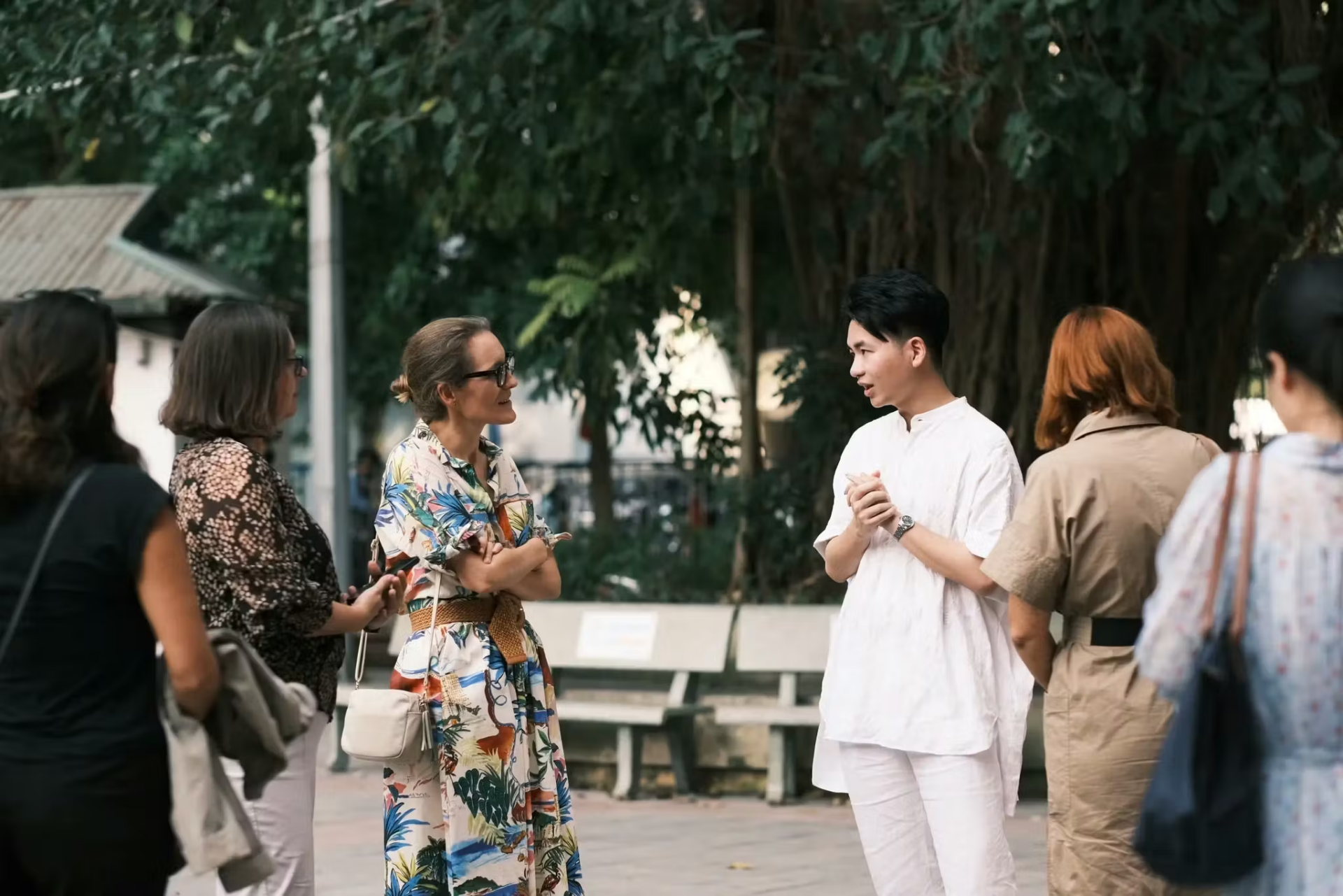
Curator Pham Minh Hieu leading a tour for Ambassadors’ spouses and representatives of international organizations in Vietnam (Photo: Organizing Committee)
Under the theme ‘Creative Intersection,’ the festival links the ‘Heritage Essence’ axis (Ly Thai To – Le Thanh Tong) with the ‘Creative Economy’ axis (Bac Co Slope – Trang Tien), forming a large-scale creative space directly integrated with tourism experiences and urban life. Activities are deployed across a network of venues, including the 45 Trang Tien Exhibition Hall, the 61-63 Trang Tien space, and the Workers’ Theater—featuring plays, folk performances, and creative product fairs—alongside street activities on Trang Tien and adjacent streets.
A primary highlight is the festival’s ability to foster a multi-party collaborative environment involving diplomatic missions, cultural organizations, enterprises, creative spaces, and artists. The ‘Hanoi Children’s Palace: Nostalgia for the Future’ cluster demonstrates a high density of connectivity, featuring nearly 50 activities and gathering numerous domestic and international artist groups and organizations. Notable international activities included: ‘The Last Repair Shop’ film screening and talkshow, organized by the U.S. Embassy in collaboration with the USC School of Cinematic Arts; a Czechoslovak animation screening featuring the National Film Archive of the Czech Republic and the Czech Embassy; the international collaborative theater project ‘Tho Dia’ (The Earth Genie); and the ‘Future Curators: Transforming Museums in Vietnam’ workshop, designed by the UNESCO Office in Hanoi and Associate Professor Jane Gavan from the University of Sydney.
If the festival is viewed as an experimental practice, the subsequent challenge is to transform these connectivity results into sustainable capacity: amplifying international communication, opening access channels through foreign press, diplomatic agencies, and international organizations; while simultaneously increasing transnational networking activities and collaborative study tours. The heritage tour for ambassadors’ spouses and representatives of international organizations during the 2024 Festival is seen as a signal for enhanced connectivity, promotion, and expanded cooperation.
Biennale Photo Hanoi’25: Standardizing International Connectivity through Deep Sectoral Engagement in Photography
While the Hanoi Creative Design Festival presents a multi-disciplinary platform, Biennale Photo Hanoi’25 demonstrates a model for deep international connectivity within the photography sector. Photo Hanoi’25—an international photography biennial—brings together over 170 artists, curators, and experts from 21 countries, alongside 21 professional partner organizations. The event is organized by the Hanoi Department of Culture and Sports in collaboration with the French Institute in Hanoi, with the support of the UNESCO Office in Hanoi.
A notable feature is the ‘urban coverage’ design: the program is organized in a decentralized format, taking place across more than 20 public spaces, art venues, and galleries. Running from November 1 to November 30, it features 22 free exhibitions and 29 fringe events, including seminars, workshops, art tours, book launches, film screenings, and portfolio reviews. Placing displays in public spaces—such as Dien Hong Flower Garden, the Hoan Kiem Lake waterfront, the walls of the Temple of Literature (Van Mieu – Quoc Tu Giam), and the facade of the French Embassy—reflects a strategic approach: transforming photography into a medium for cross-cultural dialogue directly within the urban environment.
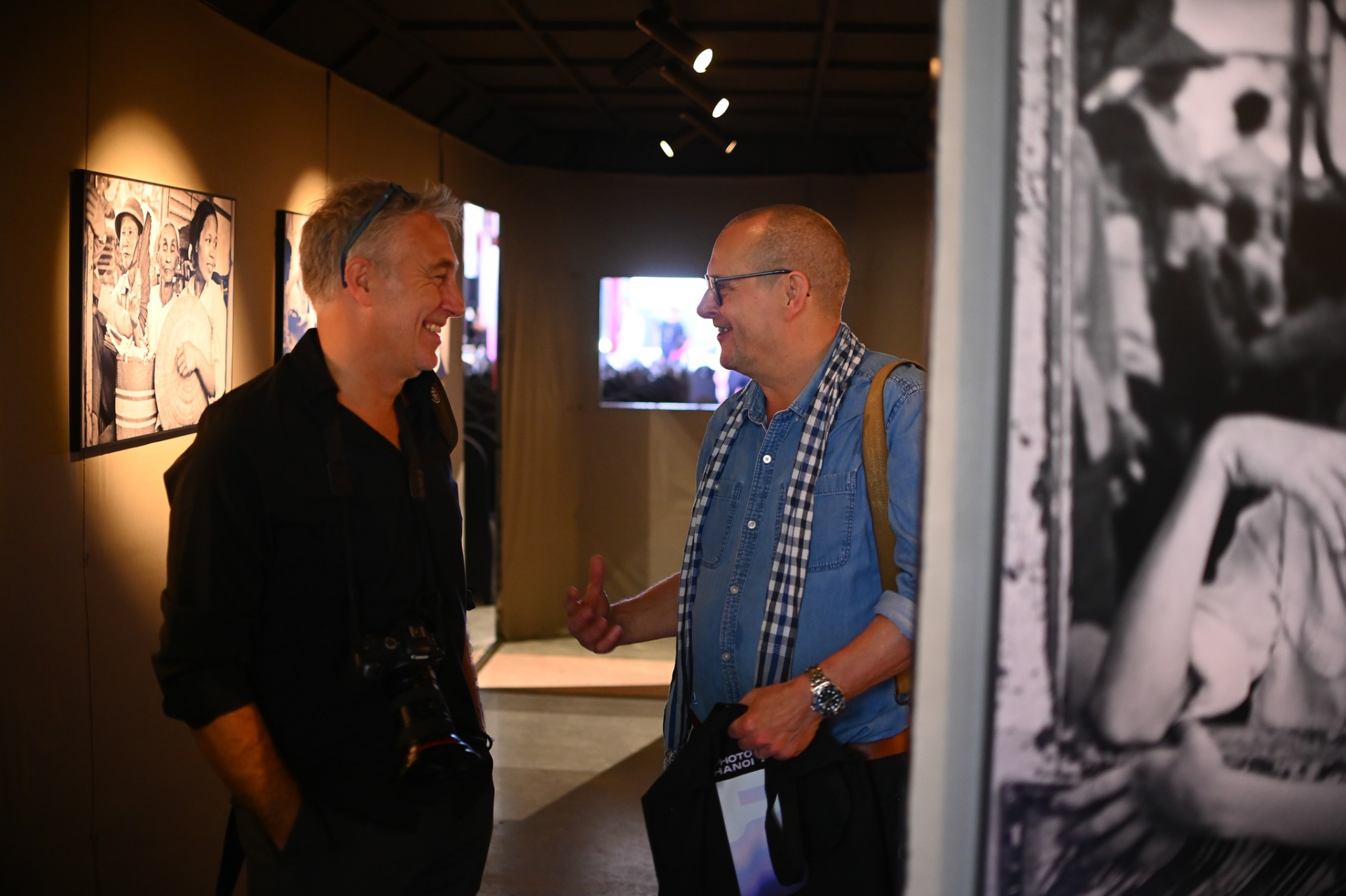
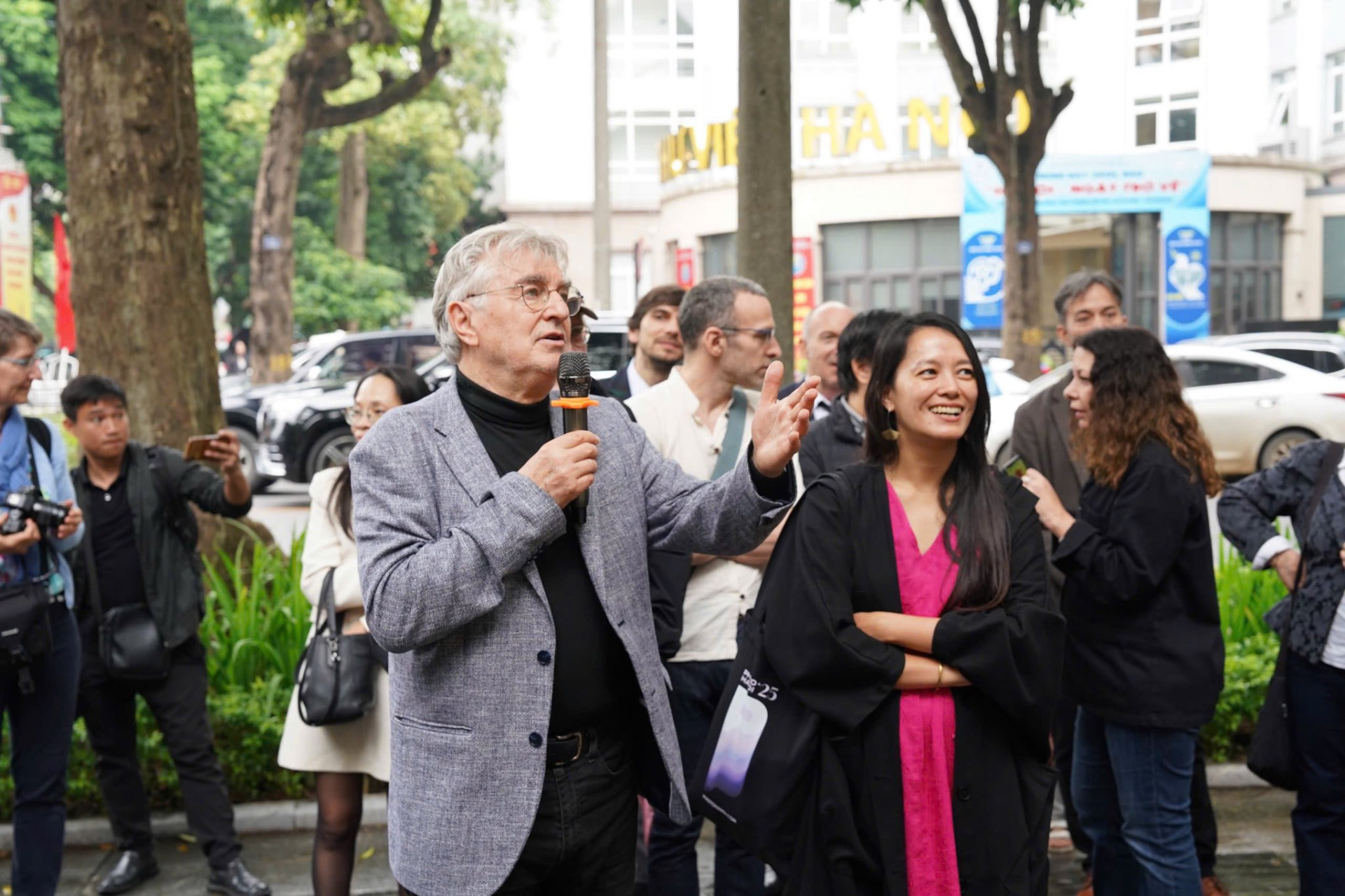
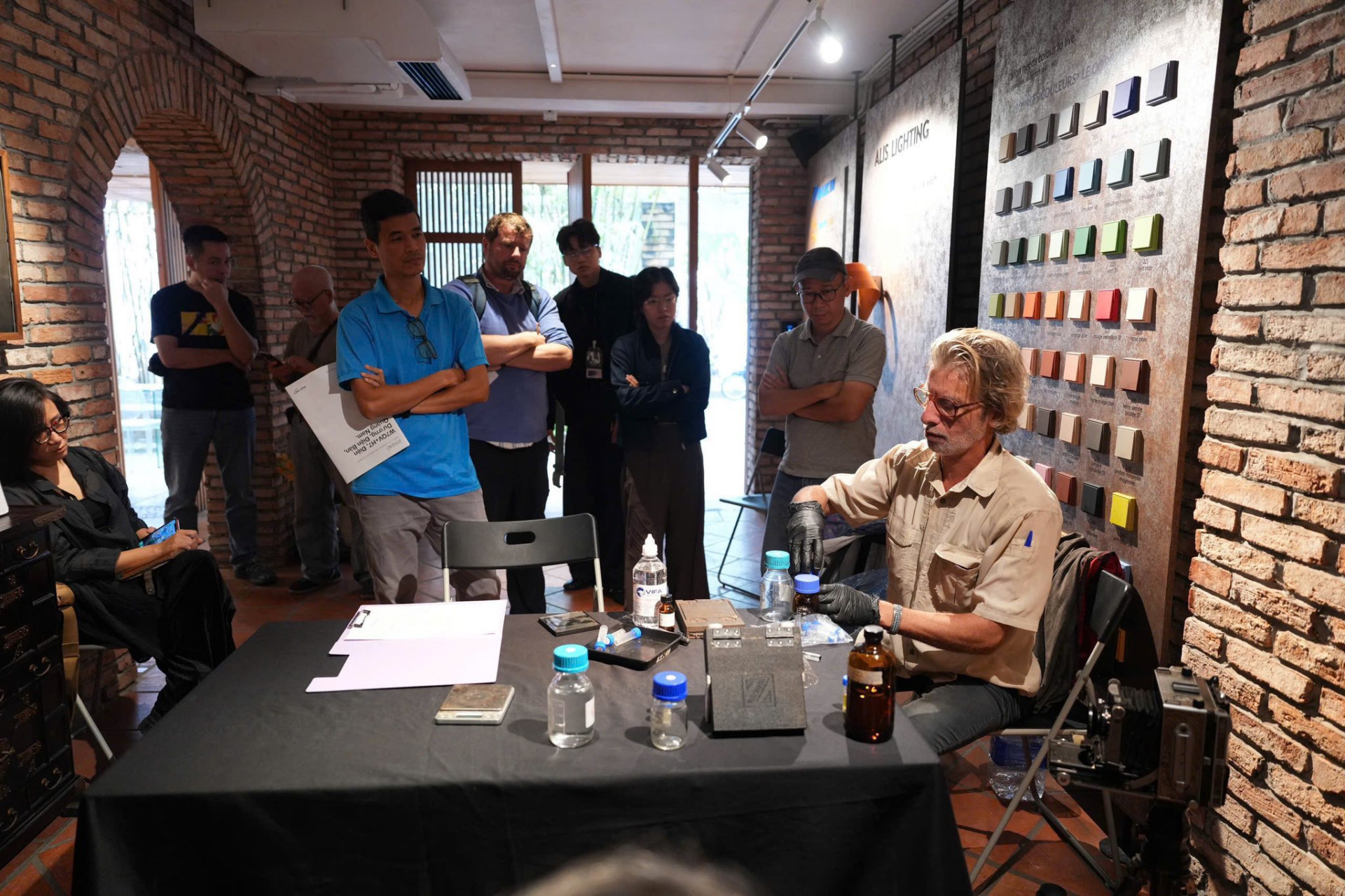
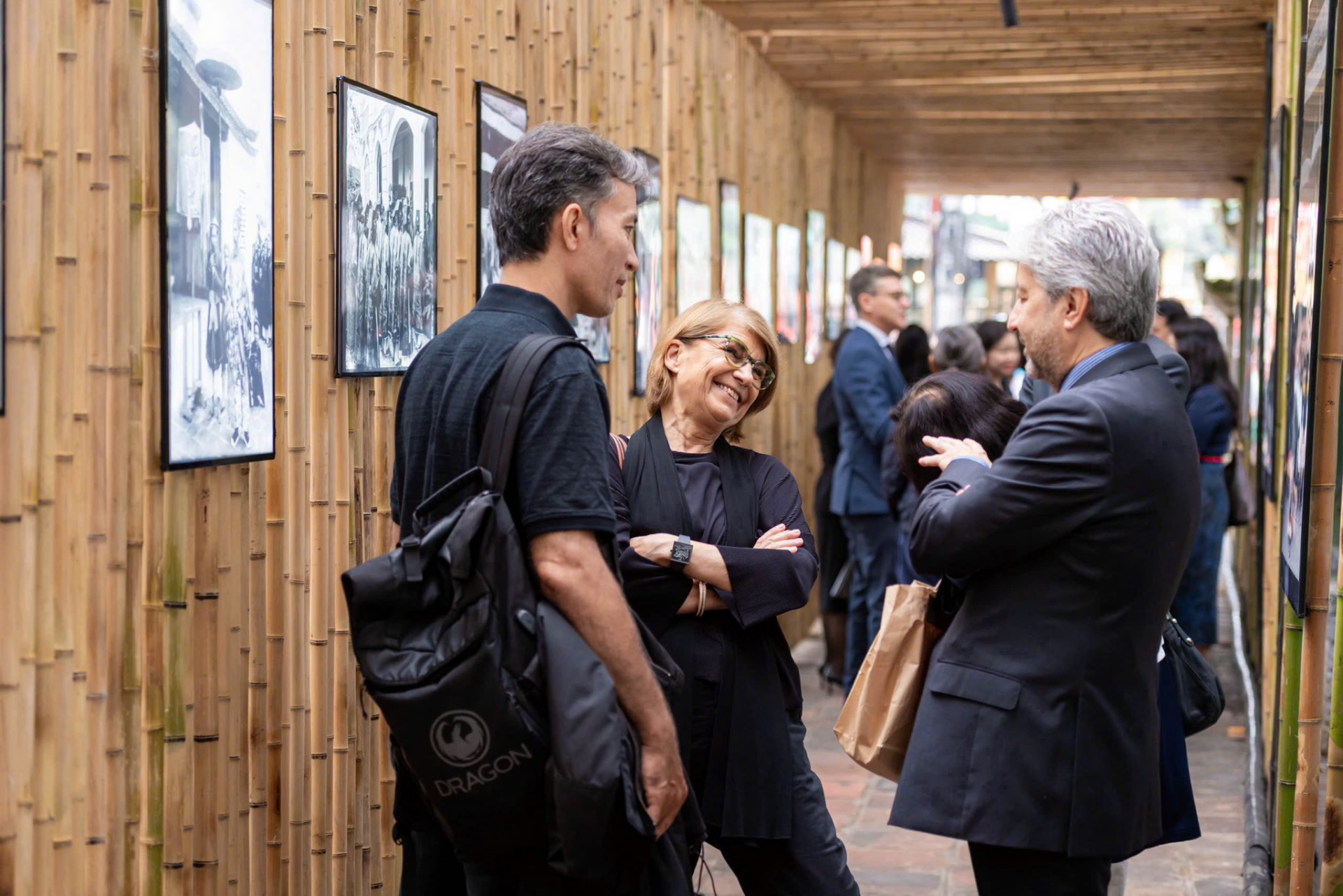
International photographers and agencies are a highlight of Photo Hanoi ’25. (Photo: Organizing Committee)
In terms of impact, the closing of Photo Hanoi – Biennale 2025 recorded over 200,000 interactions and participants, with more than 100 press and media outlets providing coverage through over 500 articles and reports in multiple languages. These figures are not merely media effects; they serve as an indicator of the city’s capacity to host international events according to biennial standards—a prerequisite for Hanoi to progressively solidify its position as a regional creative hub.
MAP and Art Residency: When Collaboration Becomes a Long-term Flow
While festivals and biennales create seasonal ‘climaxes,’ art exchange and residency programs establish a sustained, long-term flow. MAP (Month of Arts Practice) is an international art exchange project initiated by Heritage Space in 2015, aimed at supporting contemporary art by providing spaces for experimentation, international exchange, and public engagement. The project operates on a model of creative residency and exhibition spanning three months in Hanoi, featuring artists and curators from various nations.
Since 2023, MAP has entered a three-year collaborative project with Professor Ingo Vetter (University of the Arts Bremen), operating concurrently in Hanoi and Bremen under the thematic series ‘Movement.’ In 2025, the ‘To Ben’ exhibition was organized simultaneously at Galerie Nord (Berlin) and Long Bien Art Space (Hanoi), expanding into a program comprising four exchange trips for Vietnamese and German artists, a series of workshops, and practice-sharing sessions. The project is expected to culminate in a specialized publication to be released in Spring 2026. In this context, international cooperation transcends merely ‘inviting international artists’; it is about co-constructing processes, co-producing knowledge, and co-creating outputs through exhibitions, exchanges, and publications.
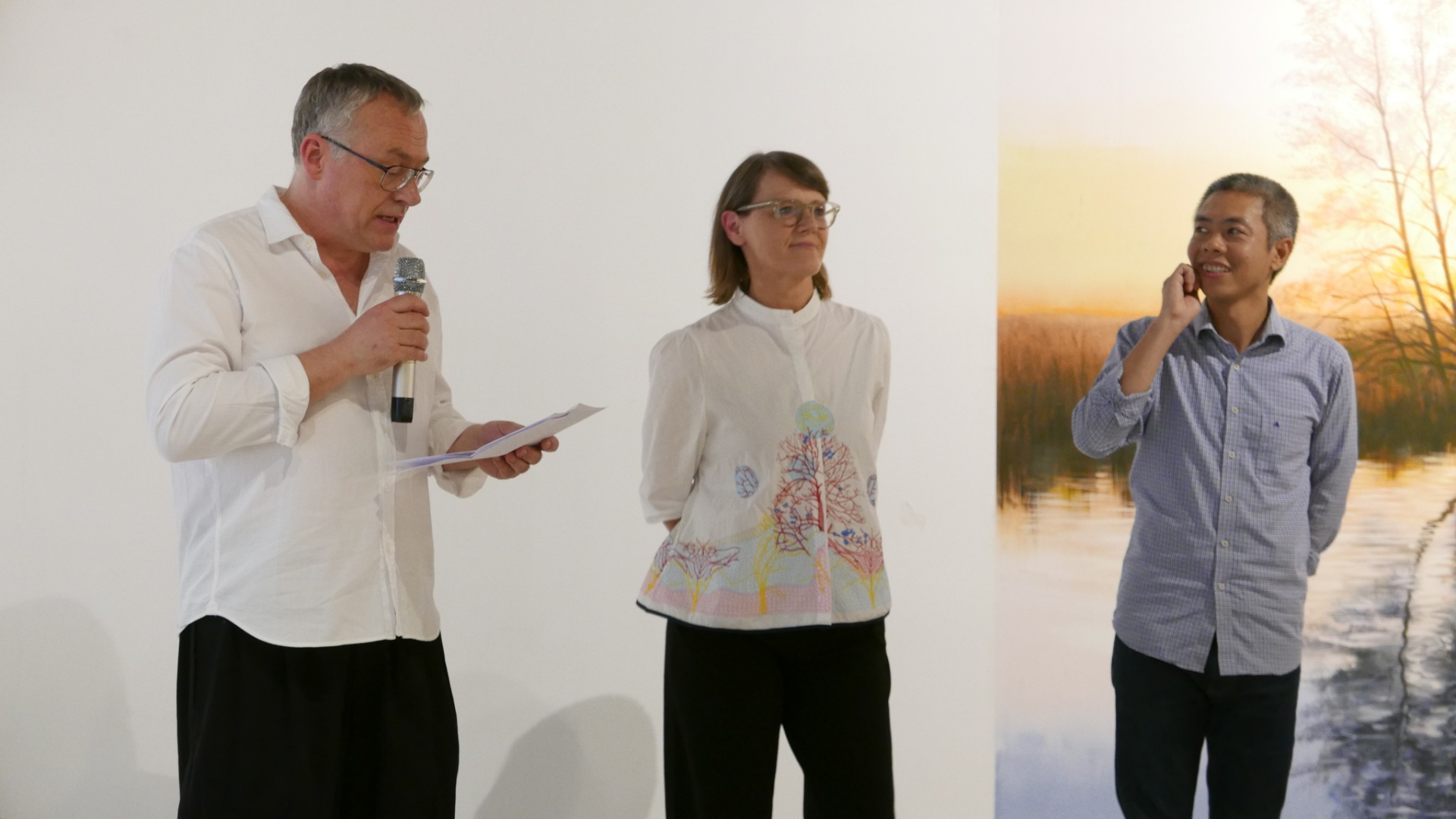
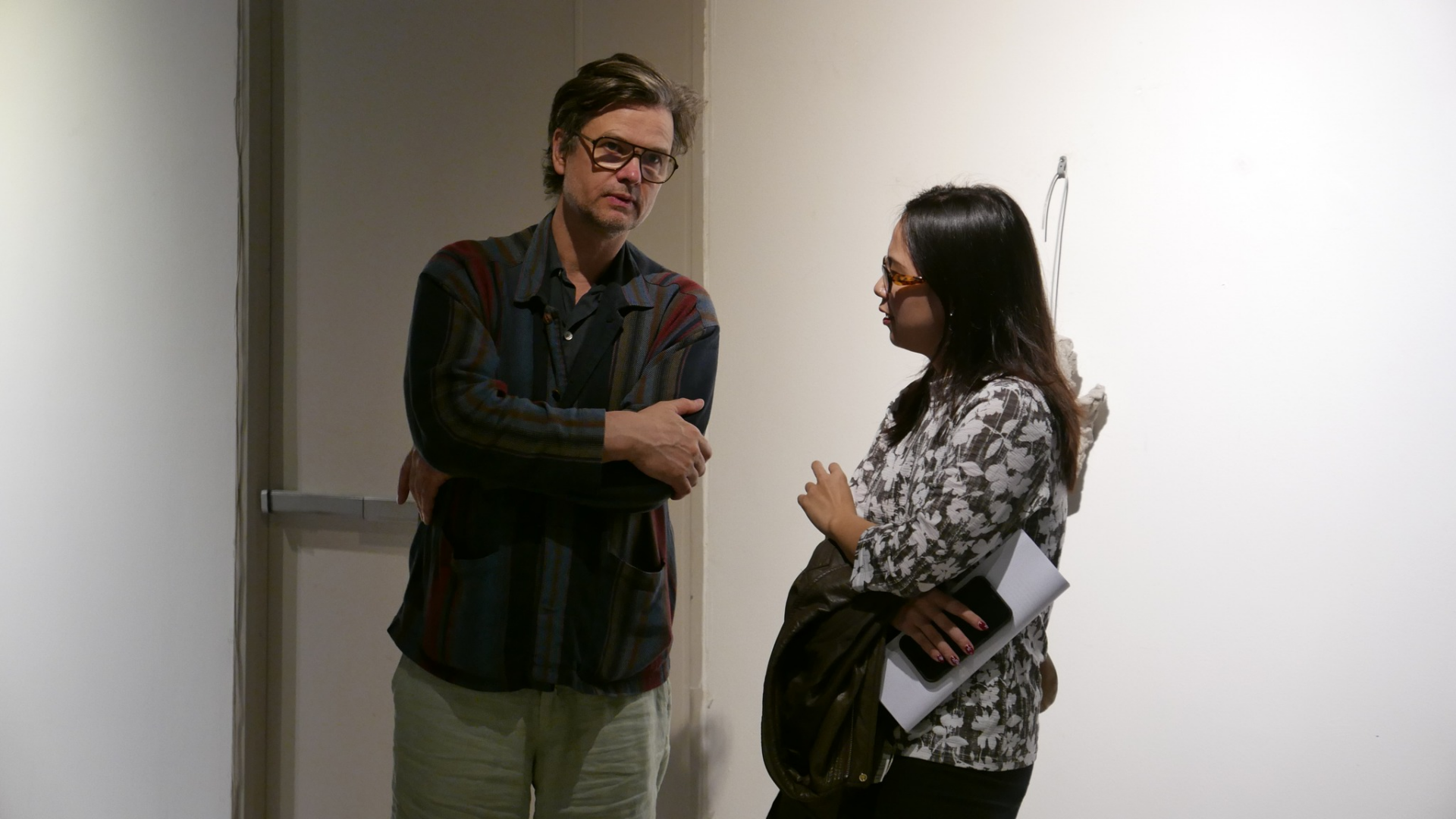
The exhibition ‘Toi Ben’ opened on December 7, 2025. (Photo: Organizing Committee)
In tandem, other residency models have contributed to extending the duration of international connectivity. Matca introduced a residency program for photography-related practices open to multiple nationalities, encouraging participants to self-design their working schedules and engage with recurring activities such as portfolio reviews and thematic talks. Another illustrative case is visual artist Yehezkiel Cyndo (Indonesia), who connected with Heritage Space through the Hanoi-Semarang exchange residency program to implement urban sketching activities and the ‘Urban Memory – Storytelling through Sketching’ workshop. These models demonstrate that ‘collaboration’ transcends event-based interactions to foster practical exchange and the accumulation of community capacity.
From Event Hosting to Ecosystem Building: The Impact of International Cooperation on Hanoi’s Cultural Industries
The juxtaposition of these three examples reveals a clear logic: international connectivity is effective when organized through appropriate platforms. Festivals create multi-party experimental spaces; biennales facilitate professional standardization; and exchange-residency programs transform cooperation into a long-term flow, generating both outputs and accumulated knowledge. Consequently, international cooperation yields three simultaneous layers of benefits: expanding markets and destination branding, enhancing the organizational and networking capacity of the ecosystem, and establishing a more sustainable creative production foundation through long-term initiatives.
Source:
- https://luxuo.vn/culture/7-cau-hoi-cho-du-an-thang-thuc-hanh-nghe-thuat-map-cua-heritage-space.html
- https://heritageartspace.org.vn/lhojexfq89ztj8rn/map.html
- https://vietnam.vnanet.vn/vietnamese/long-form/nghe-si-thi-giac-yehezkiel-cyndo-ke-chuyen-do-thi-viet-nam-bang-ky-hoa-401873.html
- https://nhandan.vn/ba-nam-theo-dau-chuyen-dong-post928626.html
- https://nhandan.vn/map-2024-don-nghe-si-quoc-te-den-ha-noi-post847500.html
- https://thanhnien.vn/trien-lam-nghe-thuat-duong-dai-cua-nghe-si-viet-nam-va-quoc-te-185251205103837596.htm
- https://dantri.com.vn/giai-tri/photo-hanoi25-quy-tu-hon-170-nghe-si-den-tu-nhieu-quoc-gia-20251022214037041.htm
- https://baovanhoa.vn/nghe-thuat/be-mac-photo-hanoi-biennale-2025-dau-an-hop-tac-quoc-te-va-xay-dung-thu-do-sang-tao-184767.html
- https://hanoimoi.vn/de-ha-noi-tro-thanh-trung-tam-cong-nghiep-van-hoa-cua-khu-vuc-va-the-gioi-719849.html
- https://bvhttdl.gov.vn/cong-nghiep-van-hoa-ha-noi-tung-buoc-gia-tang-suc-canh-tranh-va-hoi-nhap-quoc-te-20251103100831231.htm
- https://www.lehoithietkesangtao.vn/tin-bai/gia-tang-co-hoi-ket-noi-quoc-te-bat-dau-tu-sang-tao