
Hanoi Creative Design Festival 2026: A Platform for Building a Creative Ecosystem
From opening industrial heritage sites like the Hang Dau Water Tower and Gia Lâm Train Factory to experimenting with temporary functional conversions of museums, flower gardens, lecture halls, and cultural institutions, the Hanoi Creative Design Festival in recent years has served as a laboratory for urban regeneration. As Hanoi announces the framework for the 2026 Festival—following a biennial model combined with year-round activities—the focus of discussion shifts from event-driven effects to the potential of forming a platform and gradually evolving into a sustainable creative ecosystem.
Urban Regeneration: From “Renovation” to Building Infrastructure for Cultural Industries
The story of “urban regeneration” in Hanoi is not new, but in recent years, it has been positioned within a different context: Cultural Industries are identified as a development direction, and architecture, heritage, and public spaces have become resources that require reorganization. Hoan Kiem District serves as a prime example of this approach, selecting architecture as a fulcrum for culture and creative industries, linking preservation with development—from infrastructure renovation and monument restoration to building distinctive cultural spaces and tourism products.
At the policy level, the frequently mentioned objective is to harmonize preservation and development, mobilizing resources for urban renovation and beautification, while treating culture as a ‘soft power’ to enhance quality of life and generate economic momentum. However, in practice, the city requires specific ‘touchpoints’ to translate ideas into tangible experiences for its citizens. At this juncture, the festival begins to function as an experimental tool: introducing design, art, performance, and installations into familiar spaces to test how urban environments can ‘reimagine the use’ of historic structures while respecting their original values.
Notably, many of Hanoi’s regeneration challenges lie not in a lack of ideas, but in the absence of mechanisms to sustain those ideas once the event concludes. This gap ‘from suggestion to reality’ remains a recurring concern raised by the public after each festival season.
The most apparent impact of the Hanoi Creative Design Festival is its ability to create new urban situations: old structures are ‘opened’ in different ways, functions are temporarily tested, and citizens engage through direct experience rather than mere information. The 2023 case of the Hang Dau Water Tower serves as a prime illustration. Having been closed for a long period, its reopening within the festival framework generated significant public interest. This attention stemmed not only from the exhibition itself but from a very real demand: the public’s desire to understand the structure, its history, and for the landmark to become a permanent part of urban life rather than appearing only as a ‘seasonal highlight’.
In the same year, the Gia Lam Train Factory became a pivotal pilot project for industrial heritage. Workshops, locomotives, carriages, and technical infrastructure formerly dedicated to production were repurposed to host exhibitions, performances, and experiences. In the festival’s wake, a pressing question immediately emerged: what lies ahead for the Gia Lam Train Factory after those vibrant days? This reflects a broader concern for many spaces that ‘open then close’: is the city bold enough to sustain the newfound vitality of industrial heritage, or will they be relegated back to a state of dormancy?
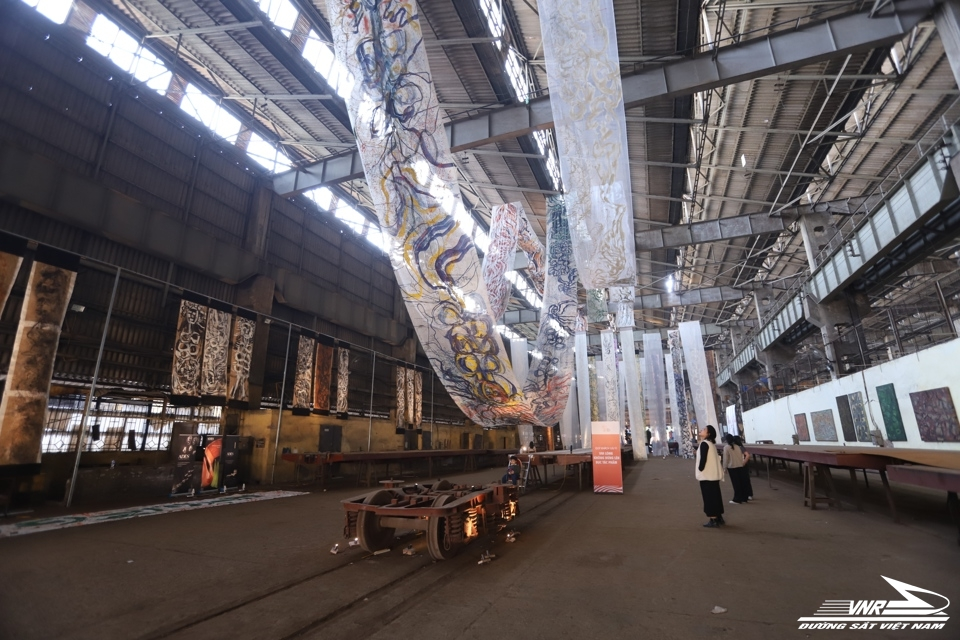
Gia Lâm Train Factory Creative Space. Photo: Vietnam Railways (VNR).
By the 2024 festival season, a different approach was implemented: not only ‘opening’ rarely accessible structures but also ‘reimagining the use’ of familiar institutions. Museums, lecture halls, and flower gardens were cast in the roles of hosting exhibitions, installations, seminars, and community activities. Placing pavilions, installations, and architectural models within museum grounds allowed the public to perceive these structures from new perspectives, while the corridors and lecture halls of the University of Science (VNU) building were transformed into artistic spaces, engaging visitors through experience rather than mere information. For flower gardens, the ‘new functions’ did not replace the old; instead, they added a layer of activity that transformed green spaces from simple walking or exercise spots into venues for meeting, learning, and creative practice.
A compelling highlight was the former Children’s Palace at 36-38 Ly Thai To. Within the context of the Creative City, the festival’s integration of dozens of activities into this site suggested the potential for a broader community creative space—where children remain the centerpiece but are no longer confined by the traditional ‘gifted class’ framework. While the potential has been signaled, the official path forward still requires a long-term operational mechanism.
Hanoi Creative Design Festival 2026: From Event Hosting to Ecosystem Building, From ‘Opening Doors’ to ‘Sustained Access
If the 2023-2024 period demonstrated the festival’s ability to generate immense attraction and unlock new functionalities, the 2025-2026 phase shifts the focus to a governance question: How can creative spaces be interconnected through secured resources and stable operational schedules?
In its plan for participating in the UNESCO Creative Cities Network in 2025, Hanoi aims to stimulate creative activities and establish landmark creative destinations based on existing cultural institutions, including sites such as the Temple of Literature (Van Mieu – Quoc Tu Giam), Hoa Lo Prison, and the Thang Long Water Puppet Theater. The plan also highlights the research into establishing the Hanoi Creative Support Fund, expanding and refining criteria for connecting creative spaces, and integrating network activities into the Hanoi Creative Hub at the Hanoi Museum. These initiatives signal a critical transition: the festival requires an organizational infrastructure to “sustain the momentum” beyond peak seasons.
Under this strategic direction, the Dong Xuan – Bac Qua area has been selected as a pivotal pilot site for a new development model, where urban heritage is directly linked to the creative economy and daily life.
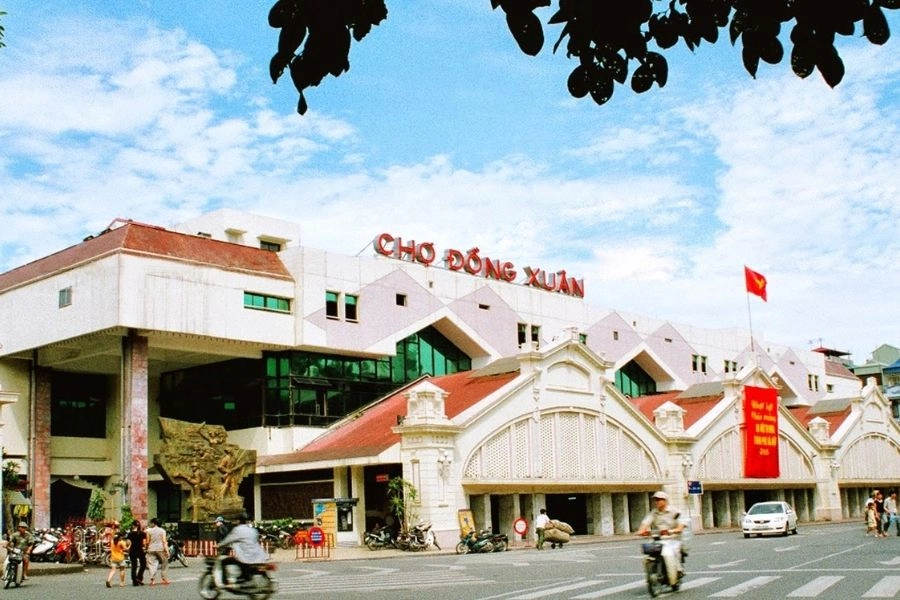
The Dong Xuan – Bac Qua area. Photo: Internet
Unlike previous festival venues that were primarily performance-based and short-term, Dong Xuan – Bac Qua is envisioned as a heritage-creative-commercial axis, rooted in traditional trading activities that have spanned centuries. Here, the festival transcends seasonal events to function as a connective mechanism: integrating designers, artisans, small traders, and enterprises into a shared value chain.
According to the framework announced for 2026, the heritage spaces within the Dong Xuan – Bac Qua market area will be linked with the Dong Xuan Cultural Industry Center, forming a creative activity cluster that operates year-round. Exhibitions, fairs, design experiments, and creative projects are expected not to be detached from existing livelihoods, but rather to complement commercial activities, thereby enhancing both product value and the urban experience.
The success of this model will serve as the foundation for Hanoi to address a broader challenge post-2026: How to awaken urban spaces and establish an operational mechanism that sustains and spreads the city’s creative spirit?