
Living heritage in urban settings: Lessons from Honduras
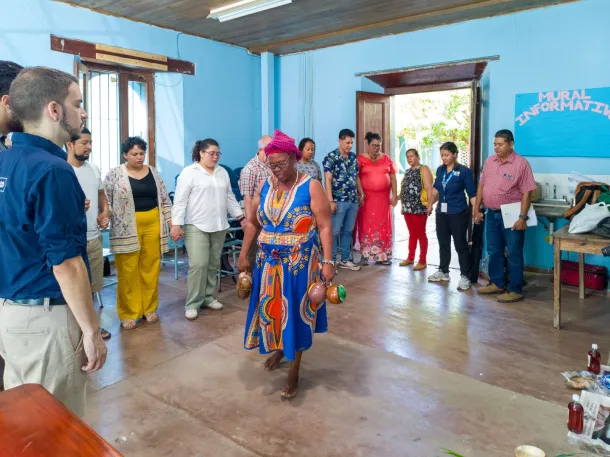
The city of Trujillo (Honduras) recently hosted a workshop on “Intangible Cultural Heritage in Urban Contexts”, accompanied by a four-day training programme that brought together a wide range of stakeholders. Participants included representatives from the Secretariat of Culture, Arts and Heritage of the Peoples of Honduras (SECAPPH), municipal authorities, community leaders, cultural managers, tourism and economic actors, alongside protected area technicians, project coordinators, researchers, religious representatives, firefighters and community memory bearers.
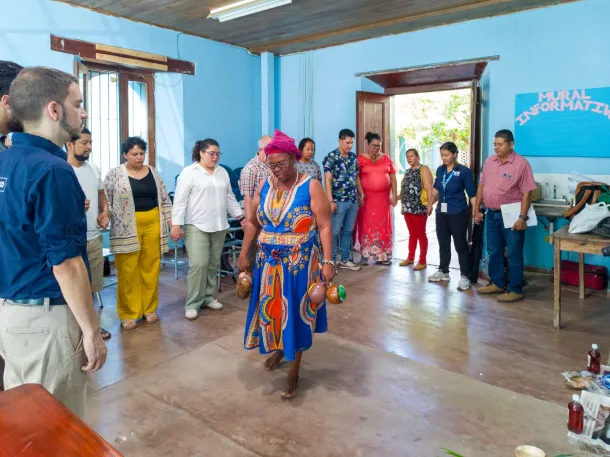 Photo: UNESCO
The activity was organised with the support of SECAPPH and formed part of the regional project “Strengthening capacities for building resilient communities through sustainable tourism and heritage safeguarding in Latin America and the Caribbean”, implemented by UNESCO with the support of the Ministry of Culture of the Saudi Arabia.
The workshop underscored the importance of building alliances among communities, local authorities and cultural sectors to integrate living heritage into urban planning. Recognising and embedding cultural practices in urban life not only strengthens identity and social cohesion, but also lays the groundwork for sustainable urban development rooted in community memory.
The programme combined expert discussions with field visits to emblematic sites in Trujillo, such as the market and Central Park, where participants observed firsthand the vitality of intangible heritage in everyday life. Group work generated meaningful exchanges around cultural practices including the preparation of machuca in fish soup with coconut crab, traditional customs related to coconuts, the Via Crucis procession, and the fair of the patron saint San Juan Bautista. These elements were identified as cultural expressions—from gastronomy and spiritual life to festivals—that help sustain the identity of Trujillo and its local communities.
The training was facilitated by architect Siris Elvir Velásquez and anthropologist Mario Ardón Mejía, focusing on practical tools, legal frameworks and heritage management strategies in urban contexts. The technical content shared is intended to support participants in applying these approaches to project design, as well as to policy-making and programme development that integrate living heritage into urban development.
This effort is being implemented across 10 countries in Latin America and the Caribbean as part of the project “Strengthening capacities for resilient communities through sustainable tourism and heritage safeguarding”. The project focuses on safeguarding intangible cultural heritage in urban settings and promoting sustainable tourism, while fostering synergies between the 1972 World Heritage Convention and the 2003 Convention for the Safeguarding of the Intangible Cultural Heritage. The initiative is expected to generate positive impacts for a wide range of stakeholders in the fields of culture, urban planning and tourism across the region.