
Old Stories Told Anew: Reviving Heritage Through Creative Language
On the afternoon of July 20, 2025, at Complex01 (Tây Sơn, Hanoi), the forum “Old Stories Told Anew: From Heritage Materials to Cultural Products” was organized by the Center for Research and Promotion of Cultural Heritage Values (CCH), with support from the British Council in Vietnam. The event brought together museums, heritage sites, heritage-practicing communities, artists, designers, and organizations developing handicraft products. This dialogue space focused on a central question: how to ensure heritage materials are not only preserved but also transformed into cultural products?
Heritage in the Creative Flow of Hanoi
The forum stemmed from the desire to create bridges between cultural institutions, communities, and the creative sector. According to MA. Nguyễn Đức Tăng – Director of CCH, the long-term goal is to integrate heritage into daily life in a way that aligns with the strategy for developing cultural industries, while helping artists, designers, and handicraft production communities see more concrete cooperation opportunities.
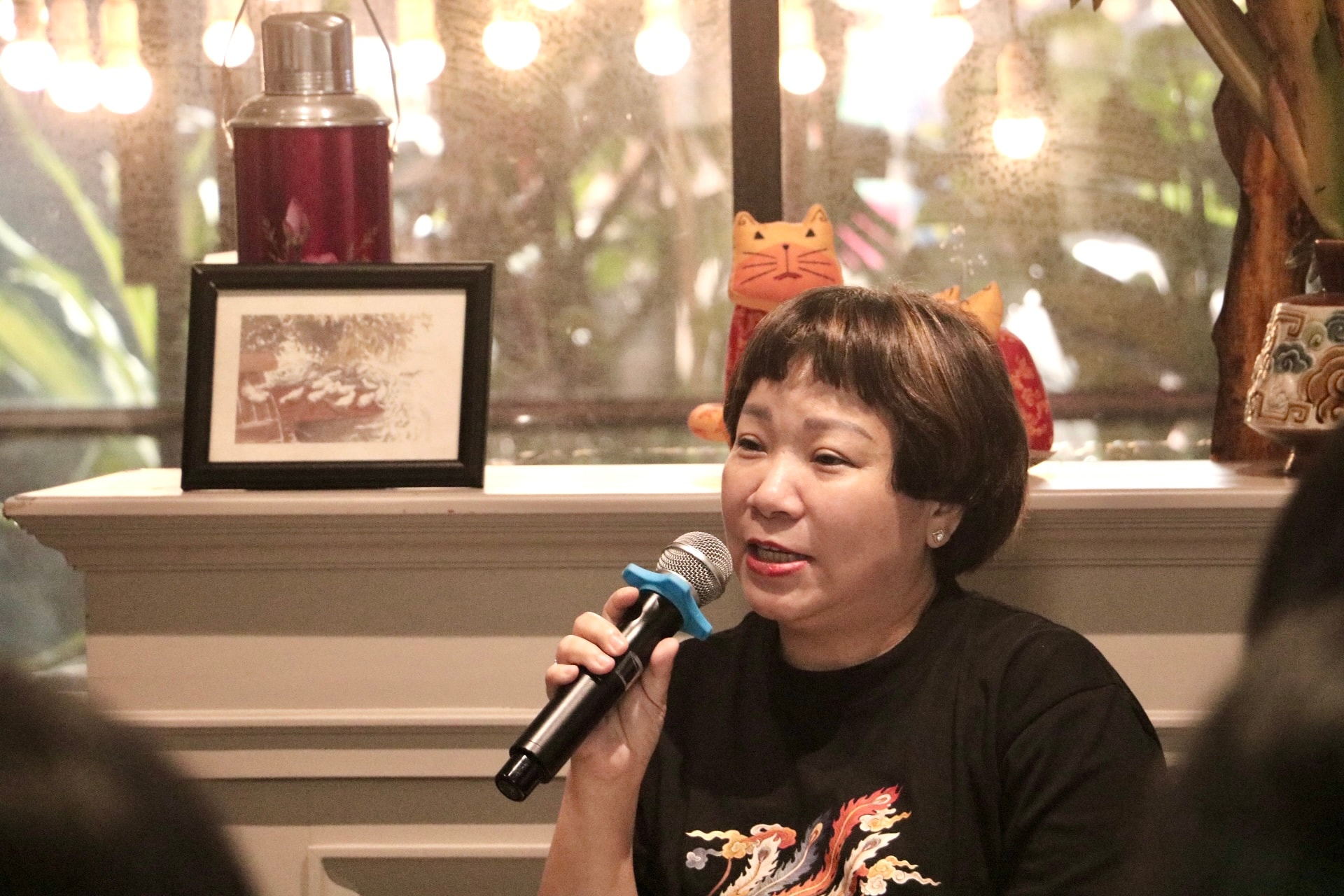
Ms. Bùi Thị Hương Thủy, Deputy Head of Heritage Management Department – Hanoi Department of Culture and Sports, sharing (Photo: Hồng Nhung/ Hanoi Moi)
In her sharing, MA. Bùi Thị Hương Thủy – Deputy Head of Heritage Management Department (Hanoi Department of Culture and Sports) emphasized that Hanoi is completing a new legal system for the heritage field – the amended Cultural Heritage Law and the 2024 Capital Law. These policies create a clearer framework for turning heritage values into cultural products; encourage public-private partnerships; prioritize investment in museums, libraries, and cultural centers; and introduce specific policies for artisans and the young workforce in the professions.
Hanoi has also inventoried all tangible and intangible heritage, forming a data repository to serve research, design, and creation. This is an important foundation for cultural products to have a clear heritage basis, ensuring both local identity and market potential.
Challenges from Practice – The Need for New Cooperation Models
Exchanges at the forum revealed that integrating heritage into creative products faces many challenges. From the social enterprise perspective, Ms. Trần Tuyết Lan (Craft Link) pointed out the large gap between artisans, designers, and the market: Most traditional handicraft workers in craft villages are elderly, while the younger generation has little attachment to the profession, making the production chain lack new vitality – Craft Link will strengthen cooperation with universities to attract students and young designers to participate in developing heritage-based products; thereby creating new resources for communities practicing traditional crafts.
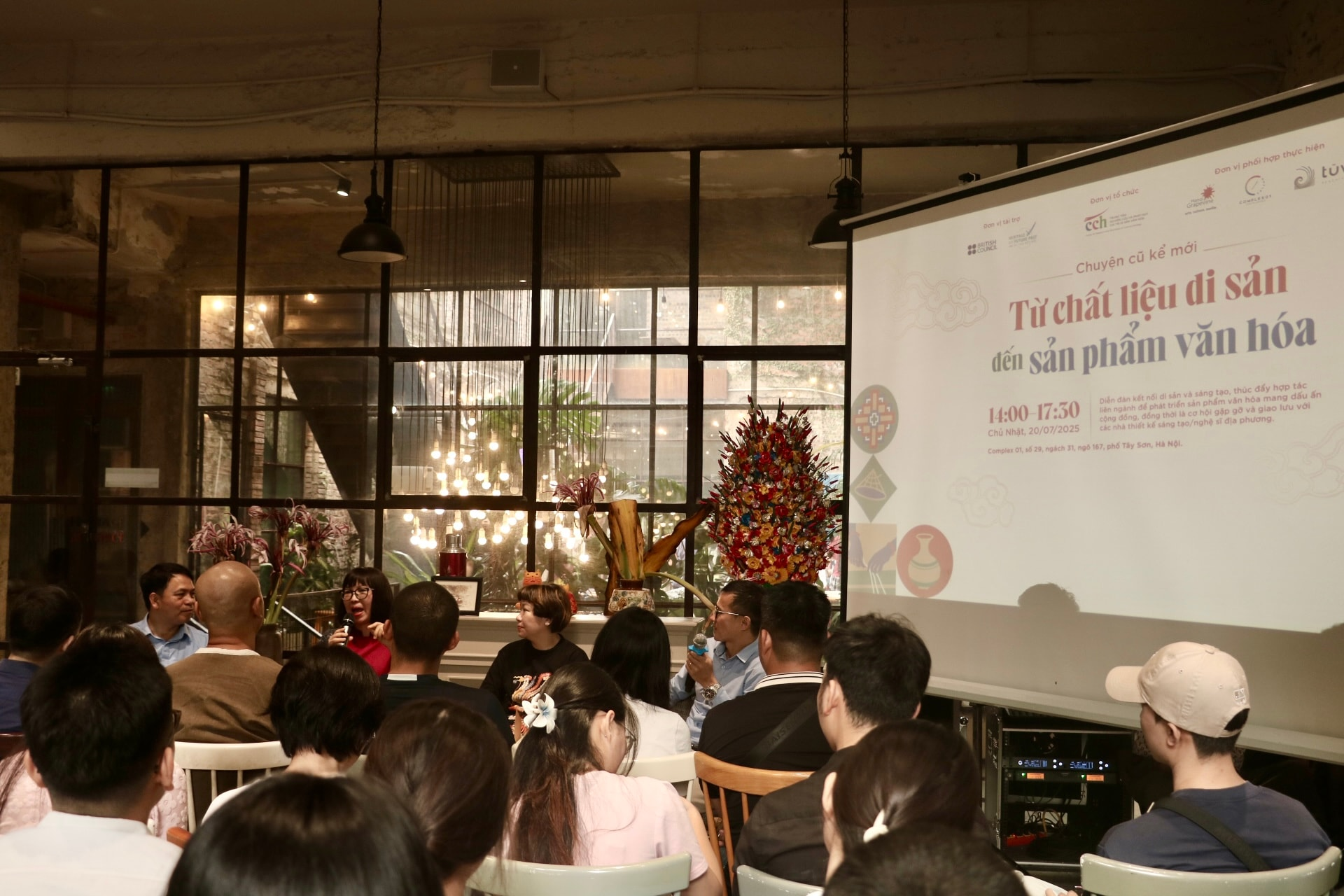
Overview of the forum (Photo: Hồng Nhung/ Hanoi Moi)
From the cultural institution side, Mr. Lê Xuân Kiêu – Director of the Temple of Literature – National University Cultural and Scientific Activities Center shared the approach to souvenir products at the heritage site. For the Temple of Literature, products must be based on original patterns and stories of the Temple of Literature and the Doctoral Stele. The product development process requires participation from designers, craft villages, and enterprises, with clear requirements for environmentally friendly materials, practicality, and suitability for contemporary tastes. However, he also frankly pointed out major challenges: Lack of investors accompanying cultural institutions and communities, lack of shared databases for creative teams to access more easily.
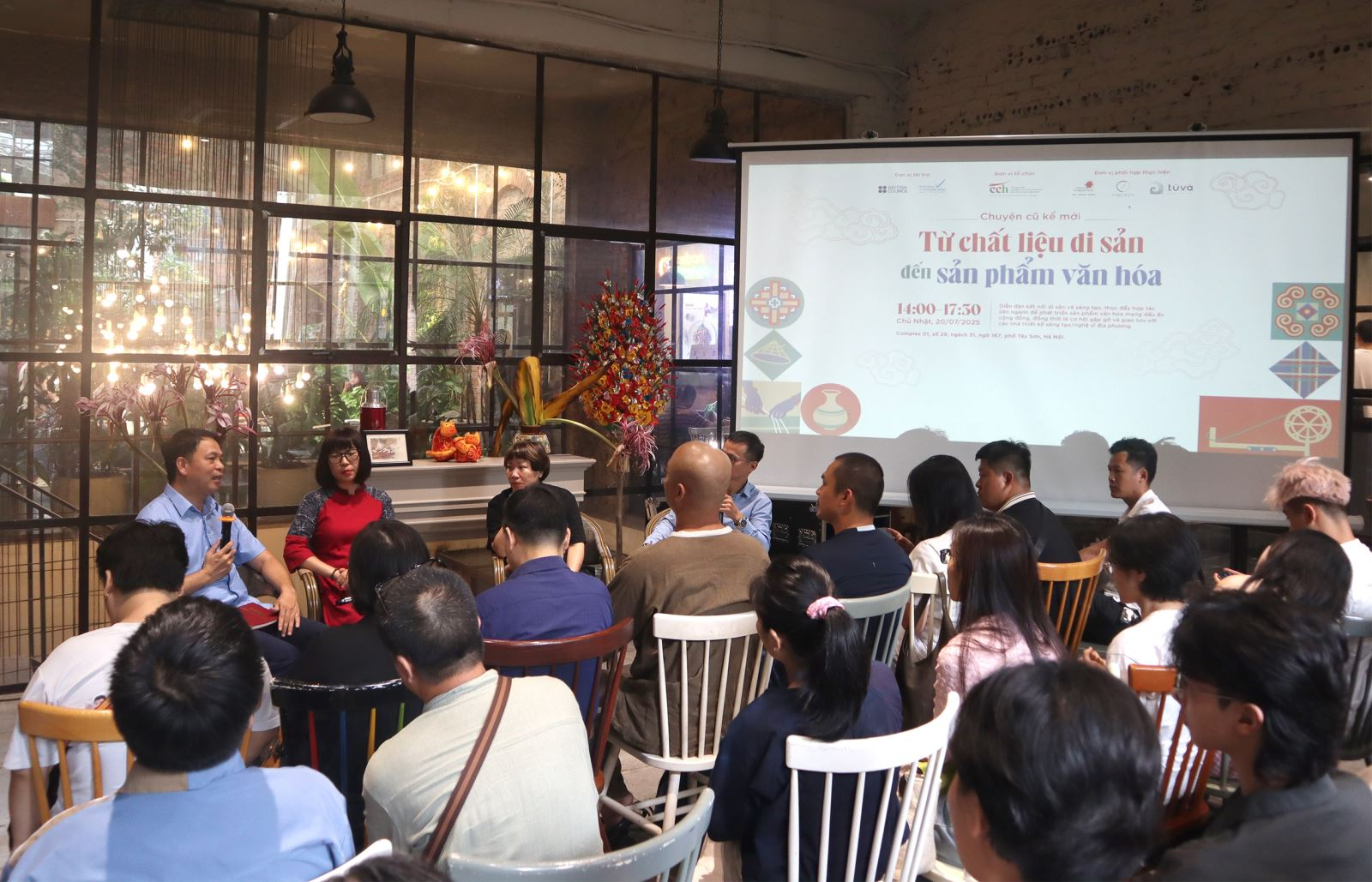
Mr. Lê Xuân Kiêu shares perspectives from the Temple of Literature (Photo: Thanh Danh/ Culture and Arts)
Opening Paths for the Younger Generation to Access Heritage
The forum did not stop at dialogue but also introduced new initiatives to bring heritage closer to young people. TUVA Communication, one of the accompanying units, announced the creative competition “Following Community Heritage Steps”, encouraging young people to exploit heritage materials to develop creative cultural products linked to community practices. The competition is organized on the online platform disanketnoi.vn, opening wide access opportunities for young creative groups.
The exhibition area of creative products at the event also showed many new approaches: Applying traditional patterns in a minimalist spirit, experimenting with new materials in handicrafts, and products inspired by rituals and community memories.
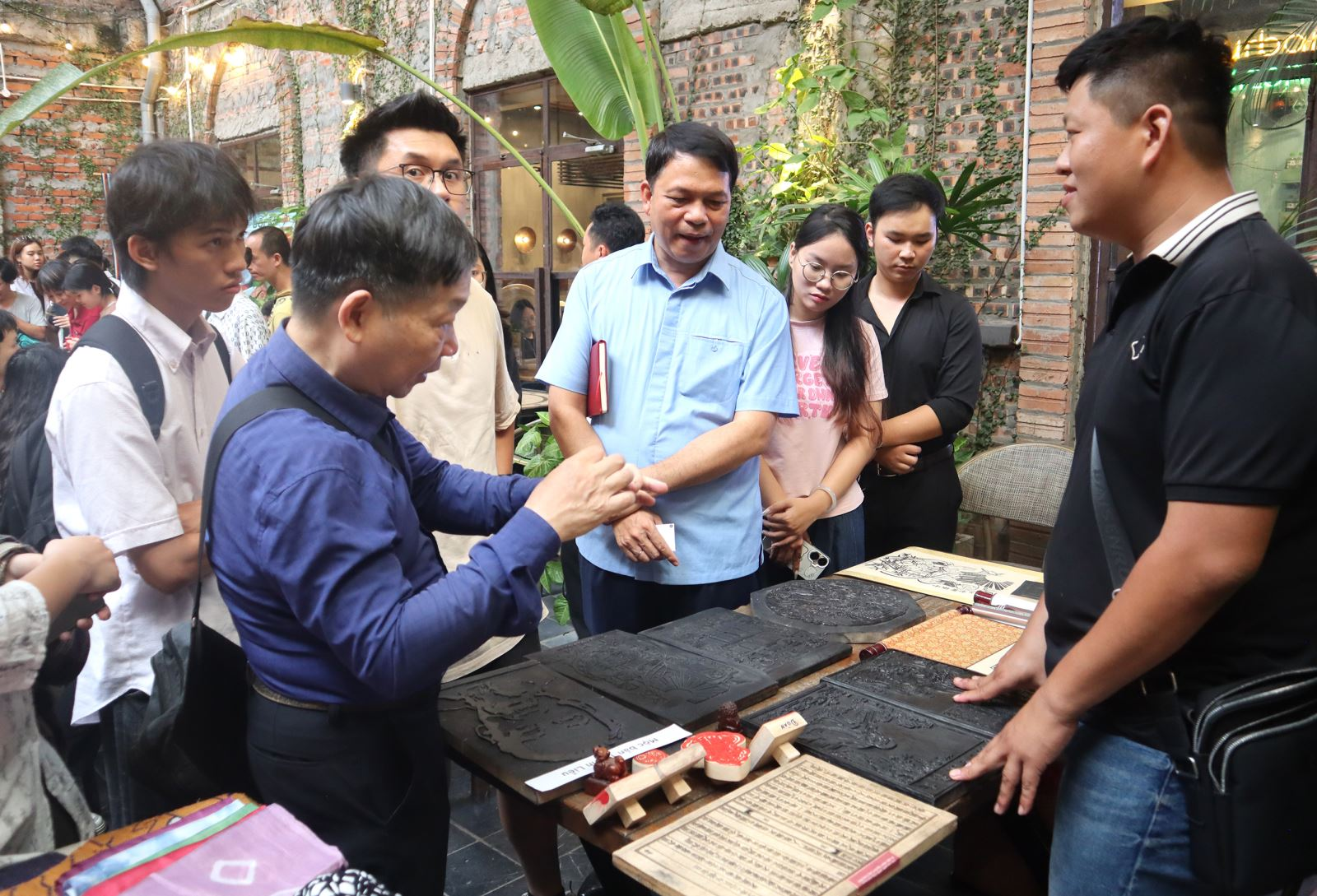
Delegates and guests visiting the creative product exhibition booth, interacting with implementing groups (Photo: Thanh Danh/ Culture and Arts)
The forum “Old Stories Told Anew” demonstrated the efforts of cultural institutions and creative communities in renewing heritage narratives. In Hanoi, where past and present intersect in layers of urban memory, the need to connect heritage and cultural products becomes even more urgent.
When artisans, designers, museums, enterprises, and social organizations sit together, old stories have the opportunity to be told in new ways: More approachable, more vibrant, and more sustainable both economically and culturally.
The forum concluded, but many questions were opened about cooperation mechanisms, shared databases, and ways to build cultural products based on respect for identity and market reach. These are also the foundations for Hanoi to continue developing creative models linked to heritage – an important goal in the capital’s cultural industry development strategy in the coming years.