
The young and stories of heritage
Fourteen innovation proposals were presented by students, offering ideas shaped by contemporary perspectives while remaining deeply rooted in traditional values, with the aim of revitalizing and promoting the craftsmanship, handicrafts, and distinctive folk arts of the heritage region. The activity took place as part of the final presentation of the Hoi An Young Leaders Training Program, within the framework of the project “Promoting innovation for youth and communities toward sustainable urban development.”
Connecting local knowledge, reimagining heritage and traditional crafts
The Hoi An Young Leaders Training Programme is part of the project “Promoting Innovation for Youth and Communities towards Sustainable Urban Development”, implemented by UN-Habitat in collaboration with Hoi An City prior to the administrative merger of Quang Nam and Da Nang, with Wemaster Co., Ltd. and Hoianlife as project partners.
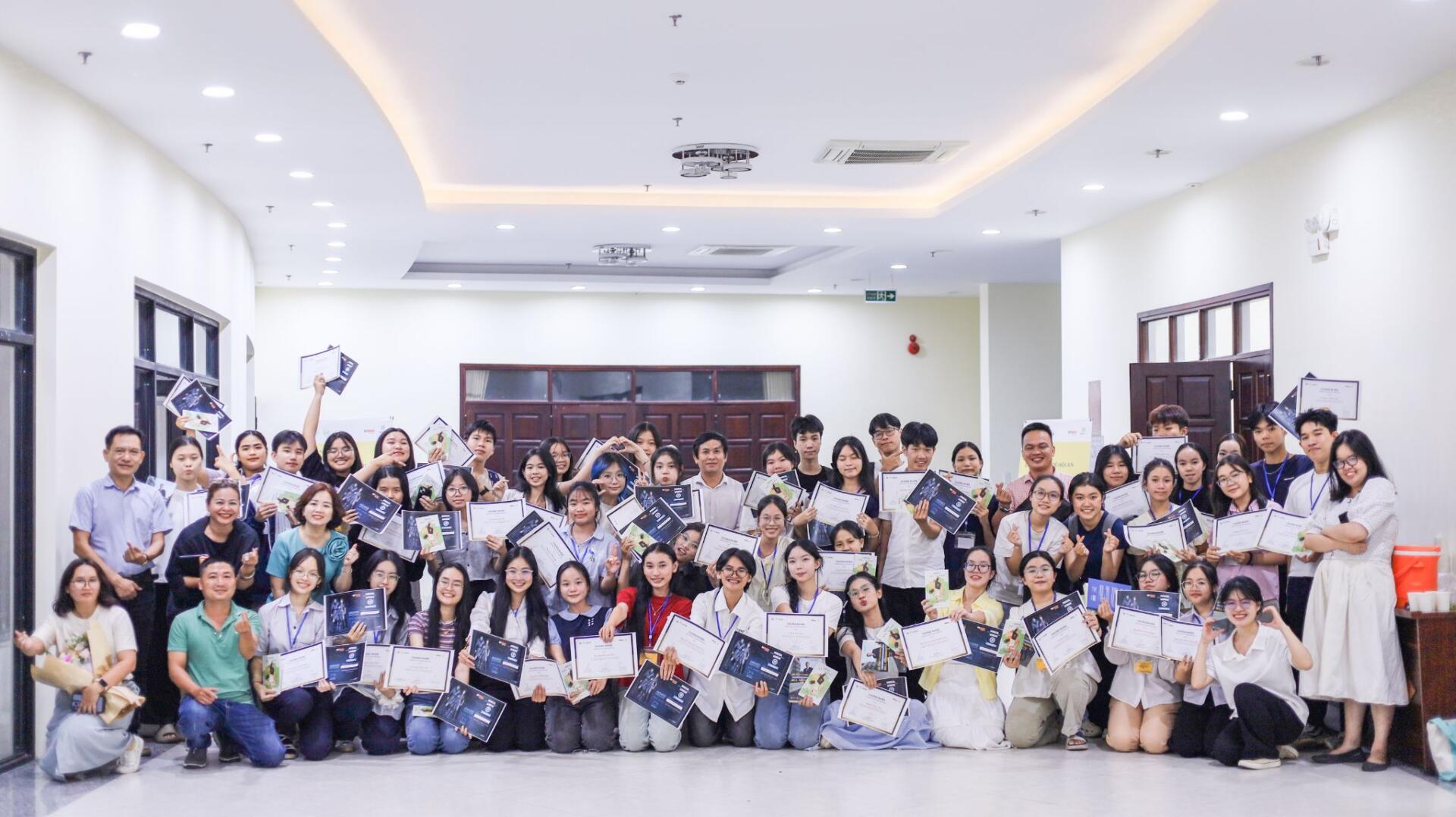
Fifty outstanding students received certificates from the programme. (Photo: Organising Committee)
Delivered through a peer-learning approach that empowers participants and encourages small-group collaboration, the nearly two-month programme equipped more than 50 talented high school students in Hội An with global citizenship skills, leadership thinking, design capabilities, and the ability to develop innovative projects—marking a formative journey in shaping 21st-century leadership within an increasingly globalised everyday context.
A key component of the programme was an experiential learning session held at Kim Bồng Carpentry Village, designed to provide participants with a foundation in local knowledge while helping them identify the competitive advantages of Hội An’s craft villages and the potential for heritage-based economic development.
During the visit, students explored traditional mat weaving, worked with artisans to carve their names onto wooden blanks, and created meaningful handmade pieces of their own. The experience was further enriched by an inspiring sharing session on the boat-building craft of ghe bầu, led by Nguyễn Mạnh Thấn, a 16th-generation artisan, and Nguyễn Mạnh Tây, representing the 17th generation of the family tradition.
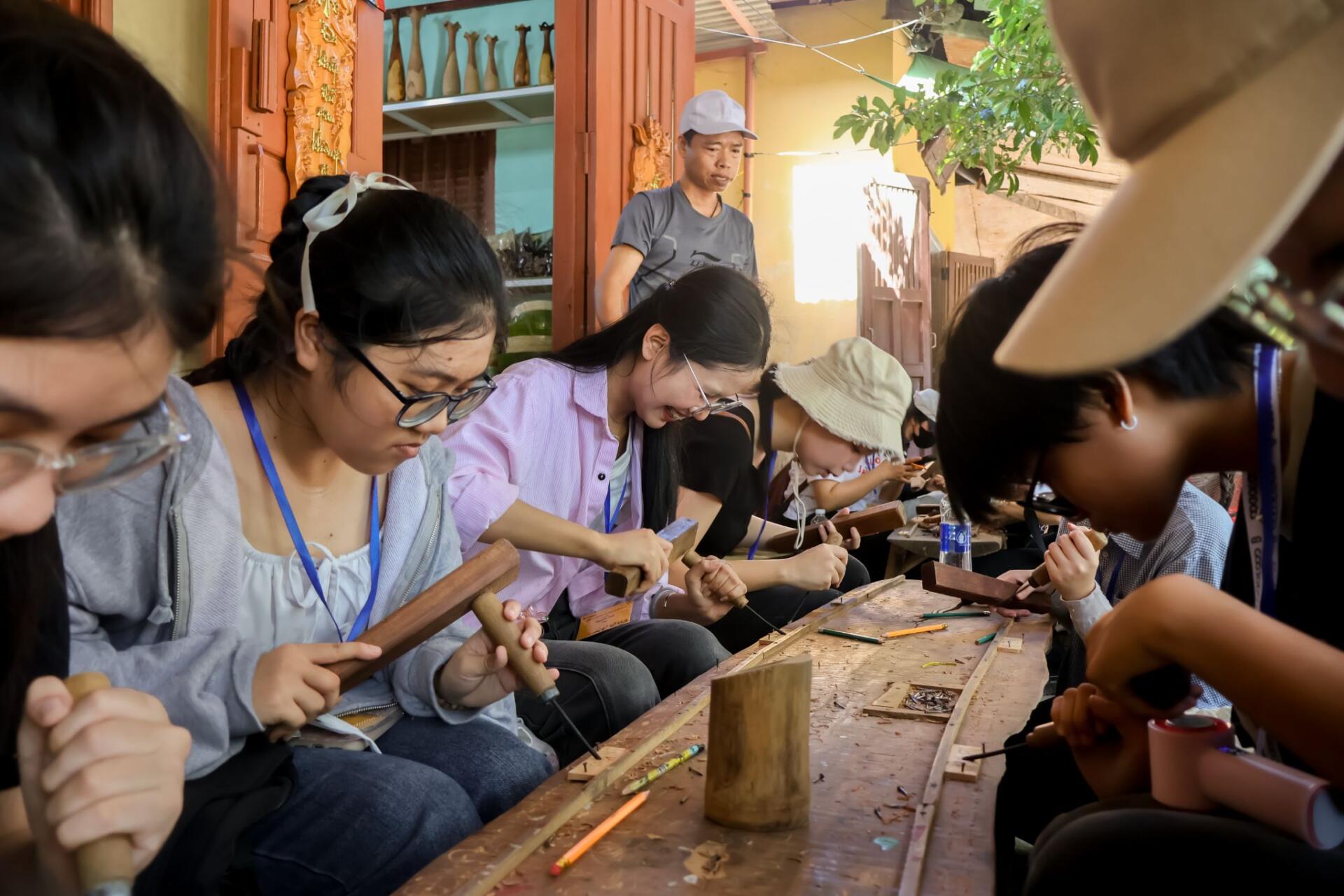
Students taking part in a field trip at Kim Bồng Carpentry Village. (Photo: Organising Committee)
During the field visit, artisans and entrepreneurs engaged in discussions with participants around the theme of developing local economies rooted in indigenous knowledge, exploring how traditional knowledge can be transformed into economic value while sharing expectations for Hoi An’s younger generation.
The conversations focused on key topics such as income generation from traditional crafts; personal journeys of creativity and entrepreneurship linked to local identity; factors that shape the uniqueness and competitiveness of Hoi An’s indigenous knowledge; and the role of technology and digital transformation in expanding markets for innovative, heritage-based products and services.
Heritage stories through a contemporary language
From the very first weeks of the programme, 14 Young Leaders of Hoi An student teams collaboratively developed innovative proposals across heritage, traditional crafts, folk arts and youth entrepreneurship.
The projects ranged from performing arts such as Bài chòi and Thiên Cẩu dance, to traditional crafts including papier-mâché masks, Thanh Hà pottery, Kim Bồng carpentry and traditional medicine, alongside ideas for creative games and locally inspired “Made in Hoi An” souvenirs.
All proposals were rooted in a shared commitment to heritage, shaped by a strong sense of responsibility and creativity among young people contributing to the future of the ancient town—a UNESCO World Heritage Site and a member of the UNESCO Creative Cities Network.
At the closing ceremony, students confidently presented their projects to a jury of international experts, researchers and business leaders. Both content and delivery demonstrated solid capabilities in communication, project management and structured innovative thinking.
Three outstanding projects were recognised, with First Prize awarded to “Kim Bồng Du Ca”—a creative community-based tourism model connecting experiences in Kim Bồng and Cẩm Kim carpentry villages into a cohesive exploration journey. The project stood out with its bold idea of a “flood season tour” and an engaging presentation that incorporated local specialties, woven mats and thoughtfully designed brochures, evoking the feel of a fully realised tourism product.
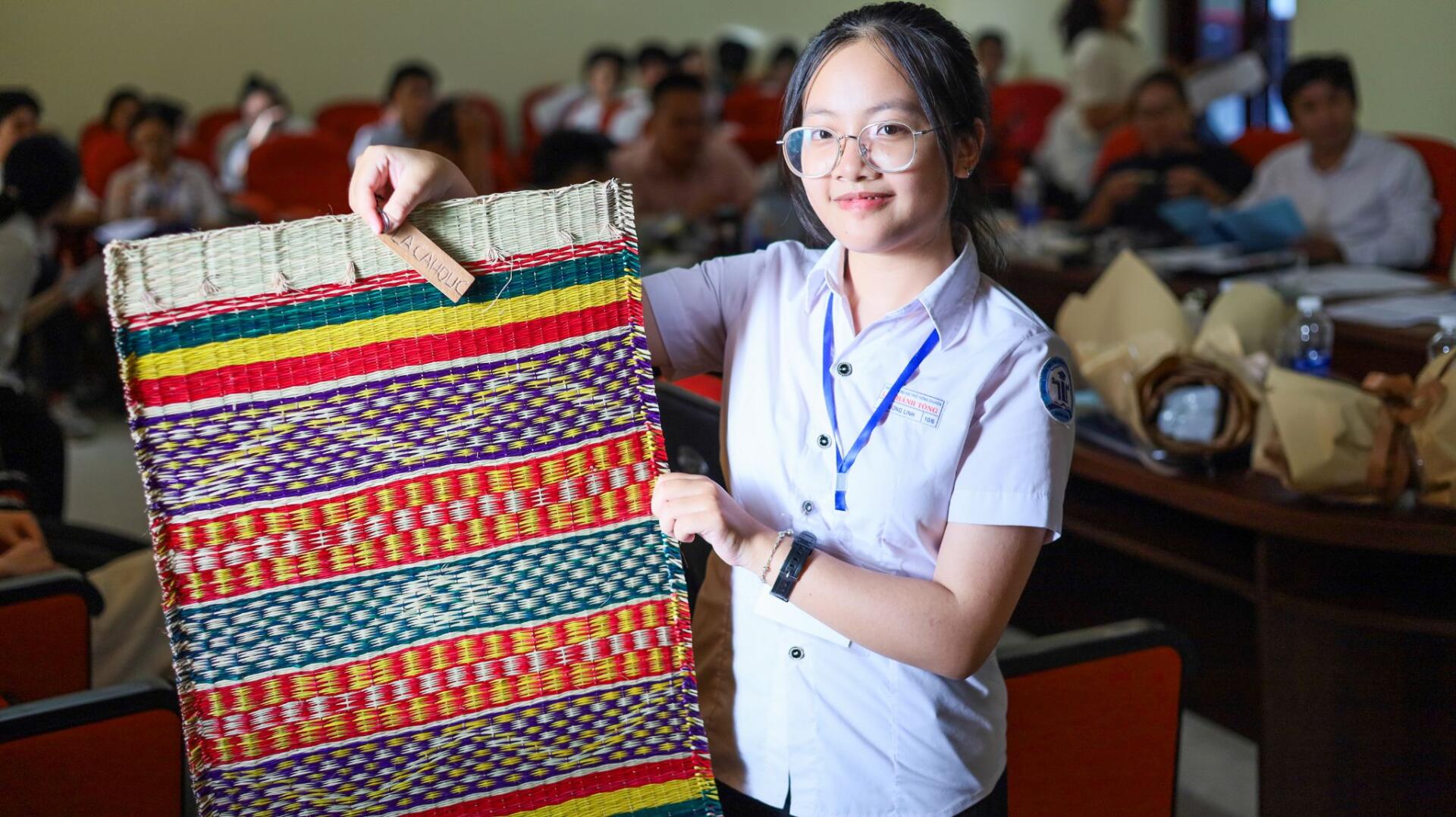
The “Kim Bồng Du Ca” project incorporated real products from the craft village to support its presentation. (Photo: Organising Committee)
The second prize, “Cham La Cham Lanh,” bridges cultural tourism with traditional medicine, introducing hands-on herbal making, health consultations, and knowledge-sharing around Eastern medicine, offering a contemporary and approachable pathway to revitalising a traditional practice. The third prize, “Neo Choi,” with “Neo” meaning “new” in Greek, focuses on preserving and promoting Bai Choi folk art through modern tools such as digital archives, souvenir products, and integrated designs within restaurant and hotel spaces—allowing traditional melodies to re-enter everyday life in fresh, engaging ways.
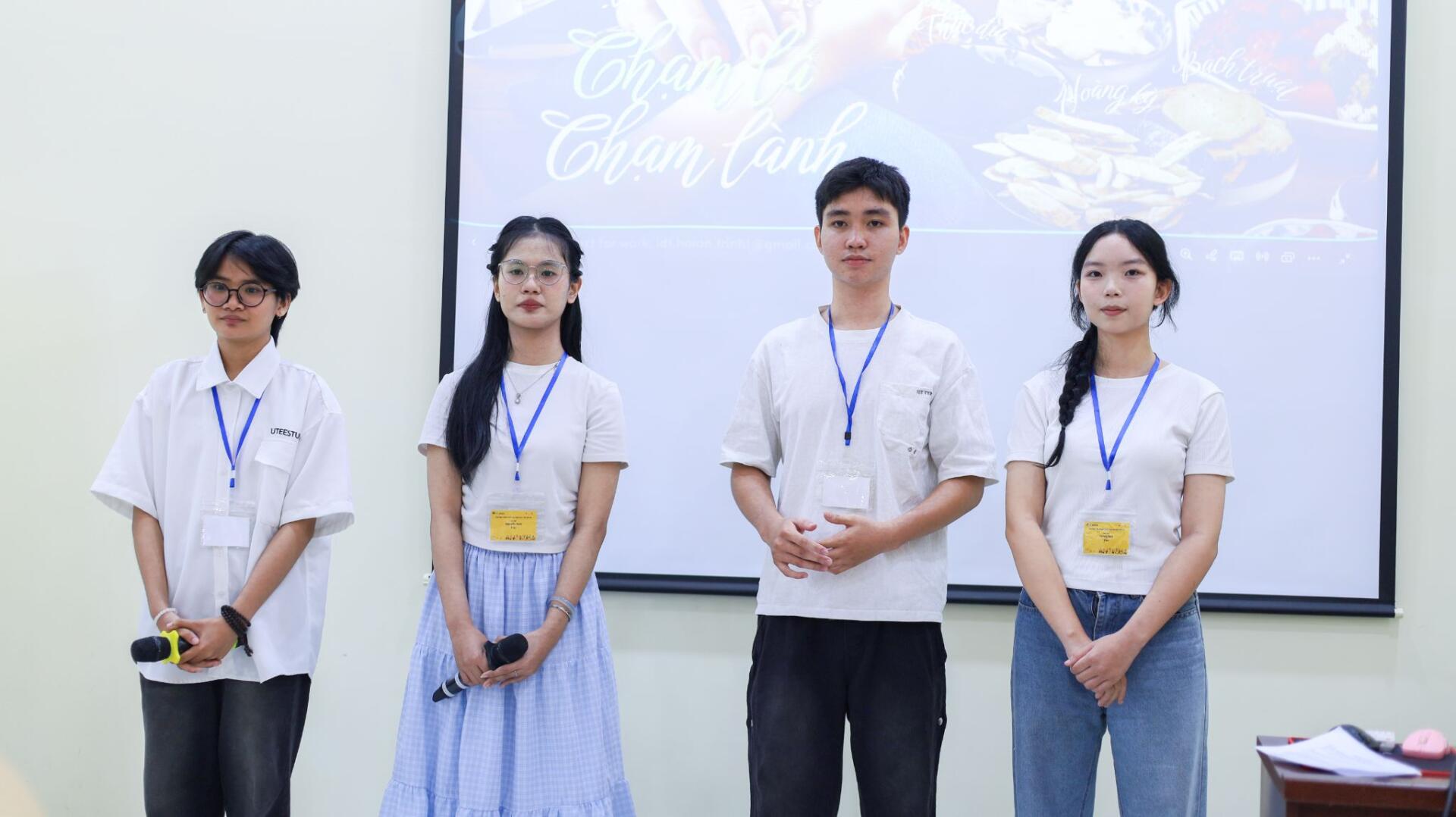
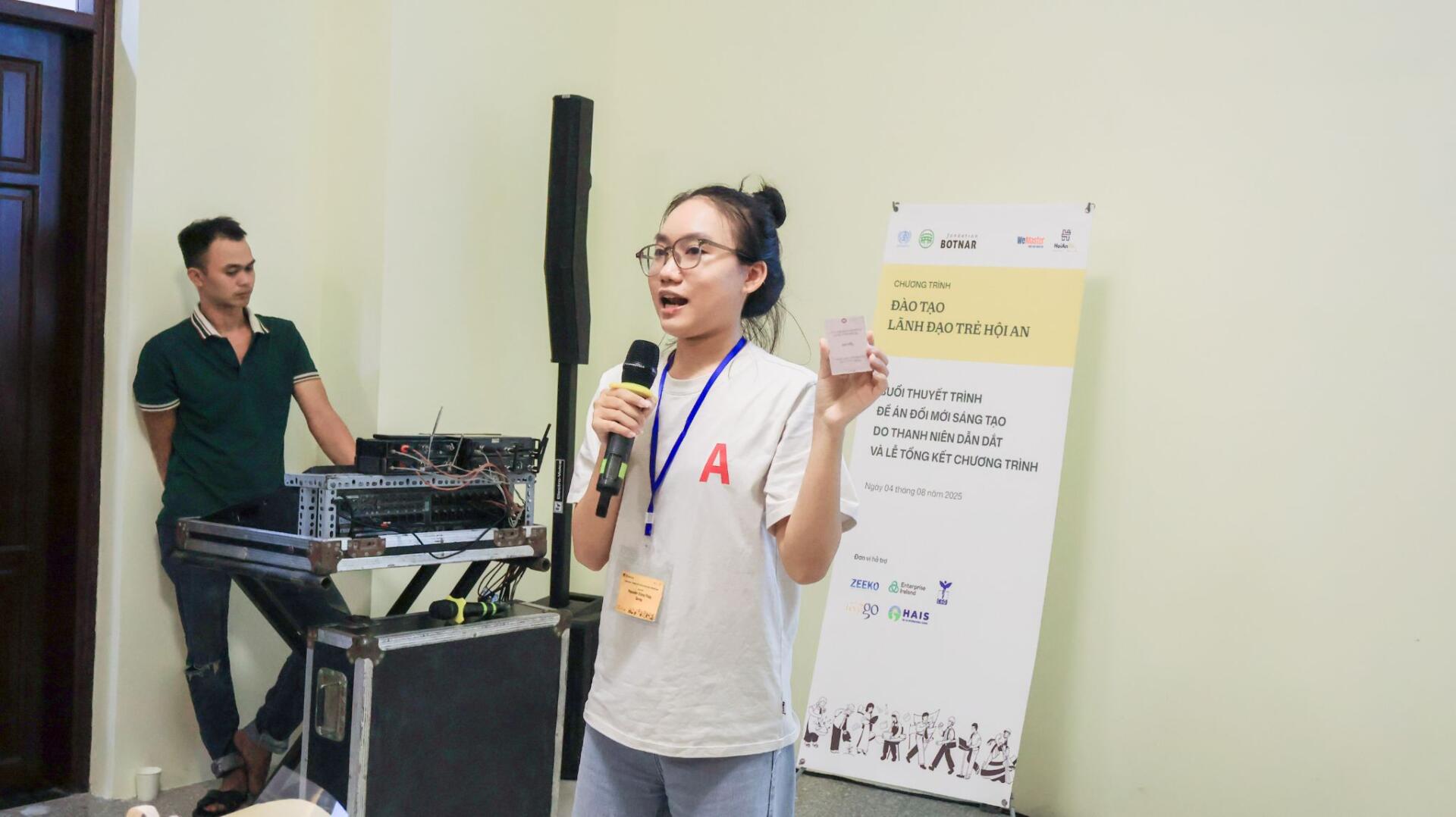
Representatives of the two projects, “Cham La Cham Lanh” and “Neo Choi,” presenting their initiatives. (Photo: Organising Committee)
Mr. Quảng Văn Quý, Deputy Director of the Hoi An World Cultural Heritage Preservation Center, commended the projects for their depth of research and strong practical applicability, noting that these young participants are opening new pathways for heritage preservation through creativity. Members of the review panel also expressed hope that several proposals could be further developed into viable business models, supported by enterprises and investors who share a long-term vision for sustainable development.
Beyond intellectual outcomes, the projects represent deeply engaging journeys in which skills and knowledge are translated into concrete action preserving cultural identity, strengthening community ties, and inspiring innovation rooted in tradition. In this way, Hoi An’s younger generation is actively “continuing the story” of a creative city: one that is distinctly local, Asian in character, and thoughtfully sustainable.
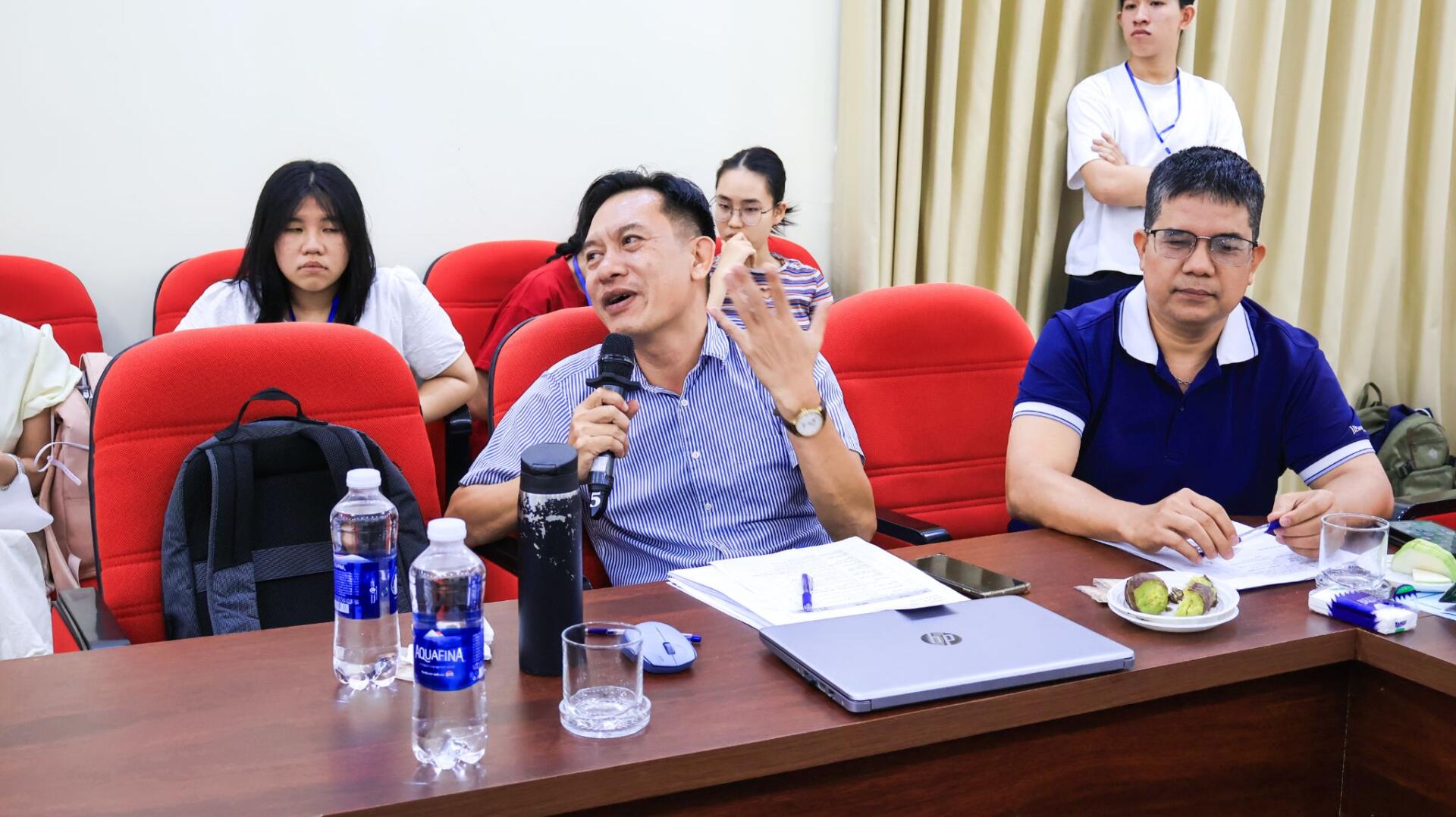
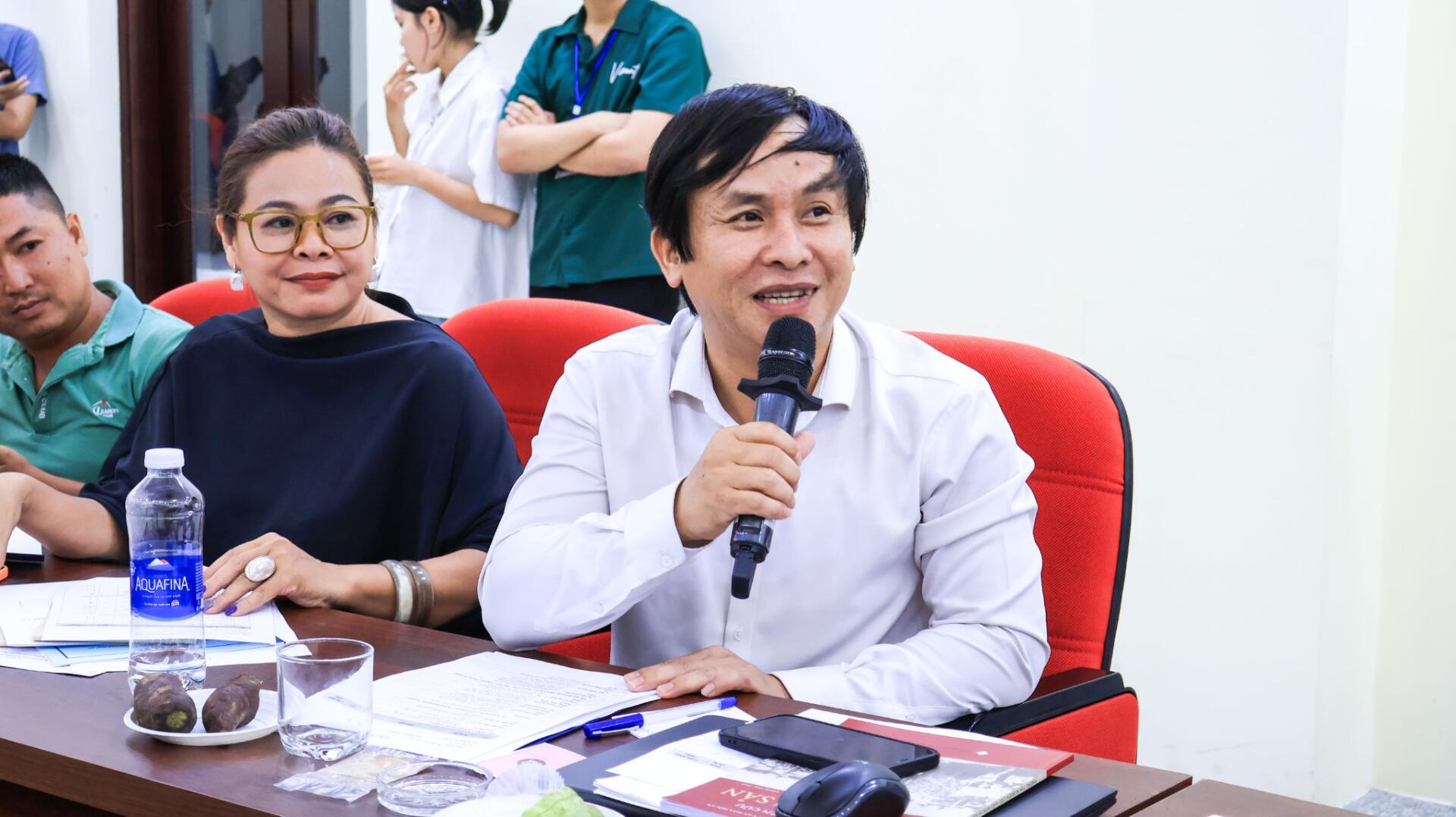
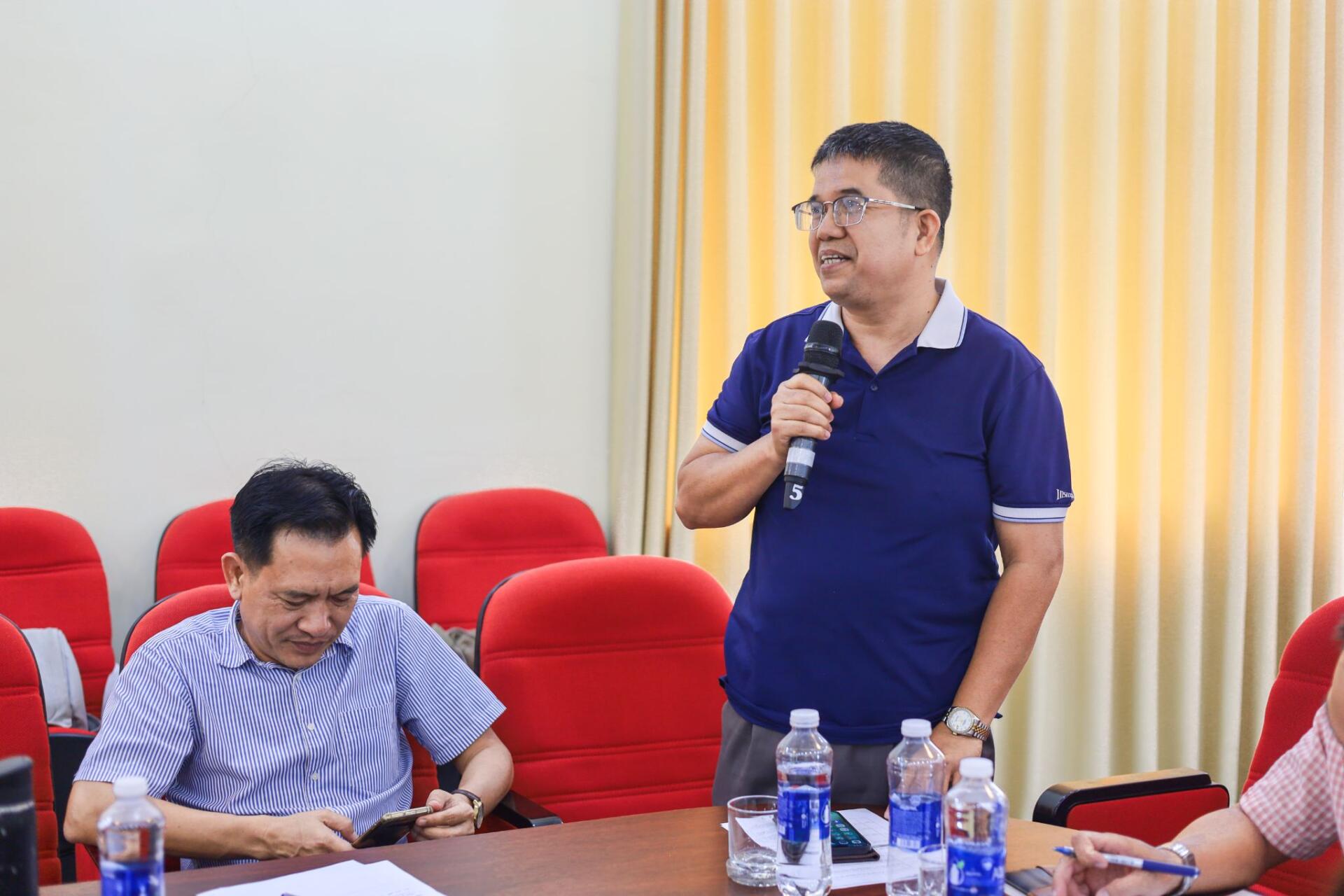
Members of the judging panel and advisory board showed great enthusiasm for the projects and tangible products presented by the students. (Photo: Organising Committee)
After the programme, participants will continue their journey with the Hoi An Youth Innovation Club, where selected proposals will have the opportunity to be developed into pilot products, contributing to local innovation initiatives in Hoi An and expanding to the Da Nang area.