
Vietnam Launches Cultural Industries Development Network: From Creative Ideas to the Market
A creative idea can only become part of the cultural industries when it can be developed into a product, protected, valued, distributed and brought to market. The launch of the Vietnam Cultural Industries Development Network by the Ministry of Culture, Sports and Tourism on October 12 signals a new approach: bringing government agencies, businesses, artists, investors, research and educational institutions, and creative communities together within a shared development ecosystem.
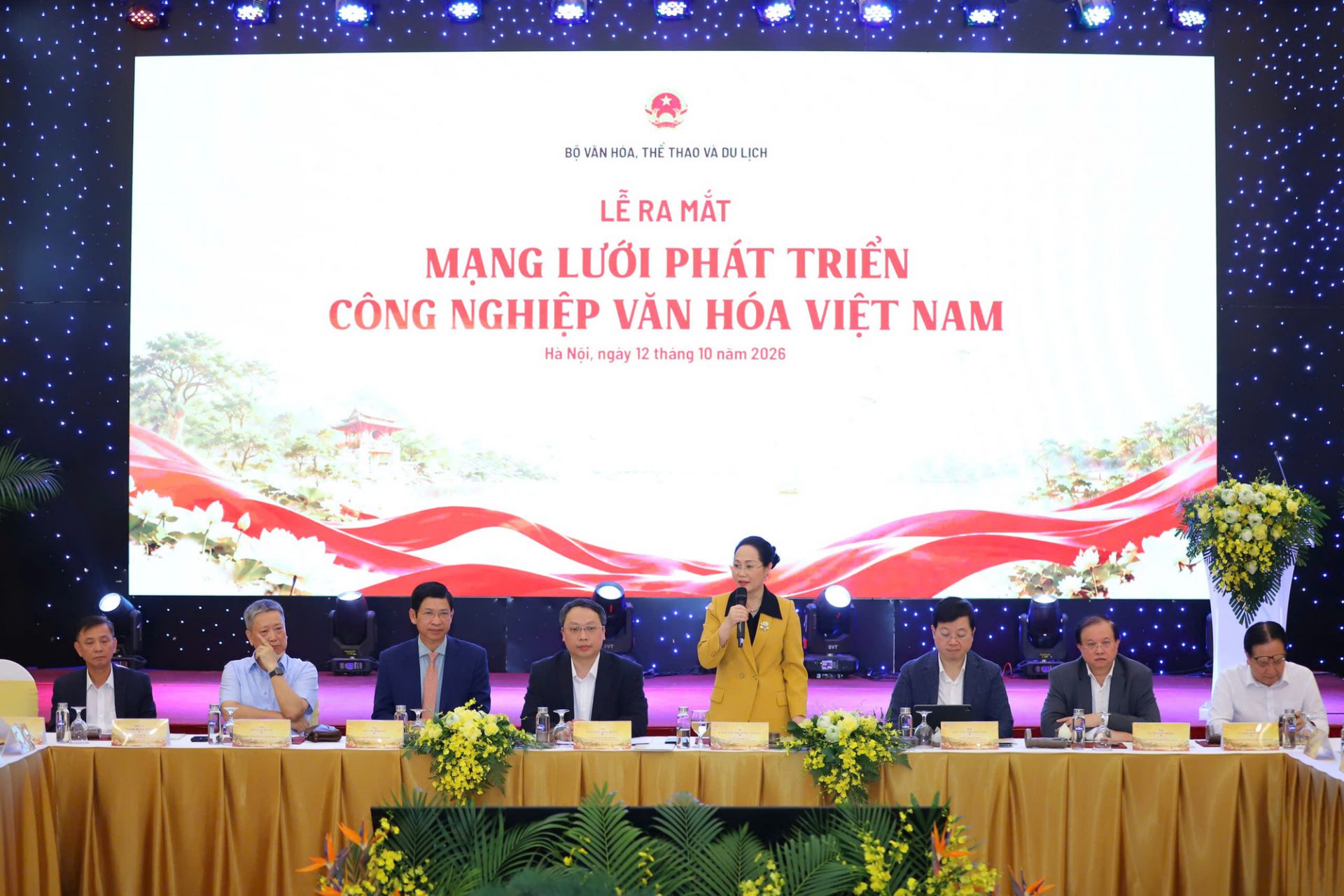
Lam Thi Phuong Thanh, Member of the Party Central Committee and Minister of Culture, Sports and Tourism, delivers the opening remarks. Source: chinhphu.vn
On the afternoon of October 12, the Ministry of Culture, Sports and Tourism officially announced the establishment of the Vietnam Cultural Industries Development Network in Hanoi, ahead of Vietnamese Entrepreneurs’ Day on October 13.
According to the Ministry, the Network aims to move beyond individual projects towards an ecosystem involving the State, businesses and communities, while mobilising resources from across society for creativity, technology and the commercialisation of cultural products.
Significantly, the initiative goes beyond simply establishing a network of connections.
At the launch ceremony, the Ministry also introduced a series of challenges and initiatives for developing the cultural industries, addressing practical market needs in areas ranging from digital cultural data and intellectual property to cinema, performing arts, music, tourism, fashion, gastronomy and sport.
Cultural Data as a Resource for Creativity
One of the most notable initiatives is the National Digital Cultural Data Repository.
Under the plan, the repository will bring together, digitise, standardise and connect cultural resources that are currently scattered across different sources. The aim is to establish a reliable body of data for research, education, content production and the development of artificial intelligence applications related to Vietnamese culture.
The Ministry aims to launch the first version of the repository in 2026, together with a pilot access portal through which businesses and creative communities can make use of the data.
This represents an important shift in how heritage and cultural resources are understood.
In the past, historical documents, artefacts, decorative motifs, audio recordings and architectural spaces primarily served archival and research purposes. Once standardised as digital data, however, these resources can also become creative materials for films, animation, games, design, education, digital exhibitions and virtual reality experiences.
This approach is also directly relevant to Hanoi’s ongoing efforts to digitise its heritage: moving beyond the documentation and presentation of individual heritage sites towards building reusable data resources for conservation, education and the creative industries.
A Marketplace for Creative Assets
Another initiative is the Cultural Industries Exchange, envisioned as a platform connecting creators, copyright holders, investors and the market.
Its purpose is to facilitate the valuation, licensing and trading of intellectual property, helping creative ideas find buyers, works generate revenue and creators earn a living from their products.
This addresses one of the major gaps in many creative ecosystems today.
There is no shortage of ideas or creative works, but the journey from creation to commercialisation is often fragmented. Creators struggle to reach businesses, businesses find it difficult to identify suitable intellectual property, valuation and protection remain challenging, and licensing mechanisms have yet to establish a transparent market.
An exchange, if operated effectively, could help bridge that gap.
For Hanoi, where the city is pursuing the development of cultural industries based on products, copyright and market opportunities, such a national mechanism could provide additional infrastructure to help the capital’s creative products reach beyond the confines of individual events or projects.
From Digital Film Studios to Derivative Products
The Ministry of Culture, Sports and Tourism also introduced the Digital Film Studio initiative, aimed at developing modern filmmaking infrastructure, technology and production tools that can be shared by multiple producers.
What is particularly noteworthy is that the vision extends beyond the production of a single film.
Starting with an original work, the initiative seeks to develop an entire ecosystem of derivative products, including design, handicrafts, cultural experiences and expanded content.
This is a familiar model in well-developed creative industries: a story is not confined to a single format.
A film can give rise to characters, music, designed products, games, exhibitions, experiential tourism and licensed merchandise.
In this way, the value of intellectual property can be extended across multiple markets.
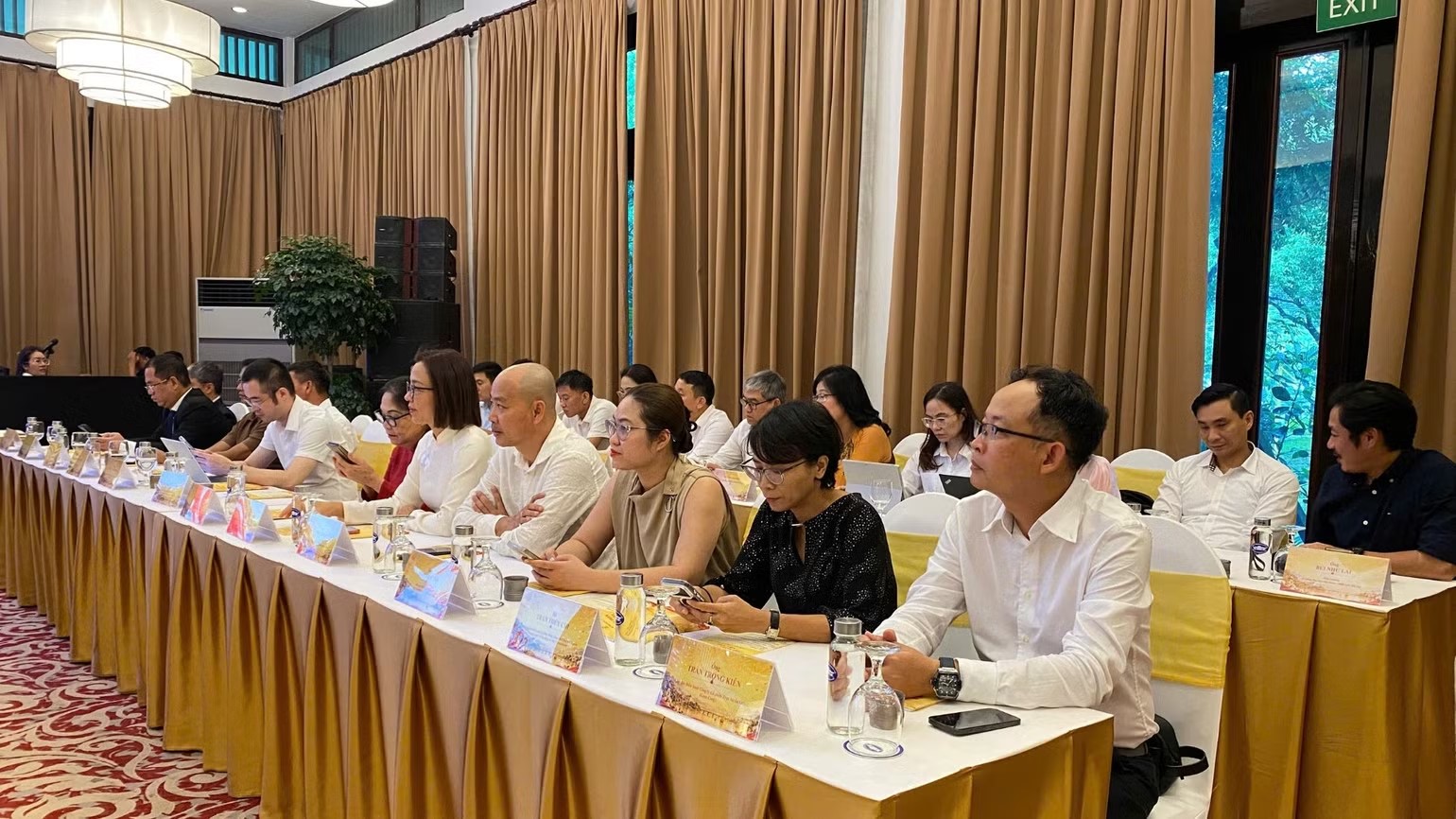
Representatives of participating organizations at the launch ceremony. Source: Nhan Dan Newspaper
From a Network of Connections to a Functioning Market
Minister of Culture, Sports and Tourism Lâm Thị Phương Thanh emphasised the goal of continually expanding and strengthening the Network, while encouraging businesses, investors, artists, experts, research institutes and educational institutions to participate in addressing specific challenges facing the cultural industries.
This approach suggests a shift in emphasis from supporting individual activities to developing the interconnected elements of a creative market.
Data provides resources for creativity.
Infrastructure enables production.
Mechanisms are in place to protect and trade intellectual property.
Businesses and investors participate.
Markets allow products to continue generating value.
If these elements can be effectively connected, the cultural industries will no longer be merely a collection of cultural events. They can become an economic sector with tangible products, revenue and the capacity for reinvestment.
New Infrastructure for Hanoi’s Creative Ecosystem
The Vietnam Cultural Industries Development Network is not an initiative exclusive to Hanoi, nor is it part of the UNESCO Creative Cities Network.
Nevertheless, its launch in Hanoi comes at a time when the capital is actively advancing its cultural industries strategy: developing creative centres, digitising heritage, connecting design with traditional craft villages, expanding the night-time economy, and placing greater emphasis on products, copyright and markets.
The common ground lies in the fact that both the national and local approaches are shifting their focus from simply “having creative activities” to “generating creative value that can continue to circulate”.
A Hanoi-based designer may need access to reliable cultural data.
An artist needs effective copyright protection.
A creative enterprise needs to find partners and investors.
A heritage-based project needs a market in order to survive beyond the event for which it was created.
If the new national platforms operate effectively, they could become part of the infrastructure that local creative ecosystems, such as Hanoi’s, can draw upon to accelerate their development.
This is perhaps the most significant implication of the new Network: creating a shared environment in which creative ideas do not remain merely ideas.
They must have the potential to become products, intellectual property and, ultimately, economic value in the marketplace.
Sources
- Government News, “Announcement of the Vietnam Cultural Industries Development Network”, October 12, 2026.
- Ministry of Culture, Sports and Tourism, information on initiatives to develop Vietnam’s cultural industries in 2026 and the commercialisation of intellectual property.
- Nhân Dân Newspaper, “Connecting Resources to Promote Vietnam’s Cultural Industries”, October 12, 2026.
- https://hanoicreativecity.com/ra-mat-mang-luoi-phat-trien-cong-nghiep-van-hoa-viet-nam-tu-y-tuong-sang-tao-den-thi-truong/