
Hanoi Creative Design Festival 2026 Announces 150 Activities, Artists from 21 Countries
At a press conference on 6 November, the organisers of the Hanoi Creative Design Festival 2026 announced an expanded programme featuring approximately 150 activities and nearly 1,000 artisans, artists and creative practitioners, including almost 100 international artists and overseas Vietnamese from 21 countries. The latest figures represent a substantial increase over earlier announcements, while the programme’s structure reflects a stronger emphasis on connecting heritage, creativity and markets.
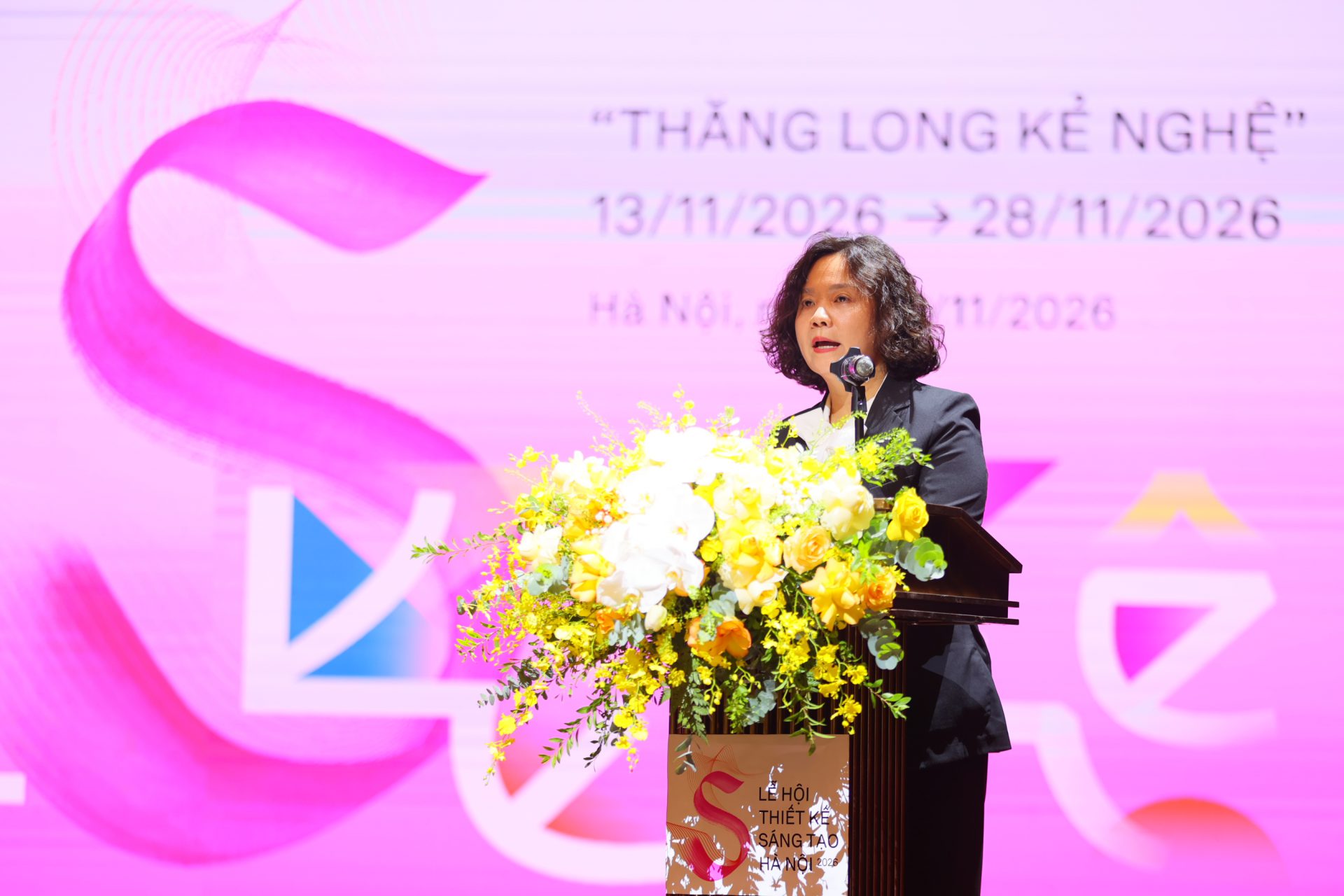
Le Thi Anh Mai, Deputy Director of the Hanoi Department of Culture, Sports and Tourism, speaks at the press conference. Photo: Organising Committee
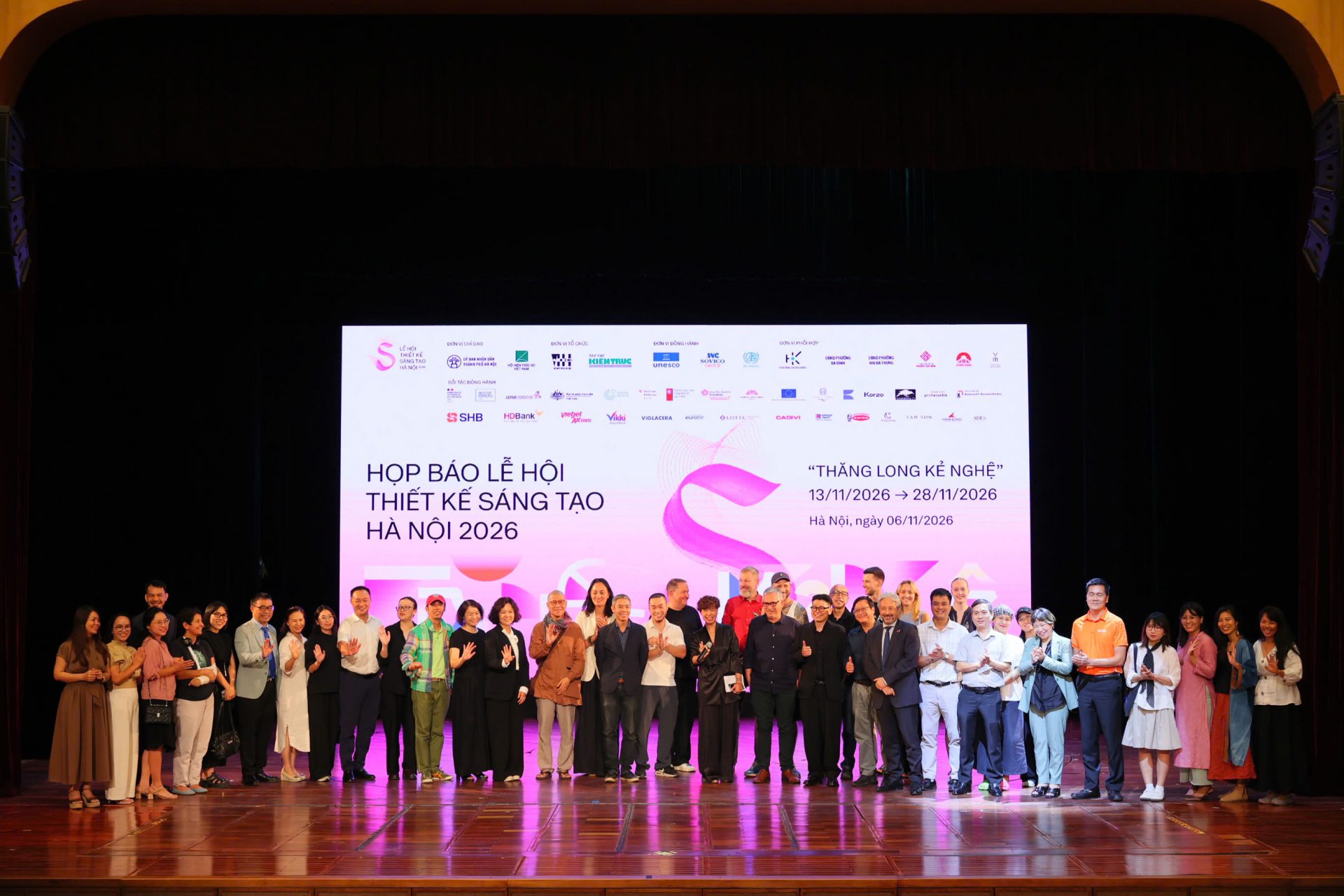
On the afternoon of 6 November, the Hanoi Department of Culture, Sports and Tourism, in collaboration with Architecture Magazine, held a press conference to introduce the Hanoi Creative Design Festival 2026.
According to the information released, this year’s Festival will feature approximately 150 activities, bringing together nearly 1,000 Vietnamese and international artisans, artists and creative practitioners. Among them are almost 100 international artists and overseas Vietnamese representing 21 countries.
These are the latest figures announced by the organisers. Earlier planning documents and preliminary announcements had indicated a programme comprising nearly 100 activities.
The Festival will open on the evening of 13 November on the eastern side of Hoan Kiem Lake. Under Plan No. 408/KH-UBND, the closing ceremony is scheduled for the evening of 28 November in the Dong Xuan Market area, while some major activities and associated events will continue until the end of 29 November.
Two Pavilions and More Than 200 Design and Creative Organisations
The eastern side of Hoan Kiem Lake remains one of the Festival’s principal locations.
Here, visitors will be able to explore two major pavilions: “Art Hanoi 2026: A Dialogue Between Architecture and Art” and “Ho Guom Pavilion”.
The area will also host two fairs, “Nghe & Nghe” (Craft and Art) and “Makers Market”, expected to bring together more than 200 design and creative organisations.
Positioning these fairs at the heart of the Festival demonstrates that this year’s ambitions extend beyond performances and exhibitions. The organisers also aim to create opportunities for design products to reach audiences, businesses and markets.
This direction was emphasised in announcements leading up to the press conference: creative products need viable market outlets, artisans and designers need connections with distribution networks, and collaborative projects should have the potential to continue beyond the Festival itself.
“Cham Dong Xuan” and 12 Heritage Communal Houses
At Dong Xuan Market, the multisensory exhibition “Cham Dong Xuan” (Touching Dong Xuan) will be one of the major highlights of this year’s Festival.
Bringing contemporary art into dialogue with the memories and rhythms of a traditional marketplace, the exhibition will involve Vietnamese and international artists and creative groups.
In the Old Quarter, the programme “Chuyen Dinh trong Pho” (Stories of Communal Houses in the Old Quarter) will open 12 communal houses and assembly halls to the public, creating a cultural trail through the craft streets, ancestral founders of traditional trades and artisanal life of historic Thang Long–Ke Cho.
The accompanying hands-on activities will introduce lacquerwork, embroidery, silk weaving, woodblock carving and various other traditional craft techniques.
This approach continues a direction Hanoi has been exploring in recent years: bringing creative activities directly into existing heritage spaces rather than separating heritage from contemporary life.
Seventeen “Ha Noi Sang Den” Performances
Another new announcement at the press conference was the “Ha Noi Sang Den” (Hanoi Lights Up) series, featuring 17 programmes with nearly 180 artists performing at 11 locations.
The series combines music, experimental art and interdisciplinary performances, extending the Festival’s activities into theatres, heritage sites and community performance spaces.
At Thong Nhat Park, the “Mam Sang Tao” (Seeds of Creativity) project will continue with two pavilions, “May” (Cloud) and “Ken” (Cocoon), providing additional spaces for experimentation with art and design in a public setting.
Alongside performances and exhibitions, the Festival will feature more than ten specialist discussions and numerous workshops held at museums, universities and creative spaces.
These activities add opportunities for professional exchange, learning and networking among artists, designers, experts, students and communities, ensuring that the Festival offers more than experiences for audiences simply to observe.
From a Festival to a Creative Ecosystem
Speaking at the press conference, Le Thi Anh Mai, Deputy Director of the Hanoi Department of Culture, Sports and Tourism, explained that the strategic direction for 2026 is to move beyond the conventional approach of organising a festival towards building an urban creative ecosystem.
The message “Ket tai hoa, det tai san” (Connecting Talent, Weaving Lasting Value) highlights the organisers’ ambition to transform cultural heritage, knowledge and creative capabilities into resources capable of generating livelihoods, employment and sustainable economic value.
This direction is increasingly evident in the structure of this year’s programme.
Heritage is connected with design.
Artisans are connected with creative practitioners.
Products are connected with markets.
Heritage sites, traditional markets, parks, theatres and universities are brought together as part of a wider network of activities, rather than serving merely as individual event venues.
Delegates gather for a commemorative photograph at the press conference. Photo: Organising Committee.
A Larger Festival, Greater Expectations
The announcement of approximately 150 activities confirms that the Festival has expanded considerably compared with the figures released during the preparation stage.
However, the number of activities alone cannot determine its success.
For Hanoi, a UNESCO Creative City of Design, the more important questions concern what will remain after November: how many new products will emerge, how many partnerships will continue, how many creative spaces will remain active, and how much cultural value will genuinely be transformed into resources for development.
These outcomes will also provide a measure of the Festival’s transition from an annual event into a creative platform capable of making a lasting contribution to Hanoi’s urban life and cultural economy.
Sources
- Journalists & Public Opinion Newspaper, “Hanoi Promotes a Creative Ecosystem Built on Cultural Resources”, 6 November 2026.
- People’s Army Newspaper, “Creative Design Festival 2026 Connects Heritage with the Creative Economy”, 6 November 2026.
- Hanoi People’s Committee, Plan No. 408/KH-UBND, dated 21 October 2026, on the Implementation of the Hanoi Creative Design Festival 2026.
- Hanoi Creative City: https://hanoicreativecity.com/le-hoi-thiet-ke-sang-tao-ha-noi-2026-cong-bo-150-hoat-dong-nghe-si-tu-21-quoc-gia/