
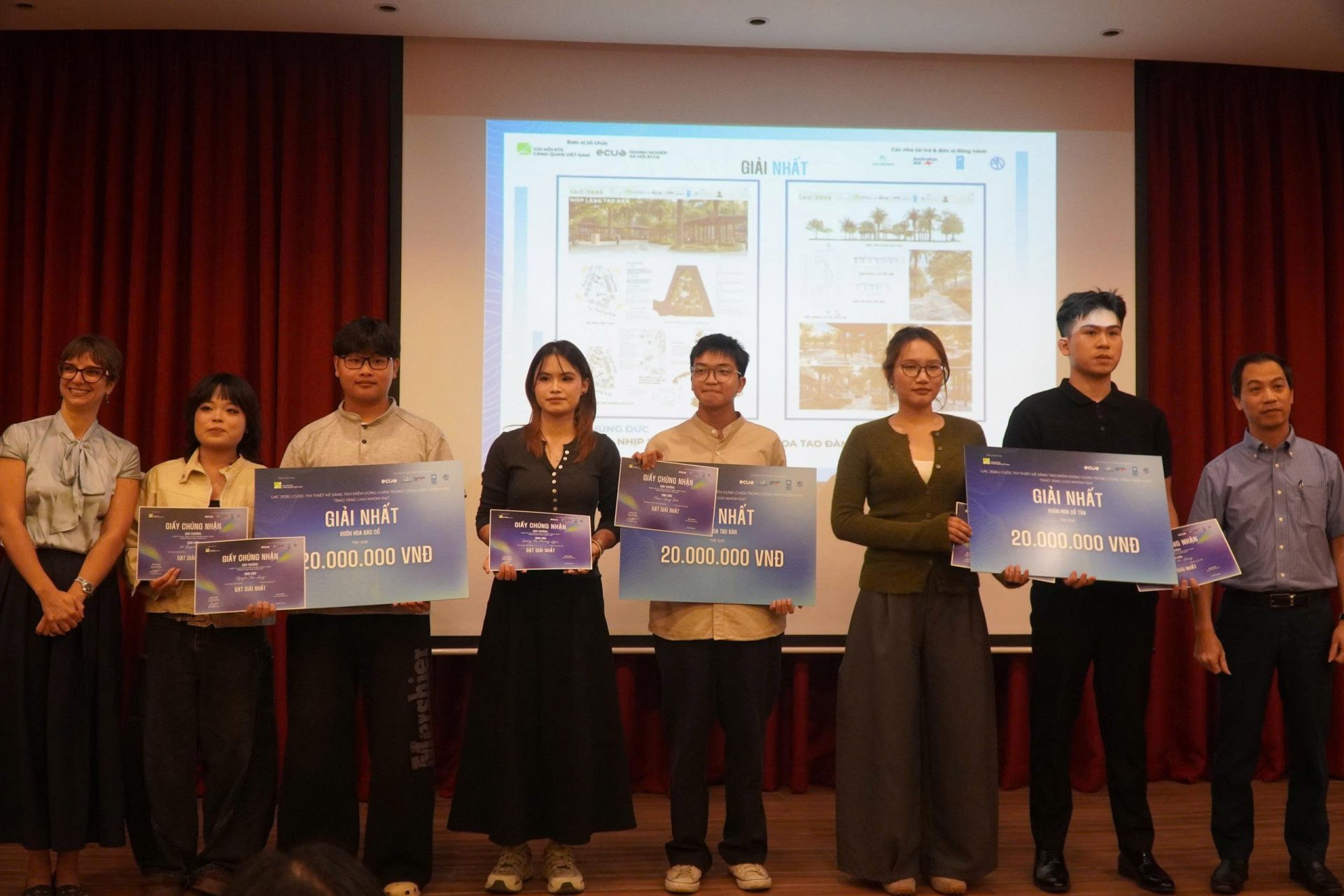
Three Hanoi University of Civil Engineering Student Designs Win First Prizes for Public Garden Rest Areas
Three proposals by students from Hanoi University of Civil Engineering — “Ben Rong”, “Hoi sinh” and “Nhip lang Tao Dan” — have won First Prizes in the Creative Design Competition for Rest Areas in Public Gardens. Addressing the need for free, shaded resting places for outdoor workers, older people, children and tourists, the competition prioritised practical solutions over landscape concepts that might never progress beyond the drawing board.
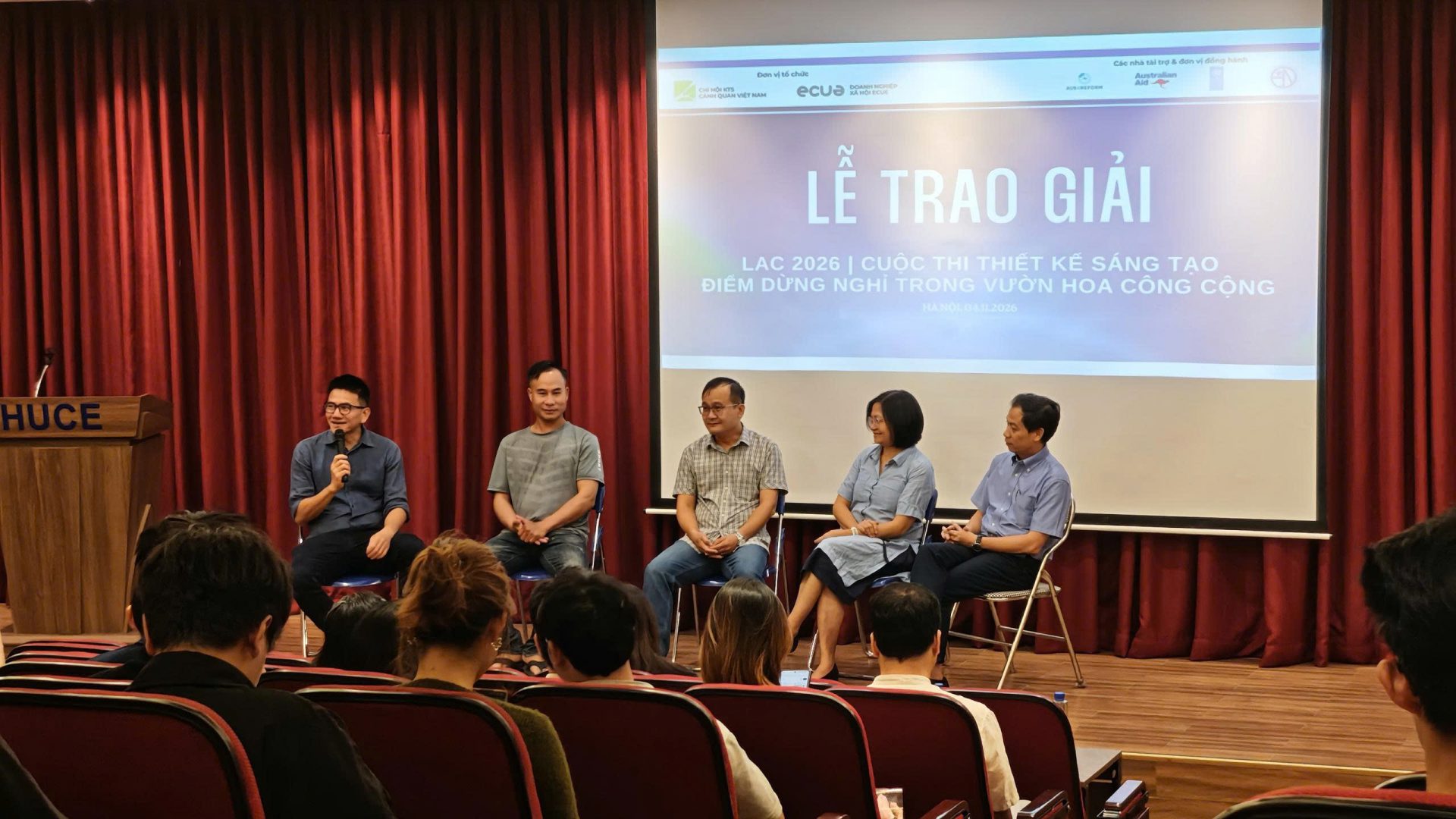
Jury members reflect on the competition and its development. Photo: Organisers
On the afternoon of 4 November, the Vietnam Landscape Architects Chapter, under the Vietnam Association of Architects, in collaboration with the community initiative “For a Liveable Hanoi”, held an awards ceremony for the Creative Design Competition for Rest Areas in Public Gardens.
The competition focused on three locations in Hanoi: Tao Dan Garden, Co Tan Garden and Bac Co Garden.
According to the organisers, the competition attracted registrations from 93 teams and individual participants, involving 307 students from 20 universities and institutions specialising in architecture and construction across Vietnam. Following several selection rounds, 31 proposals developed by 93 students were shortlisted for the final round.
All three First Prizes went to teams from Hanoi University of Civil Engineering for their proposals “Ben Rong”, “Hoi sinh” and “Nhip lang Tao Dan”.
The Second Prize was awarded to “Hoi sinh” (Revival), a proposal for Tao Dan Garden developed by students from Hanoi Architectural University.
Three Third Prizes were awarded to “Bong mat”, “Hoa bat tu”, both submitted by students from the University of Architecture Da Nang, and “Ngu Tinh Dai”, developed by students from the School of Interdisciplinary Sciences and Arts at Vietnam National University, Hanoi.
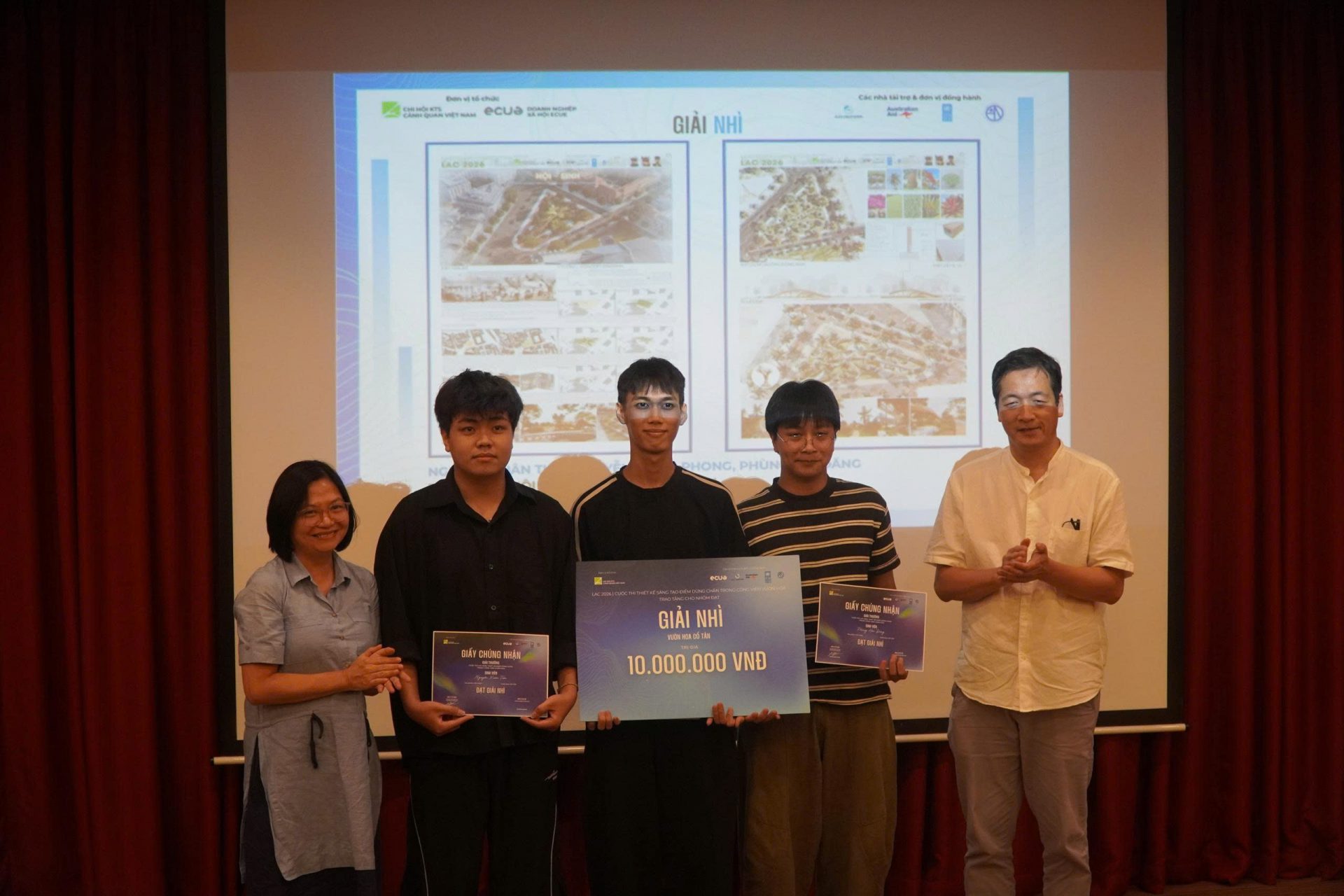
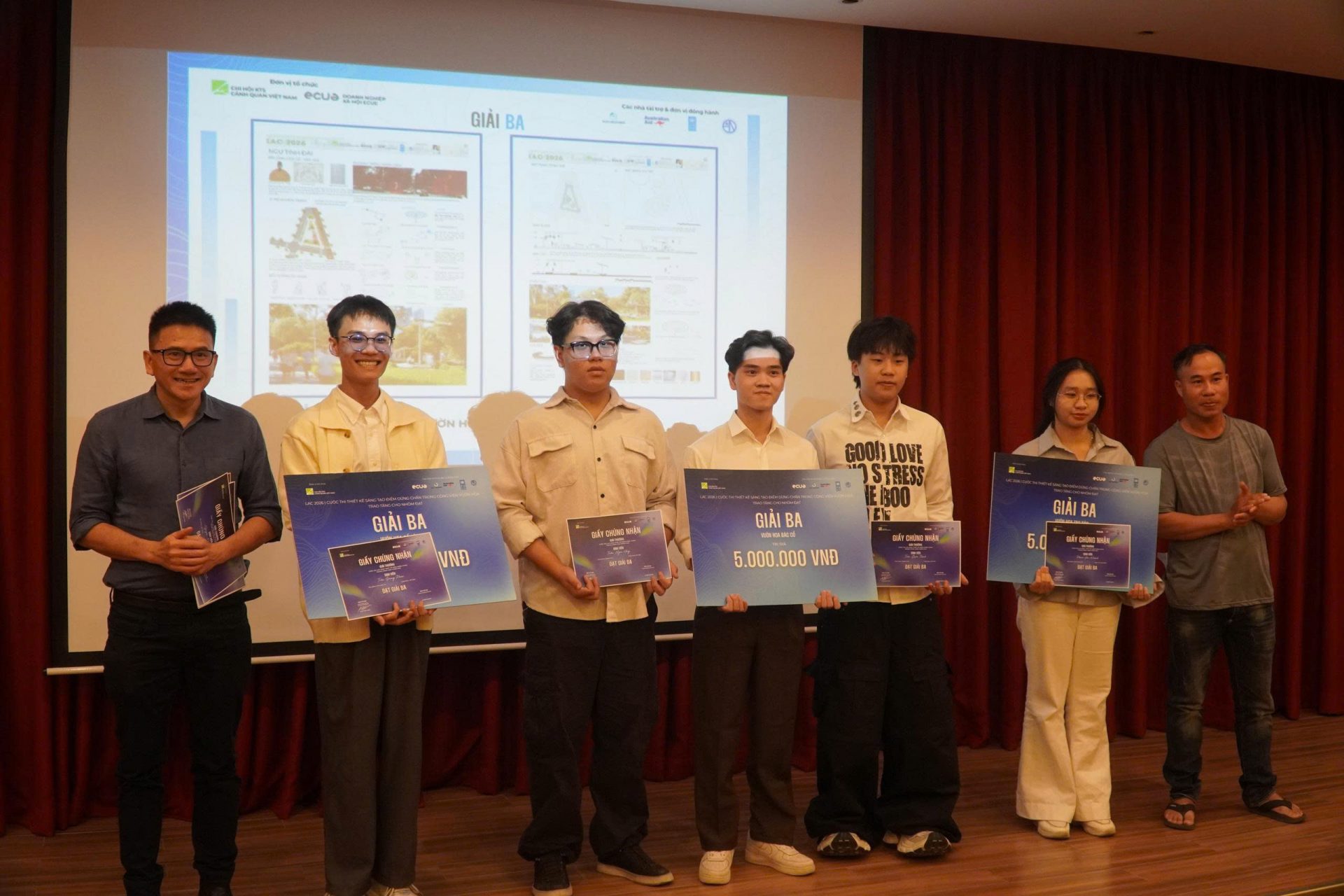
Award-winning student teams at the competition. Photos: Organisers
A Design Challenge Rooted in Everyday Needs
According to Dr Pham Anh Tuan, architect and Chairman of the Vietnam Landscape Architects Chapter, the competition originated from a very specific need in Hanoi.
As outdoor temperatures become increasingly severe, many densely populated inner-city areas accommodate large numbers of outdoor workers, pedestrians and tourists but lack free, shaded and easily accessible places where people can rest.
Surveys conducted in Hoan Kiem and Cua Nam wards revealed that many small public gardens primarily serve a landscaping function, with limited facilities to help visitors rest, escape the sun or shelter from rain.
In response, participating students were asked to survey one of three public gardens — Tao Dan, Co Tan or Bac Co — and select an area of approximately 100–150 square metres in which to design a public resting facility.
Priority users included outdoor workers, older people and children. Accessibility for people with disabilities, tourists and other user groups was also considered during the judging process.
The proposed designs were required to address several challenges simultaneously: providing shade, improving the local microclimate, offering protection from sun and rain, ensuring accessibility, avoiding physical barriers and integrating with the gardens’ existing activities.
Practical Feasibility Carries Significant Weight
One notable feature of the competition was the emphasis placed on practical feasibility, which accounted for 30 out of 100 points in the judging criteria — equal to the weighting assigned to design solutions.
The organisers encouraged participants to use readily available, sustainable and durable materials that would be affordable, easy to maintain and suitable for construction under real-world conditions.
Students were also encouraged to conduct on-site surveys, take measurements, observe how people used the gardens and engage with local residents before developing their proposals.
The judging panel included representatives of local authorities, the Vietnam Landscape Architects Chapter, the United Nations Development Programme (UNDP) and outdoor workers.
This composition enabled the needs of potential users to be considered directly in the evaluation process, rather than assessing proposals solely on their architectural appearance.
According to the organisers, the objective was not simply to introduce attractive structures into public gardens, but to identify solutions capable of genuinely improving the usability of public spaces.
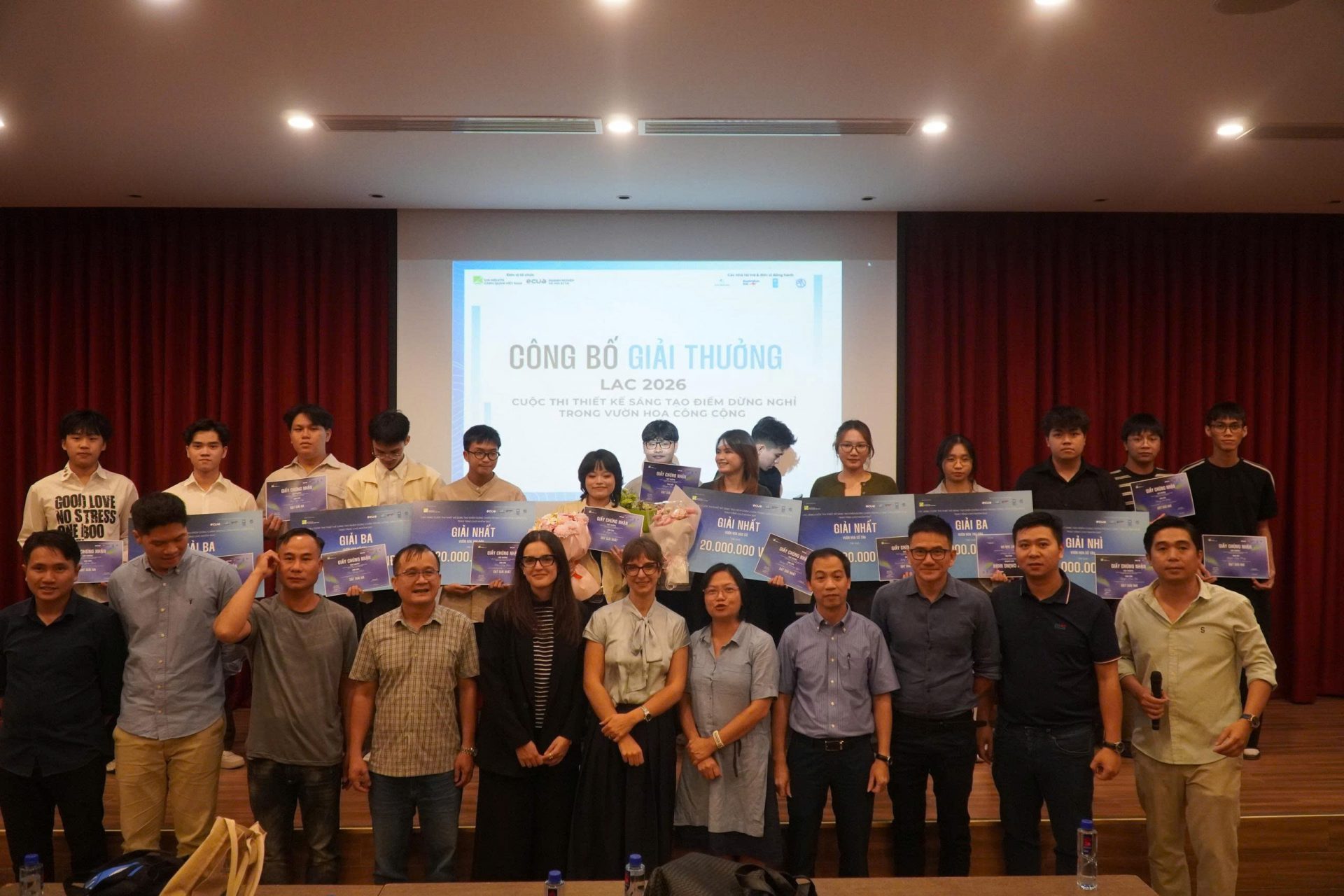
Organisers and award-winning student teams gather for a commemorative photograph. Photo: Organisers
From Student Design Projects to Potential Real-World Applications
Launched in August 2026, the competition formed part of LAC — Landscape Architecture Competition — an initiative providing opportunities for students of architecture and landscape architecture.
From the outset, the organisers identified one of its objectives as finding design solutions that could contribute to improving Hanoi’s urban public spaces.
This ambition was reiterated following the awards ceremony: feasible proposals would be considered for further research and refinement, with the aim of moving towards practical implementation in Hanoi.
However, this remains an intention expressed by the organisers. No information has yet been released indicating that the city authorities or local wards have approved the construction of any of the winning proposals.
This distinction is important.
Should the designs progress beyond the competition, students will have to address challenges that extend well beyond their drawings, including costs, materials, maintenance, safety, operational management and integration with existing landscapes.
Such a process would also bring an academic design competition closer to the practical challenges of urban development.
Designing for the Small but Essential Needs of a City
Public rest areas may be modest structures within Hanoi’s urban landscape, but they reflect an important approach to design.
Rather than beginning with a large-scale architectural project, the competition asks a series of everyday questions: Where can a delivery worker, street cleaner, older person, child or pedestrian sit when they need to escape the heat or rest for a few minutes?
When design begins with such situations, the quality of public space is measured not only by greenery or visual appearance, but also by how effectively it serves different groups of people in their daily lives.
This approach also aligns with Hanoi’s ongoing efforts to expand urban design and creative activities, bringing universities, architects, communities and local authorities together to find solutions to specific urban challenges.
The public garden rest area competition has not been identified as an official activity of the Hanoi Creative Design Festival 2026.
Nevertheless, the participation of 307 students from 20 institutions in studying three actual public gardens in Hanoi demonstrates another form of creative engagement taking place alongside the Festival: applying university-level design expertise to tangible issues affecting public spaces.
If feasible proposals can be further developed and tested, the competition’s significance will extend beyond the prizes awarded on 4 November.
Its lasting value may lie in the possibility of transforming a student design challenge into a practical public amenity that improves everyday urban life.
Sources
- Construction Newspaper – Ministry of Construction, “Hanoi Presents Awards for Creative Design Competition for Rest Areas in Public Gardens”, 4 November 2026.
- Landscape Architecture Academic Group, Faculty of Architecture and Planning, Hanoi University of Civil Engineering, LAC 2026 competition regulations and launch information.
- Vietnam Landscape Architects Chapter and the “For a Liveable Hanoi” initiative, information on site surveys and competition organisation.
- https://hanoicreativecity.com/ba-phuong-an-cua-sinh-vien-dai-hoc-xay-dung-gianh-giai-nhat-thiet-ke-diem-nghi-trong-vuon-hoa-ha-noi/